A $1.15 Trillion Defense Bill, a Divided Congress, and a Stalled Senate: Inside the FY 2027 NDAA Fight

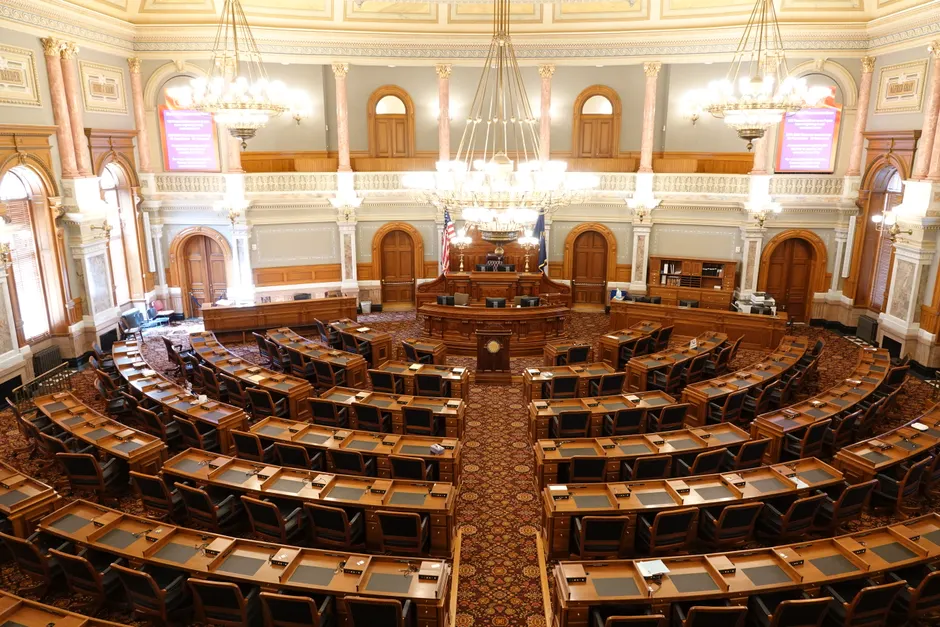
The US House of Representatives passed the fiscal year 2027 National Defense Authorization Act on July 22, 2026, approving $1.15 trillion in defense spending by a vote of 216 to 212. The near-party-line result masks a striking level of Democratic opposition: all but six House Democrats voted against the bill, joined by seven Republicans who broke ranks.
The bill, designated H.R. 8800 in the 119th Congress, now moves to the Senate, where its path is anything but clear. Senate Democrats had already blocked their chamber's version of the NDAA the week before the House vote, in protest of the Iran war. The Senate procedural vote on July 14, 2026, failed 50-46, falling short of the 60-vote threshold required to advance legislation past what is known as a legislative filibuster — a Senate rule that allows a minority of senators to delay or block a bill unless 60 of the 100 senators vote to move forward. The Senate's companion bill is designated S. 4784.
Democratic opposition in the House centered on two intertwined flashpoints. The first is President Trump's decision to join Israel in attacking Iran without congressional authorization. Under the US Constitution, Congress holds the power to declare war, but presidents have long deployed military force under broad interpretations of their authority as commander in chief. Democrats argue that the legislature has been sidelined on matters of war and peace. The second flashpoint is the inclusion of the Save America Act, a Trump-backed proposal attached to the NDAA that would ban mail-in ballots and impose new voter identification requirements. Democrats have characterized the provision as an effort to restrict voting access under the guise of defense policy.
The NDAA forms part of President Trump's broader plan to spend $1.5 trillion on the military in fiscal year 2027. The House Armed Services Committee passed the bill at the committee level after Chairman Mike Rogers (R-AL) and Ranking Member Adam Smith (D-WA) jointly released the Chairman's Mark — the baseline version of the bill that the committee uses as a starting point for debate and amendments — on May 26. H.R. 8800 was reported to the House on June 15, and the Committee of the Whole considered it on July 21, one day before the final vote.
Rogers defended the bill's price tag in stark terms. He said the legislation "accounts for the true cost of American deterrence" and addresses "decades of underinvestment" in the military. (Deterrence, in military strategy, refers to maintaining enough strength that adversaries are discouraged from attacking.) The bill includes provisions to deepen US-Israel defense industry cooperation, a measure that takes on particular weight given the ongoing conflict with Iran and the US role in it. It also calls for a 3.8% pay raise for many military members and includes housing and facility improvements on military bases.
Smith, the top Democrat on the House Armed Services Committee, opposed the NDAA, citing massive cuts to domestic programs and tax cuts. His opposition is notable: Smith co-released the Chairman's Mark with Rogers in May, meaning the committee's ranking member ultimately voted against a bill he helped shape at the markup stage. That trajectory — from bipartisan markup to partisan floor vote — reflects how the Iran war and the Save America Act shifted the political calculus between committee work and the floor.
The Senate's July 14 block fell largely along party lines. The Senate had begun consideration of the motion to proceed to S. 4784, but Democrats held firm, denying the 60 votes needed to overcome the legislative filibuster. That sets up a potential stalemate between the two chambers, with the House having passed a bill laden with provisions the Senate's Democratic caucus has already said it will oppose.
The broader context here is a collision between three powerful forces: a president pursuing a historically large military buildup, a Congress divided over whether that buildup should be tied to an unauthorized war, and a legislative process in which must-pass defense authorization has become a vehicle for domestic voting policy. Each of these elements alone would make for a difficult legislative path. Together, they raise the question of whether a conference committee — a temporary group of lawmakers from both chambers assembled to reconcile competing versions of a bill — can bridge H.R. 8800 and S. 4784, or whether the FY 2027 NDAA stalls entirely. That outcome would leave Pentagon funding operating under a continuing resolution, a stopgap measure that keeps the government funded at prior-year levels rather than under a new authorization.
The vote margins tell their own story. A four-vote spread in the House, combined with a Senate where the majority party cannot reach 60 on its own, means neither chamber has produced a version capable of clearing the other. The six Democrats who voted yes and the seven Republicans who voted no represent thin crossover on either side, suggesting that the partisan lines hardened around the Iran and voting-rights questions are not easily softened in conference.