Trump Warns Iran Over Houthi Strikes as Oil Markets Reel and Saudi Tankers Come Under Fire

President Trump warned on July 23, 2026, that the United States would hold Iran directly responsible for any further attacks by Yemen's Houthis on commercial shipping. The statement escalates a confrontation that has already pulled U.S. military power into direct airstrikes on Iranian territory and pushed oil prices higher (NYT).
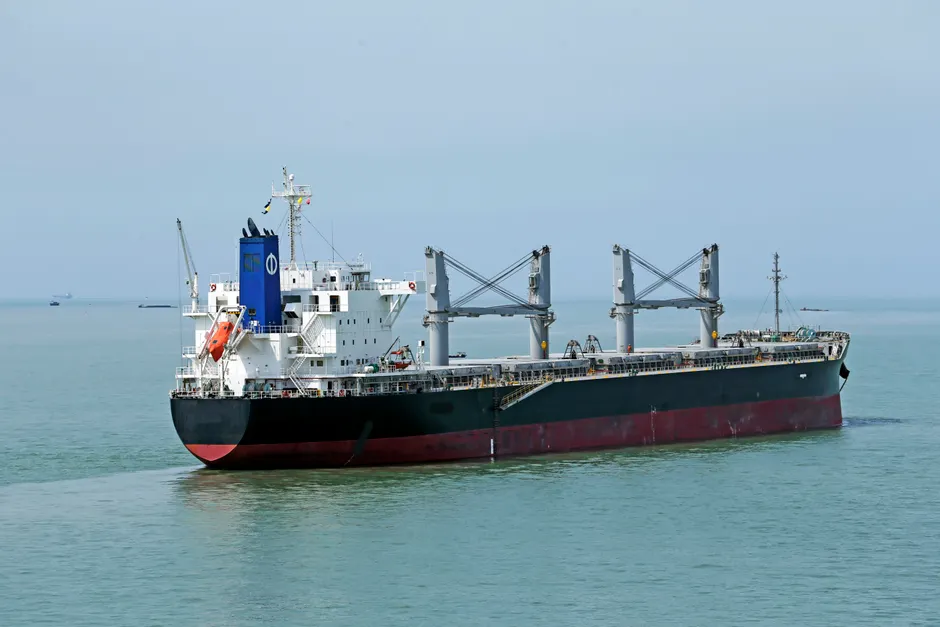
The warning came one day after Yemen's Houthis claimed responsibility for attacks on two Saudi-flagged oil tankers, the Encelia and the Layla, in the Red Sea. The group said the vessels were targeted for violating a blockade decision issued by the Houthi armed forces, and claimed to have used missiles and drones in the strikes (Al Jazeera; Euronews; NY Post).
The market reaction was immediate. On July 22, Brent crude — the benchmark price for oil sold on the international market — settled up 3.3% at $94 per barrel. The same day, four oil tankers carrying Saudi crude to Asia reversed course in the Bab el-Mandeb Strait (Reuters). That strait, a narrow waterway between Yemen and East Africa, is one of the world's most important passageways for seaborne oil. The decision by multiple vessels to turn back signals that ship operators are treating the risk of Houthi fire as serious enough to override their contractual sailing schedules.
Trump's July 23 statement is not an isolated threat. It is the second time he has placed responsibility for Houthi actions on Tehran, Iran's capital and seat of government. In March 2025, during an earlier round of U.S. raids on Yemen that killed 53 Houthis according to Houthi claims, Trump said he would hold Iran directly responsible for any future attacks by the group (Al Jazeera; Times of Israel). The repetition of that framing now, alongside an active bombing campaign against Iran itself, suggests the administration is building a doctrinal linkage: Houthi strikes on commercial shipping are treated as Iranian acts, with the military response calibrated accordingly.
That campaign is already well underway. As of July 18, 2026, the U.S. military had conducted 12 nights of airstrikes against Iran (AP). The strikes on Iran proper, combined with the ongoing Houthi threat in the Red Sea, have opened what amounts to a two-front maritime confrontation: one targeting Iran's military infrastructure directly, the other contesting control of one of the busiest shipping lanes in the world.
Oil markets have been absorbing this pressure for months. Brent crude surpassed $98 per barrel earlier in 2026 amid the Iran war and Houthi attacks on shipping (AP). The price trajectory has been volatile but persistently elevated. Brent settled at $100.46 on March 12, fell to $94.75 on April 7, and U.S. crude briefly settled above $100 on March 29 following a Houthi attack on Israel that widened the perceived scope of the Iran conflict (Reuters, March 12; Reuters, April 7; Reuters, March 29). The $94 close on July 22 thus sits within a range the market has tested repeatedly, though the specific catalyst — a direct strike on Saudi-flagged vessels — introduces a new variable.
The targeting of Saudi tankers marks a shift in Houthi operational focus. Previous attacks in 2025 and early 2026 primarily threatened U.S. and Israel-linked shipping. The Encelia and Layla are Saudi-flagged, meaning the Houthis are now engaging vessels tied to a Gulf state that has walked a careful line between alignment with U.S. security interests and preservation of its relationship with Tehran. Riyadh, Saudi Arabia's capital, has not — based on the available reporting — been a direct party to the U.S. strikes on Iran. The Houthi decision to escalate against Saudi assets raises questions about whether the group is attempting to fracture the Gulf coalition or simply enforcing its declared blockade on its own terms.
The broader context here is one of compounding escalation loops. The U.S. has linked Houthi attacks to Iran rhetorically since at least March 2025 and has now operationalized that linkage through direct strikes on Iranian territory. The Houthis, in turn, have expanded their target set to include Saudi-flagged crude carriers. Each escalation narrows the diplomatic off-ramps: Iran is being held responsible for actions it may not be directly commanding, while Saudi Arabia finds its commercial fleet caught in a conflict whose trajectory is increasingly set in Washington and Tehran rather than in Sana'a or Riyadh. For energy markets, the key variable is whether the Bab el-Mandeb disruptions persist. Four tankers reversing course is a tactical event. A sustained closure or degradation of safe passage through the strait would push Brent well beyond the $94–$100 band the market has traded this year.