Apple and Ford Partner on Embedded Maps for Next-Generation EVs

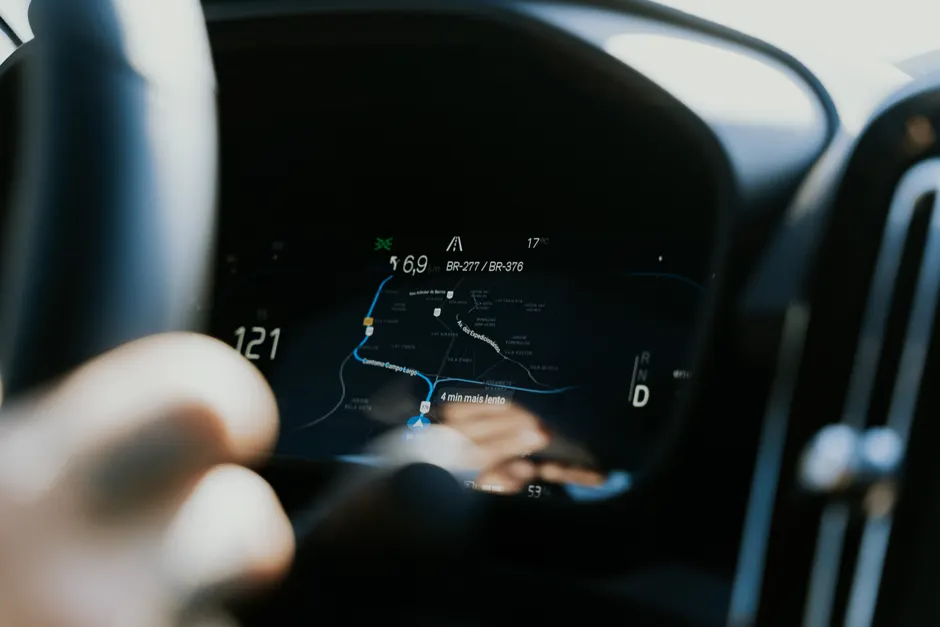
Apple has announced MapKit for Automotive, a software development kit that lets automakers embed Apple Maps navigation directly into vehicle infotainment systems. Ford is the first automaker to partner with Apple on the SDK, and will debut the integration with a new line of electric vehicles starting with a $30,000 midsize truck in 2027. The two companies signed a commercial agreement with undisclosed terms. TechCrunch
MapKit for Automotive runs natively in the vehicle and is architecturally separate from Apple CarPlay, which mirrors iPhone apps onto a vehicle's central display. The embedded Apple Maps will feed road-level information to Ford's next-generation BlueCruise hands-free driver assistance system. The upgraded BlueCruise is expected to roll out in 2027 and will handle entire highway journeys, including entrance and exit ramps. Ford said the system will ultimately handle "point-to-point autonomy" comparable to Tesla's Full Self-Driving (Supervised) software. Eyes-off driving capability is targeted for 2028.
The native Apple Maps integration also enables EV-specific functionality. Battery preconditioning, which prepares the battery before arrival at a charger to reduce charge times, will be driven by the embedded mapping data. Ford Pro commercial fleet customers could benefit from routing to job sites and displaying other fleet vehicles on the map.
Ford developed a universal EV platform called UEV that will underpin a midsize truck, sedan, crossover, three-row SUV, and small commercial vans. The $30,000 midsize truck is the first vehicle expected to ship with MapKit for Automotive integrated.
The partnership extends a relationship that already exists at the CarPlay layer. Ford previously made NACS (North American Charging Standard) fast charger routing available to its customers through Apple Maps in CarPlay, and was the first automaker to announce and make the Tesla Supercharger network available to its customers. Ford
The distinction between CarPlay mirroring and a native embedded SDK matters at several levels. CarPlay, by design, is ephemeral: it lives on the phone and projects to the head unit, which means the navigation experience disappears when the phone is absent and cannot directly feed vehicle subsystems like a battery management system or ADAS (advanced driver assistance) stack. A native SDK running on the vehicle's own compute means the mapping layer is always available, can interface with CAN-bus-level vehicle data (the internal communication network that connects a car's electronic components), and becomes a first-party input to driver assistance rather than a companion display.
This is the architectural pattern the industry has been moving toward. Google built an embedded Android Automotive OS that runs natively on Volvo, Polestar, and Renault vehicles, among others. Apple has now taken a parallel path with MapKit for Automotive, though notably the announced SDK is specifically a mapping and navigation integration rather than a full infotainment operating system.
The decision to feed Apple Maps data into BlueCruise is where the partnership carries the most technical weight. Hands-free driver assistance systems depend heavily on high-definition map data for lane-level positioning, road geometry, and exit-ramp logic. Ford's current BlueCruise operates on mapped highway segments that have been pre-validated. Moving to a system that handles entire highway journeys including ramps, and then progresses to point-to-point autonomy and eyes-off driving in 2028, requires map data that is richer, more frequently updated, and more deeply integrated with the vehicle's real-time sensor fusion than what a mirrored phone app can provide. Apple Maps, rebuilt from the ground up starting in 2018 with Apple's own first-party data collection, now includes lane-level detail, 3D road models, and detailed city experiences in select markets. Whether that data is sufficient to serve as a primary input for Level 3-equivalent conditional automation (where the car can drive itself in specific conditions but a human must be ready to take over) is a question that will only be answerable once the system ships and is evaluated against real-world edge cases.
For Ford, the partnership also solves a build-versus-buy problem. Developing and maintaining a high-definition mapping platform in-house is capital-intensive and requires continuous data-collection infrastructure. Tesla built its own. GM's Super Cruise relies on a partnership with Mapbox and lidar-collected road data. Ford is now betting that Apple's mapping infrastructure, embedded natively, can serve as the spatial backbone for its autonomy roadmap.
The $30,000 midsize truck price point is worth noting. Ford is targeting a mainstream segment where margins are thin and integration costs matter. Embedding Apple Maps rather than building a proprietary navigation stack from scratch aligns with keeping per-vehicle software costs down while leveraging Apple's continuously updated map data. The UEV platform's broad vehicle coverage, spanning commercial vans to three-row SUVs, means the same mapping and driver-assistance architecture can be amortized across Ford's entire next-generation EV portfolio.
The broader context here is that Apple's entry into embedded automotive mapping raises questions about how other automakers will respond. If MapKit for Automotive proves competitive with Google's embedded offering and Tesla's in-house stack, the mapping layer of the vehicle stack becomes a two- or three-vendor market. Automakers that have invested in proprietary navigation and ADAS mapping may need to reassess whether continued in-house development is justified against the pace of improvement Apple and Google can fund.
Ford has not disclosed the commercial terms of the agreement, nor whether the MapKit integration will be exclusive to Ford for any period. The 2027 timeline for the first vehicles and the upgraded BlueCruise, with eyes-off capability targeted for 2028, positions this as a multi-year roadmap rather than a near-term product launch.