Astronomers Detect the Strongest Exomoon Candidate Yet — Orbiting a Brown Dwarf

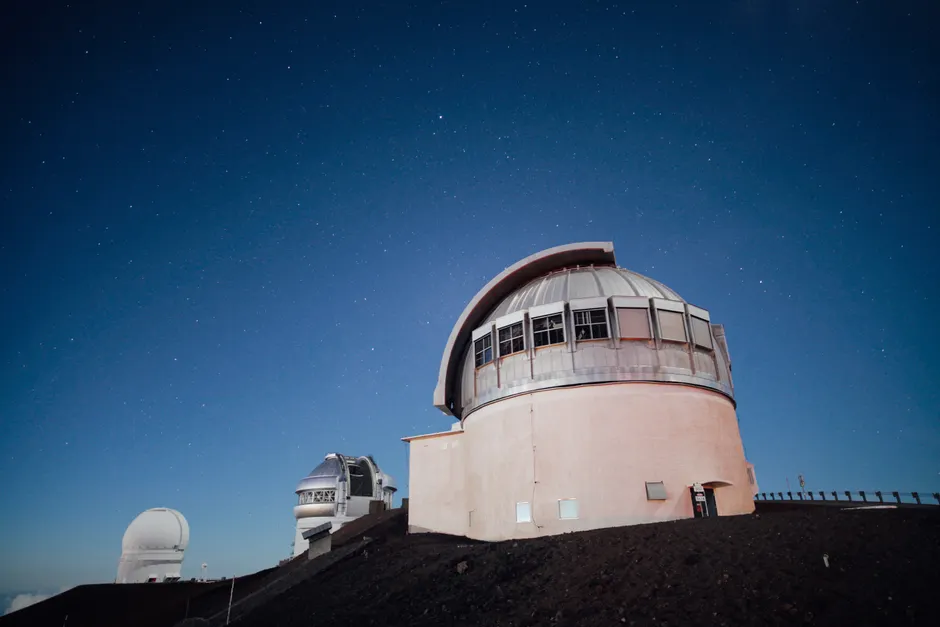
Astronomers using ESO's Very Large Telescope have found evidence for a moon-like object orbiting a brown dwarf in the CD-35 2722 system. If confirmed, it would be the first exomoon — a moon outside our Solar System — ever discovered (ESO). The study, led by ESO student Kevin Hoy and published in Nature on 22 July 2026, used the CRIRES+ spectrograph on the VLT to measure the slight wobble that the orbiting companion induces on its host (Nature).
The host object is a brown dwarf — a body too massive to be a planet but not massive enough to sustain the hydrogen fusion that powers a real star — exceeding 30 Jupiter masses. It orbits CD-35 2722, a star with roughly half the mass of the Sun. The newly detected companion is at least as massive as Jupiter, which led the research team to call it an "exosatellite" rather than a conventional moon. At that mass, it sits in a range more familiar to planetary astronomy than to satellite taxonomy (ESO).
The detection method is the same one that uncovered the first exoplanet around a Sun-like star: the radial velocity technique, which identifies orbiting bodies through the gravitational pull they exert on their host, causing it to wobble. Applying this method at the precision needed to detect wobbles in a brown dwarf rather than a full-fledged star is where this work breaks new technical ground. The CRIRES+ instrument — a high-resolution, cryogenic spectrograph upgraded for near-infrared observations — provided the spectral detail required to separate the brown dwarf's motion from the light of CD-35 2722 itself.
Hoy, who is also affiliated with Universidad Diego Portales and the Millennium Nucleus of Young Exoplanets and their Moons (YEMS) in Chile, is the lead author. Alice Zurlo, YEMS Director and an astrophysicist at Universidad Diego Portales, is a collaborator on the study (ESO).
The context for this detection is sparse but instructive. Over 6,000 exoplanets have been catalogued to date, yet confirmed exomoons remain at zero. Only a few candidates have appeared in the literature, each with limited supporting evidence. In 2014, the OGLE and MOA collaborations reported MOA-2011-BLG-262Lb as a possible exomoon orbiting a free-floating (rogue) planet candidate, detected via microlensing — a technique that uses the bending of light by a foreground object's gravity — though the interpretation has remained contested (arXiv). More recently, David Kipping's Cool Worlds Lab at Columbia University reported evidence for a second exomoon candidate in archival transit data (Columbia News). A few months before this study, Quentin Kral's team used ESO's Very Large Telescope Interferometer to observe the HD 206893 system, finding hints of a satellite but stopping short of a firm detection (ESO).
The CD-35 2722 result differs from these earlier efforts in that it comes with a peer-reviewed Nature paper and a direct radial velocity measurement rather than a transit-based or microlensing inference. That said, the classification of the object has already spurred debate among astronomers. Space.com noted the possibility that the detected body could be "something weirder" than a straightforward satellite (Space.com). The Chosun Ilbo's science desk also reported on the classification debate surrounding the discovery (Chosun Ilbo). Time magazine covered the finding on 22 July 2026 (Time).
The classification tension is worth unpacking. An object at least as massive as Jupiter, orbiting a body that is itself more than 30 Jupiter masses, sits in an ambiguous regime. The mass ratio between the two bodies is roughly 1:30, comparable to the Earth-Moon ratio of about 1:81. By that metric, the system resembles a planet-moon pair more than a star-planet pair. But the absolute masses are so far outside the Solar System's satellite inventory that calling the companion a "moon" stretches the term in ways that make some astronomers uncomfortable. The brown dwarf itself fails to sustain hydrogen fusion, sitting below the roughly 75 Jupiter-mass threshold needed for a star to ignite, yet it is far more massive than any planet. Its companion, at a Jovian mass or above, would be classified as a gas giant in most schemes if it orbited a star directly.
The core of the debate is this: the detection is real and the orbital dynamics are clear, but whether the word "exomoon" applies depends on whether you prioritize the formation pathway, the mass ratio, or the object's hierarchical position in the system. The research team's choice of "exosatellite" sidesteps this, and it is a reasonable compromise, though it may not satisfy all parties.
The broader context here is one of historical parallels. Exoplanet science spent the 1990s and early 2000s in a similar state: a handful of detections, fierce debate over classification boundaries, and instruments that were technically capable but not yet optimized for the task. The radial velocity detections of the mid-1990s gave way to transit photometry, then direct imaging, then space-based surveys that catalogued thousands. Each method opened a different discovery space, and each resolved classification disputes that earlier methods could not.
If exomoons follow anything like this path, the CD-35 2722 detection — made with a ground-based spectrograph in the near-infrared — could be the first data point in a sequence that space-based missions and next-generation Extremely Large Telescopes will eventually populate at scale. The confirmation step for this specific object may come through additional radial velocity measurements, direct imaging at longer wavelengths, or astrometric measurements (tracking the object's precise position over time) that constrain the orbit independently. The Nature paper, titled "Planetary-mass exosatellite detected around the substellar companion of CD-35 2722," represents the initial detection rather than a settled result (Nature).
For now, the field has its strongest exomoon candidate to date, detected with a method that carries three decades of exoplanet heritage behind it. Whether it becomes the first confirmed exomoon, the first confirmed exosatellite, or something that demands a new category entirely, will depend on follow-up observations that have not yet been conducted.