Astronomers Detect Helium in the Atmosphere of a Rocky Exoplanet in the Habitable Zone
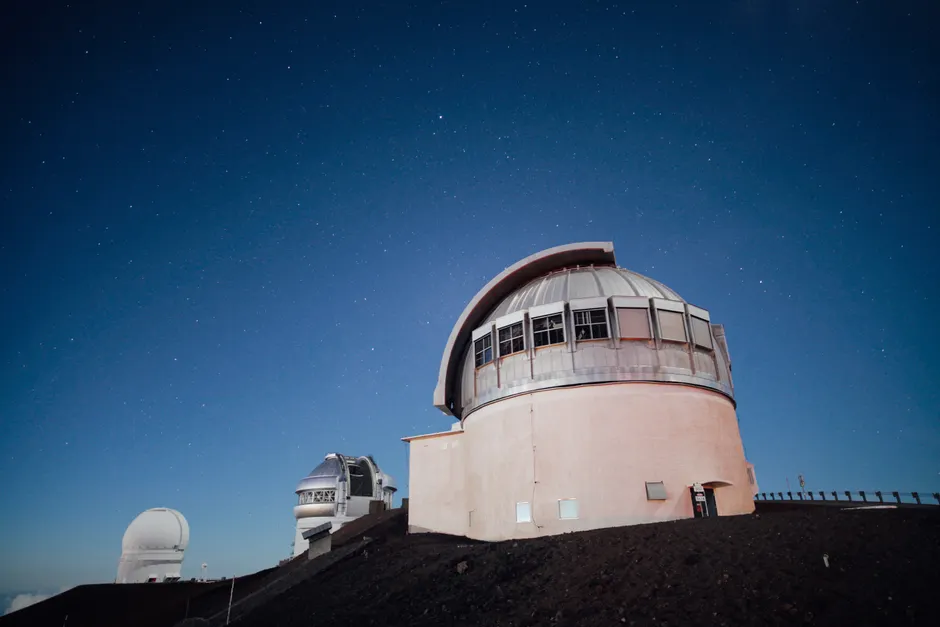
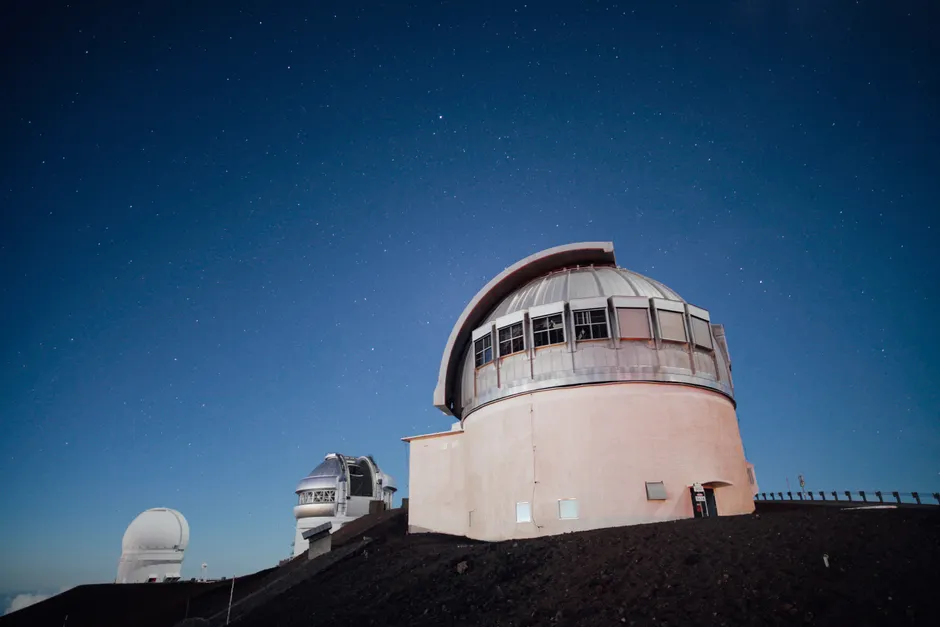
Astronomers have directly detected helium escaping from the atmosphere of LHS 1140b, a rocky exoplanet about 48 light-years from Earth that orbits within its star's habitable zone — the region around a star where temperatures could allow liquid water to exist on a planet's surface. The observation, made using the Magellan Clay telescope at Las Campanas Observatory in Chile, is the first direct atmospheric detection for any rocky exoplanet and the first confirmed atmosphere around a rocky, Earth-like planet in the habitable zone (Space.com).
The finding was announced on July 16, 2026, through press releases from the AAAS/EurekAlert service and the University of Florida. The EurekAlert release, titled "Detected: Rocky, habitable-zone exoplanet with an atmosphere," describes helium escaping from the planet's atmosphere (EurekAlert). The University of Florida published its own institutional announcement the same day (University of Florida).
Rocky exoplanets have been extraordinarily difficult to study in this way. Gas giants — including the so-called "hot Jupiters" that orbit close to their stars — have produced atmospheric signatures for years through transit spectroscopy, a technique that analyzes starlight filtering through a planet's atmosphere during a transit. Rocky planets, with their much thinner atmospheres, have resisted equivalent analysis. The helium signal from LHS 1140b breaks through that barrier.
The helium was detected as it streams away from the planet, a process consistent with hydrodynamic atmospheric loss driven by radiation from the host star. Because helium is chemically inert — it does not react with other elements — it serves as a clean tracer for atmospheric dynamics. Its presence or absence reflects physical processes like heating and escape, rather than chemical reactions that could complicate the interpretation.
The observational campaign was motivated by a computer model that predicted a helium-dominated, escaping atmosphere on LHS 1140b (USA Today). That modeling work gave astronomers a theoretical basis for pointing the Magellan Clay telescope's spectroscopic instruments at the planet. The confirmation of the prediction lends credibility to the modeling framework, which could help guide future observations of other rocky exoplanet candidates.
The broader context is the long-standing gap between detecting exoplanets and understanding their atmospheres. Thousands of rocky exoplanets have been identified, mostly through transit and radial velocity methods (the latter measures a star's wobble caused by an orbiting planet's gravity), but the atmospheric properties of nearly all of them have remained out of reach. Detecting an atmospheric component on a rocky planet in the habitable zone narrows that gap. It does not, by itself, establish the presence of water, a biosphere, or conditions suitable for life. The Guardian's coverage notes that the atmosphere could contain water, but that is a possibility raised for further investigation, not a confirmed finding (The Guardian).
One notable aspect of this detection is the instrumentation. The Magellan Clay telescope is a ground-based facility, and the observation was achieved without space-based platforms like the James Webb Space Telescope. Ground-based spectroscopy of this type has historically been limited by telluric contamination — interference from Earth's own atmosphere — and by atmospheric seeing, the blurring effect caused by turbulence in the air above the telescope. A successful helium detection from the ground suggests that instrumental techniques and data-processing methods have matured enough that a broader survey of rocky exoplanet atmospheres from ground-based facilities may now be feasible.
The detection of escaping helium also has implications for how we understand planetary evolution. Atmospheric loss is a key mechanism by which rocky planets, especially those orbiting M-dwarf stars — small, cool stars that are the most common type in the galaxy — may be stripped of their volatile compounds over geological timescales. LHS 1140b's host star is a factor in interpreting how long the planet may have held onto its atmosphere and what its current composition reveals about its history. The observed helium outflow provides a direct observational constraint on those models.
In this author's view, the most consequential outcome of this detection is not the helium itself but the proof of concept it provides. For the exoplanet community, the ability to probe the atmosphere of a rocky, habitable-zone planet with a ground-based telescope opens up a population of targets that has been theorized about extensively but scarcely observed. The next questions — whether water vapor is present, whether the atmosphere is stable or eroding, whether surface conditions could support liquid water — can now be asked with an observational foothold rather than speculation alone.
The LHS 1140b system remains one of the more accessible targets for follow-up. At 48 light-years (Phys.org), it is close enough for continued spectroscopic monitoring, and the confirmation of an atmospheric signal provides a baseline against which future observations can be compared. Whether this atmosphere is a long-lived envelope or a transient remnant in the final stages of erosion is among the questions that repeated observation may eventually answer.