Tesla's Austin Robotaxi Fleet Now Running Fully Driverless, Crowdsourced Data Shows
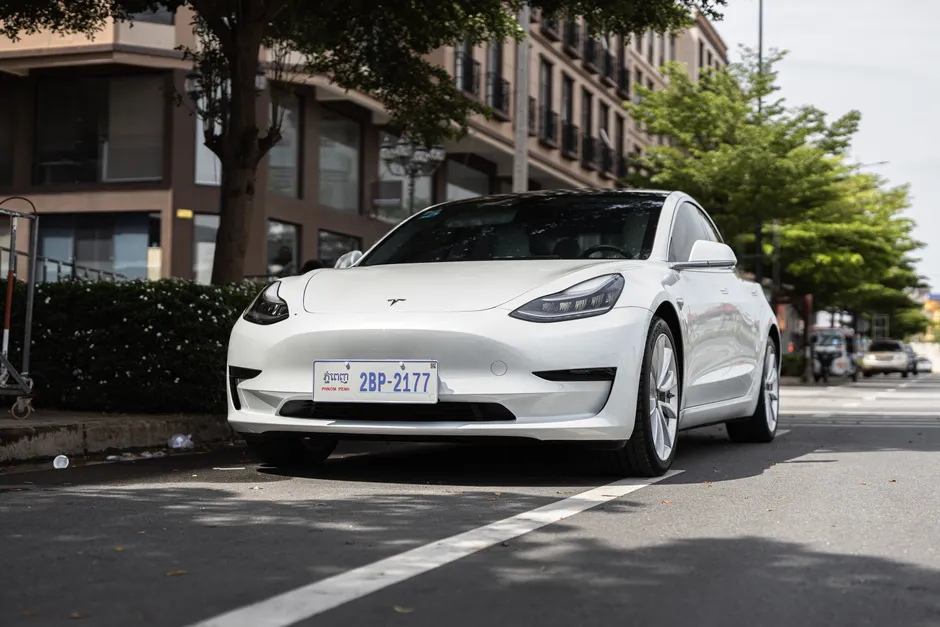
Tesla's Robotaxi fleet in Austin appears to have shifted entirely to unsupervised operation, with crowdsourced data showing zero safety-monitored rides over a two-week stretch. During that window, all 170 Tesla Robotaxi rides logged by the community-run Robotaxi Tracker were driverless, involving 54 distinct vehicles across the Austin area, according to the site's creator, Ethan McKanna. The Verge
The shift comes roughly seven months after Elon Musk first said Tesla's Robotaxis were running without human safety monitors onboard. Safety monitors are trained operators who sit in the driver's seat ready to take control if the car's autonomous system encounters something it can't handle. Reddit and X posts from individual riders back up the tracker's findings, and McKanna noted that license plates previously flagged as supervised have been confirmed as offering unsupervised rides. Austin's supervised service appears to have stopped entirely for at least a couple of weeks.
The data also shows a sharp geographic expansion. McKanna reported roughly 30 driverless Teslas operating in Dallas and Houston over the past week. As recently as the prior week, Robotaxi Tracker showed just 28 active unsupervised vehicles across all six Texas and Florida markets it monitors. Austin alone now hosts nearly twice that count, a jump McKanna attributes partly to improved data sources rather than purely to fleet growth; after revising the feeds powering the tracker, he found more vehicles operating unsupervised than the site had previously reflected.
The trajectory shows up clearly in the historical data. In January, The Verge reported that neither of Tesla's robotaxi services in Austin was fully open to the public. As of July, Robotaxi Tracker listed only 16 unsupervised vehicles in Austin and four in Dallas. Going further back, a KXAN report from February noted that McKanna's tracker listed 58 active autonomous vehicles in Austin but had logged just 3 unsupervised rides. The Verge
An Electrek report from August 17, three days before The Verge's current coverage, painted a flatter picture. It stated that Tesla's unsupervised fleet in Austin had stalled at roughly 17 vehicles as of mid-August, down from about 25 in the spring. The Verge's August 20 reporting, based on the most recent Robotaxi Tracker data, supersedes that figure.
Robotaxi Tracker, available as both a website and an iOS app, provides live wait times, fleet directories, service-area maps, and pricing data for Tesla, Waymo, and Zoox autonomous vehicle fleets. McKanna, who spent the summer interning with Tesla's Robotaxi team, built and maintains the platform as an independent community resource.
The shift to fully driverless Model Y rides comes as Tesla prepares to launch the Cybercab, its purpose-built robotaxi, in Austin potentially as soon as this month. The Cybercab is designed without a steering wheel or pedals, a fundamental departure from the Model Ys currently providing rides. On Tesla's most recent earnings call, Musk said the Robotaxi program would scale "very rapidly" but offered no specific targets for vehicle count or city expansion. A JPMorgan note offered one possible explanation for the constrained Model Y fleet: Tesla is intentionally holding back on adding more of them because it expects to scale Cybercab in the near term.
The competitive gap remains substantial. Waymo operates more than 300 driverless vehicles, leaving Tesla well behind its primary robotaxi competitor despite the Austin progress. Tesla does not publish detailed fleet data and did not respond to requests for comment from The Verge.
The broader context here is one of cautious validation rather than declared victory. The 170 monitored rides over two weeks, while a meaningful sample, represent crowdsourced observation rather than audited fleet telemetry. McKanna's data sources have already been revised once to correct undercounting, and an earlier Electrek report noted the service was unavailable roughly 60% of the time over a recent week. Whether the current pace of unsupervised rides holds, and whether it scales to the "very rapid" trajectory Musk described, will depend on factors Tesla has not disclosed: vehicle availability, regulatory sign-off in additional markets, and the Cybercab's readiness for production deployment. The Austin data is encouraging for Tesla's autonomy program in a way that earlier numbers were not, but it remains a narrow, single-city signal in a competitive landscape where Waymo has been running fully driverless commercial service at larger scale for considerably longer.


