Canada's Wildfires, Argentina's Record Heat, and a New Pacific Storm: A Global Weather Snapshot for July 2026

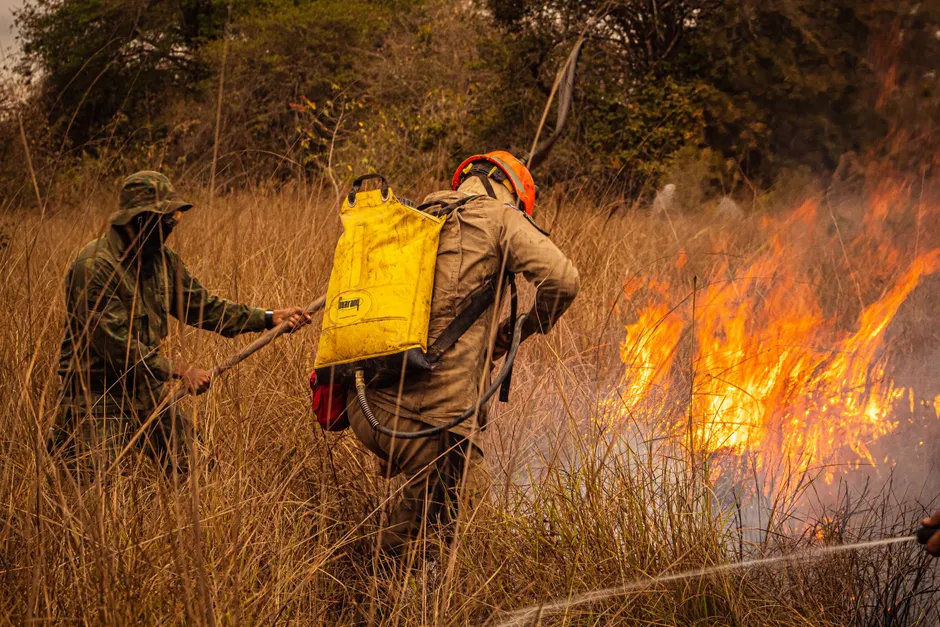
More than 900 wildfires are burning across Canada, scorching roughly 3 million hectares of land as of late July 2026, with smoke plumes traveling across the Atlantic to reach northern Europe.
The Canadian Wildland Fire Information System (CWFIS), operated by Natural Resources Canada, showed active fire conditions for July 23, 2026, based on daily updates from provincial fire management agencies. The most worrying fires are concentrated in the Northwest Territories and Ontario, where several blazes remain out of control. Smoke from the Canadian fires has been carried by winds into the United States and across the Atlantic Ocean.
Earlier reporting from July 18, 2026, noted that Canada's federal Natural Resources Department recorded 69 new fires overnight, bringing the national total to 955. By July 20, Ontario alone was battling 190 active blazes, with fires in the province having grown to 735,000 hectares — up from 650,000 hectares the preceding weekend. The territorial government issued an Evacuation Order for Fort Simpson in the Northwest Territories on June 28, later downgraded to an Evacuation Alert on July 18. Ontario declared Emergency Area Order EAO 2026-009 on July 15 under its forest fires regulations.
The Guardian's Weather Tracker, published July 24, does not name a specific attribution or data source for the Canadian wildfire figures beyond its own reporting. The Canadian Interagency Forest Fire Centre (CIFFC) publishes daily-updated mobilization statistics during the wildland fire season, including graphs of aircraft mobilized and situation reports summarizing national preparedness levels and priority fires. CIFFC's Canada Reports page, last updated July 8, listed 9 files providing synopses of the fire season.
Meanwhile, in Salta, Argentina, the city recorded its warmest-ever overnight minimum temperature on Saturday, July 18, 2026, with the temperature not falling below 26°C (79°F). The record occurred during the Southern Hemisphere winter; Salta's average winter nighttime minimum is approximately 3°C. The previous warmest night at the Salta weather station was 22.2°C, recorded in January 1953 during the height of summer.
The exceptional warmth was driven by the Zonda wind, a Foehn effect phenomenon. A Foehn effect occurs when air crosses a mountain range — in this case the Andes — descends on the other side, and warms through compression while also drying out. A rapidly developing El Niño (a periodic warming of the eastern Pacific Ocean that can disrupt global weather patterns) in the eastern Pacific was a possible contributing factor to the unusual intensity of the Zonda wind event.
In the Pacific, Tropical Depression 11 formed on Tuesday, July 21, and developed into Tropical Storm Noul north of the Philippines on Thursday night, July 23. Noul was forecast to intensify into a typhoon and make landfall on China's southeast coast on Sunday morning local time as a category 1 storm.
The broader context here is that the convergence of a high-latitude boreal fire season, an anomalous mid-winter warm spell in the subtropics, and rapid cyclogenesis (the rapid formation and intensification of a storm system) in the western Pacific illustrates the multi-regional stress points active across global weather systems this July. The CWFIS summary, published July 15, remains the most recent dated official data source for national conditions, though the Guardian's July 24 reporting provides broader aggregate figures.
The Zonda event, occurring during winter rather than summer and driven partly by eastern Pacific El Niño development, underscores what meteorologists call teleconnection patterns — the links between oceanic conditions in one region and weather anomalies on a distant continent. Think of it as a planetary chain reaction: warmer-than-usual ocean surface temperatures in the Pacific can shift wind patterns, which in turn intensify downslope winds over the Andes, producing record warmth thousands of miles away.