ICC Members Vote on Whether to Remove Prosecutor Karim Khan

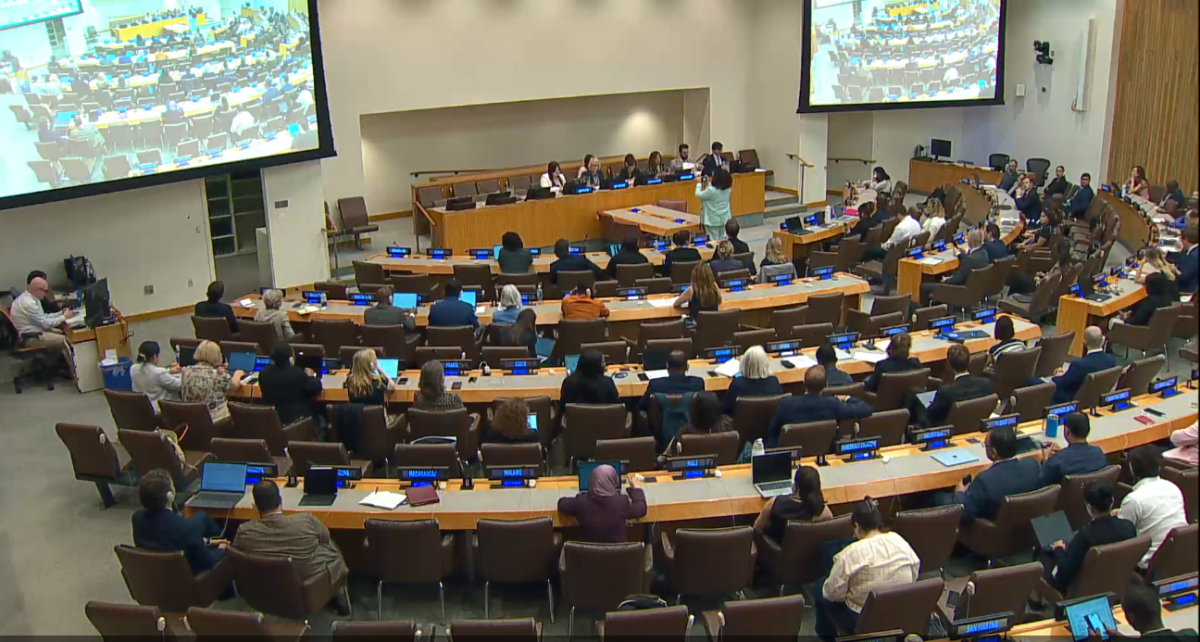
On July 24, 2026, the Assembly of States Parties to the International Criminal Court (ICC) gathered at United Nations Headquarters in New York to hold a secret-ballot vote on whether to remove Prosecutor Karim Khan from office. The vote was scheduled for roughly 3:00 p.m. local time (19:00 GMT), with results expected by 5:30 p.m. (21:30 GMT). Al Jazeera
The Assembly of States Parties is the ICC's governing body, made up of the 125 countries that have joined the court. Think of it as a board of shareholders that can hire and fire the court's top officials. Khan, a 56-year-old British barrister, had already been suspended from his duties pending the outcome. The ICC's oversight body said the suspension was based on a UN investigative report, the advice of an ad hoc (specially convened) panel of judicial experts, and written submissions. The Bureau of the Assembly had previously met on June 8, 2026, and issued a decision about disciplinary action in the case. Al Jazeera
The allegations against Khan center on accusations of sexual harassment brought by a junior colleague who worked as his direct assistant. The accuser, publicly identified only as "Sarah," told CNN that Khan engaged in escalating touching and groping behavior, including an incident in which she said he touched her intimately while she pretended to be asleep. Al Jazeera
Khan has categorically denied any wrongdoing. His lawyer, Sareta Ashraph, stated that Khan denies "any form of sexual contact, relationship, consensual or non-consensual" with the alleged victim. Khan's legal team, which also includes lawyer Tayab Ali, said a panel of independent judges found no evidence to establish the allegations beyond reasonable doubt. Khan himself accused the ICC process of being "unjustified and unlawful" and said his suspension violated the court's own procedures. Al Jazeera
Khan was barred from attending the removal vote in person because of US sanctions imposed against him and other ICC officials. Sanctions are government-imposed penalties that can restrict a person's ability to travel, access funds, or do business. In this case, they directly prevented Khan from entering the United States, where the vote took place. The sanctions followed Khan's 2024 decision to seek ICC arrest warrants for Israeli Prime Minister Benjamin Netanyahu and then-Defence Minister Yoav Gallant. Al Jazeera
Several member states publicly declared their positions ahead of the vote. The Netherlands announced on or around July 16, 2026, that it would support Khan's removal. Reuters France stated on July 24, 2026, that it would vote to dismiss the prosecutor. Reuters
Removing the prosecutor required an absolute majority of at least 63 of the court's 125 member states, cast via secret ballot. If Khan were removed, the election process for a new ICC prosecutor would begin immediately, though a successor was not expected to be voted in before 2027. Active ICC arrest warrants, including those Khan sought against Israeli officials, would remain in place regardless of the outcome. Only ICC judges have the authority to withdraw warrants. Al Jazeera
The institutional timeline leading to this vote spans more than a year of formal proceedings. The Presidency of the Assembly of States Parties issued a statement on May 18, 2025, noting a communication from the Prosecutor dated May 16, 2025. The Bureau's June 8, 2026, disciplinary decision followed. The Assembly's twenty-fifth session is scheduled for December 7–17, 2026, at the United Nations in New York, where the composition of the court's leadership and the prosecutorial vacancy, if one exists, will be among the agenda items. ICC ASP ICC ASP ICC ASP
The broader context here is that three distinct pressures are converging on the Office of the Prosecutor simultaneously, and that convergence is what gives the vote its weight for member states and court observers. The sexual misconduct allegations strike at the personal integrity of the officeholder. The US sanctions, triggered by Khan's decision to pursue arrest warrants against Israeli officials, raise questions about whether the ICC's chief prosecutor can operate in or even enter a host state for the Assembly. And the prospect of a leadership vacuum stretching potentially into 2027 unfolds against active war-crimes proceedings, where the credibility of the institution is already under scrutiny from multiple capitals. Member states voting on July 24 are weighing not only the specific allegations against Khan but the operational and reputational consequences of prolonged institutional limbo at the top of the ICC's prosecutorial function. The fact that warrants issued under Khan's tenure would survive his removal offers partial institutional continuity, but a court without a confirmed prosecutor for months carries its own risks for pending investigations and future indictments.