ICC Member States Remove Chief Prosecutor Karim Khan in Historic Vote
On July 24, 2026, the member states of the International Criminal Court voted to remove Karim Khan from his position as Chief Prosecutor, ending a tenure shaped by some of the court's most politically charged arrest warrants and a misconduct scandal that dominated his final months in office.
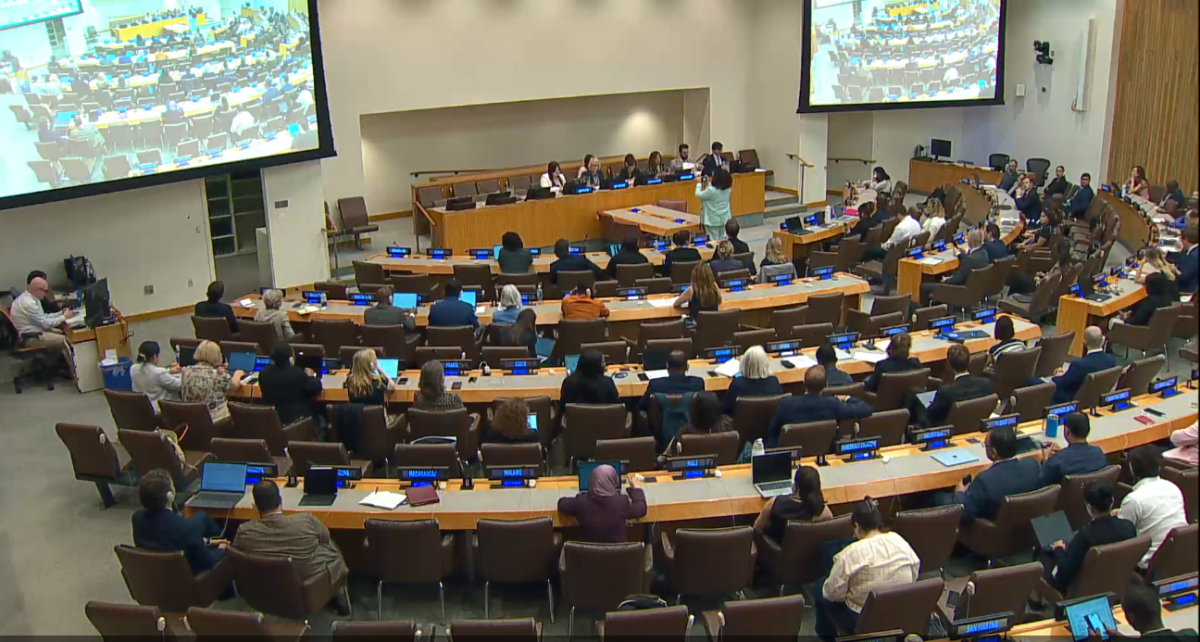
The vote took place at a special session of the Assembly of States Parties — the ICC's governing body, made up of the countries that have ratified the court's founding treaty — held at UN headquarters in New York. Eighty-two of the ICC's 125 member states voted in favor of removal, 13 voted against, and 11 abstained in a secret ballot. The removal was carried out under Article 46 of the Rome Statute, the treaty provision that governs the dismissal of ICC officials for misconduct or serious breaches of their duties (ICC).
The proceedings against Khan stem from sexual abuse allegations first reported in 2024. The complainant, a woman who worked for Khan at the ICC, has alleged that he engaged in coercive and non-consensual sexual behavior over an extended period. In June 2026, the ICC bureau issued a decision stating that Khan should be fired for an inappropriate sexual relationship with a junior staff member (Reuters). The executive committee of the ICC's governing body had earlier concluded that Khan committed serious misconduct, suspended him, and referred the matter to member states for a removal vote.
The diplomats who cast ballots reviewed findings from the ICC executive committee, a fact-finding report by a UN watchdog, and a legal analysis by a panel of judges. The ICC's governing body separately found no evidence to support claims that the complainant was being used by third parties, including intelligence agencies (The Guardian).
Khan has repeatedly denied all allegations. His legal team criticized the disciplinary process as procedurally unfair and stated that Khan would challenge the decision through all available legal mechanisms. Khan's representatives have suggested the allegations may be part of an effort to discredit him in response to his 2024 decision to seek arrest warrants for Israeli Prime Minister Benjamin Netanyahu. The complainant spoke publicly about the allegations in an interview with CNN's Christiane Amanpour on or around July 16, 2026, and denied being a state agent.
Danya Chaikel, the International Federation for Human Rights' (FIDH) representative to the ICC, has been among the civil society figures monitoring the proceedings, though the specific content of her public commentary is not detailed in the available record.
Khan was elected in 2021 to serve a nine-year mandate. His tenure saw the issuance of ICC arrest warrants for Russian President Vladimir Putin and Israeli Prime Minister Benjamin Netanyahu, actions that placed the court at the center of major geopolitical confrontations. The warrants for both leaders remain unaffected by Khan's removal. The ICC has also stated that Khan's disqualification has no impact on the ongoing case against former Philippine President Rodrigo Duterte (ICC). ICC judges had already disqualified Khan from the Duterte case on October 14, 2025, citing a conflict of interest (Reuters).
The ICC prosecution division, which comprises approximately 400 staff, now faces the transition to new leadership while managing active cases of extraordinary political sensitivity.
The broader context here is that the removal vote raises institutional questions extending well beyond Khan's individual case. The ICC has spent recent years working to establish credibility with member states and the public, and the spectacle of a chief prosecutor removed for sexual misconduct inevitably draws attention to the court's internal governance and accountability mechanisms. The scale of the vote — 82 states in favor against 13 opposed — suggests a broad consensus that the institution's legitimacy required decisive action, regardless of the geopolitical friction Khan's prosecutorial decisions generated.
At the same time, Khan's legal challenge is still pending. His team's procedural objections, if sustained by a review mechanism, could complicate the narrative of institutional closure. The defense's suggestion that the allegations were retaliation for the Netanyahu warrant, while rejected by the ICC's own investigation, taps into a preexisting discourse about the politicization of international justice — a discourse that Khan's high-profile warrants undeniably intensified. Whether that discourse now recedes or deepens will depend in part on how the court's next prosecutor navigates the same dockets.
The continuity of the Putin, Netanyahu, and Duterte cases is the most immediate operational reassurance for member states. But leadership transitions at institutions of this size rarely leave the casework untouched. The next prosecutor will inherit a docket shaped by Khan's strategic choices and will face pressure — from both advocates and hostile states — to either reaffirm or recalibrate the prosecutorial direction of the last five years.