Razer Blade 18 Aims at AI Work, Now with NVIDIA's Top Mobile GPU

Razer Blade 18 Aims at AI Work, Now with NVIDIA's Top Mobile GPU
Razer has announced a 2026 update to its Blade 18 laptop, built around NVIDIA's latest RTX 5090 GPU and Intel's Core Ultra 9 275HX processor. The company is pitching it as both a gaming laptop and a machine for AI development — saying it will deliver AI performance roughly 2.2 times faster than the previous Blade 18 generation.
The shift reflects a wider trend in the industry: high-end gaming laptops are increasingly used by AI researchers and developers who need powerful hardware they can carry with them.
What's Inside
The RTX 5090 GPU uses 175W of power — the maximum budget NVIDIA allows for this chip in a laptop form factor. That power limit constrains how fast the GPU can run compared to a desktop version, but it's still the most powerful mobile GPU available today. Paired alongside it is Intel's Core Ultra 9 275HX, a current-generation processor designed for workstations and high-end gaming machines.
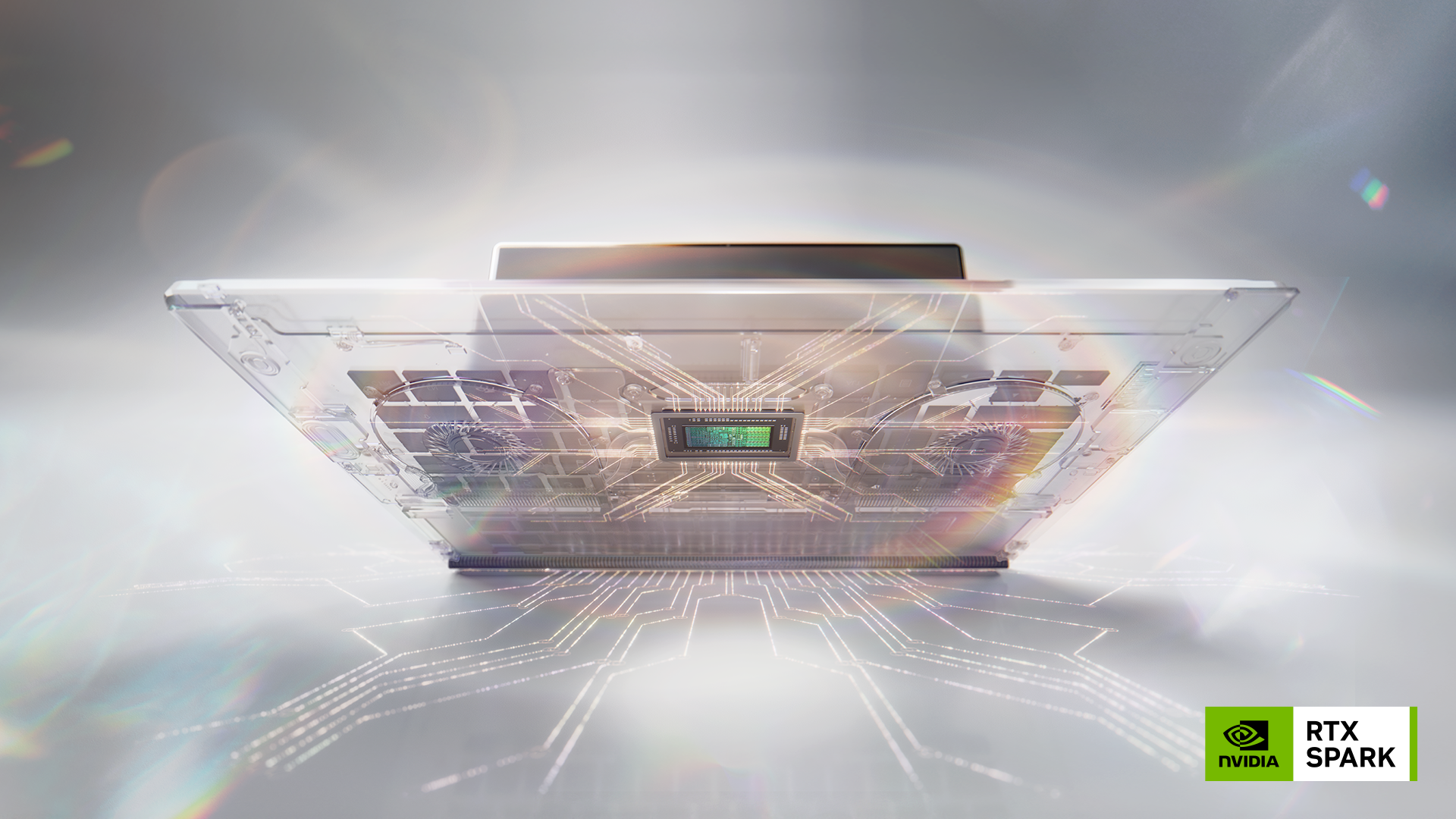
To handle the heat that all this power generates, Razer redesigned how the laptop cools itself. The company describes a "thermal hood design" with three fans and a vapor chamber — a cooling system that moves heat more efficiently than traditional approaches. Razer mentions improved thermal gel between components, though it hasn't shared exact specifications.
Display and Design
The 18-inch screen has been improved with higher brightness than previous Blade 18 models. Razer describes it as a "dual-mode display," though the company hasn't revealed exact brightness numbers, refresh rates, or color accuracy details yet.
The overall chassis shape stays largely the same, though internal space has been reorganized to fit the beefier cooling system.
Why AI Development Matters to Razer
Modern AI tools — particularly large language models like the ones behind ChatGPT — can run directly on a laptop's GPU without needing to send data to the cloud. The RTX 5090 is particularly good at this kind of work because it has specialized hardware built in to accelerate the calculations involved. Combined with the Core Ultra 9's built-in AI processor (called an NPU), the Blade 18 can handle local AI inference, image analysis model training, and other compute-heavy AI tasks entirely on the machine.
For developers and researchers, this matters because it means they don't have to upload sensitive data to cloud servers, and they don't depend on internet connectivity or cloud service costs for experimentation.
Blurred Lines Between Gaming and Work
Gaming laptops and AI workstations use similar underlying hardware — both need high-speed memory access, lots of processing cores working in parallel, and excellent cooling. We have seen this pattern before: gaming graphics cards became the foundation for cryptocurrency mining in the early 2010s, and then again for early deep learning experiments a few years later. But those were accidental markets; the hardware wasn't designed with those uses in mind.
This time is different. Razer, NVIDIA, and Intel are explicitly building these machines to serve both purposes. They recognize that AI developers need portability and power, while traditional workstation makers like Dell and Lenovo are heavy, expensive, and often designed more for office environments than for the kind of intensive local computation an AI researcher might want to do.
What We Don't Yet Know
Razer has opened pre-orders with promotional bundles (a Razer Skin and laptop stand), but hasn't announced final prices or which configuration options will be available when.
The real test will come when users actually try to run sustained AI workloads on the machine. A 175W power budget is ambitious for a laptop, and keeping temperatures stable during hours of training or inference work is different from the intermittent heat load gaming creates. How well Razer's cooling design handles that sustained load — and how its price compares to dedicated workstations — will decide whether this experiment succeeds.
Whether AI developers will accept a laptop that looks and feels like a gaming machine is also an open question. Gaming aesthetics (aggressive vents, RGB lighting, racing-car styling) have never been the norm in professional settings. That said, younger developers and researchers who grew up with gaming PCs may feel at home in that visual language, and the performance-per-dollar advantage could be compelling.