France and Spain Face Historic Wildfires as 330,000 Are Evacuated

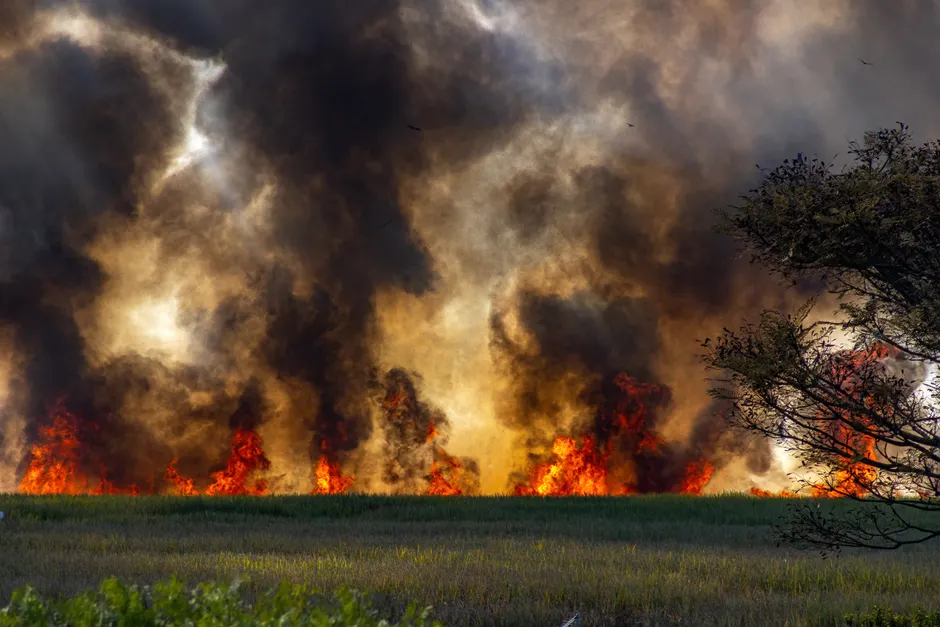
On July 26, 2026, another 55,000 people were evacuated from six towns south of Bordeaux in France's Gironde region, as a wildfire described by firefighting commanders as erratic and unmanageable consumed 42,000 hectares. That makes it one of the largest forest fires in France since the Second World War. The blaze shut down a 60-kilometre stretch of the A63 motorway leading to Spain and prompted military reinforcements to assist firefighters with brush clearance and fire breaks. BBC News
The latest evacuations bring the total displaced across France and Spain over the preceding week to more than 330,000. On the French Atlantic coast alone, about 20,000 people were evacuated from towns and vacation resorts, and some Bordeaux suburbs were cleared on July 25. BBC News
France has now seen approximately 98,000 hectares burn since the start of the calendar year. The Gironde fire alone accounts for nearly half that total, a figure that points to the concentration of destructive burning in the Landes forest and surrounding pine plantations, a region historically vulnerable to fire but rarely at this scale. BBC News
The fire is exhibiting extreme fire behavior. Captain Nicolas Braz, a firefighting operation leader, said the fire had created its own winds complete with whirlwinds and was "erratic and unmanageable." Dry vegetation and brisk winds continue to drive its spread. This phenomenon, known as pyroconvection, occurs when intense heat generates updrafts that pull in surrounding air, creating localized wind systems independent of broader weather conditions. Think of it as the fire building its own weather engine: the heat rises, drags in air from all sides, and whips up winds that push flames in unpredictable directions. BBC News
French Interior Minister Laurent Nunez told La Tribune the fire would take a long time to bring under control and that there would be no return for evacuated residents and tourists until it is contained. France mobilised its military, sending army reinforcements to assist firefighters. President Emmanuel Macron said France would rebuild and his government would be there "for as long as needed." BBC News
On the Spanish side of the Pyrenees, the crisis is equally acute. More than 90,000 people were evacuated from the regions around Madrid and Ávila. Madrid regional president Isabel Díaz Ayuso described the wildfires as the worst fire in the history of the region. Spanish Prime Minister Pedro Sánchez admitted there were "complex times ahead" regarding the wildfires. At least eight municipalities near Toledo were ordered to evacuate late on the preceding Saturday. Authorities in València confirmed the death of a man in a wildfire; the victim was in Manises, near Valencia, and the death was confirmed by the Spanish Interior Ministry on July 25. BBC News
Spain's worst wildfire in 2026 burned an estimated 32,000 hectares and forced evacuations in 34 municipalities. Earlier in July, the Guadalajara blaze forced more than 1,200 evacuations. Roughly 88,000 people were evacuated or confined to their homes across Spain because of three major fires. Reuters
The current crisis builds on a fire season that was already active across both countries well before the late-July escalation. A large wildfire ravaged the Fontainebleau forest in Seine-et-Marne, France, starting on July 12, prompting the Interior Minister to travel to the site amid a gendarmerie mobilisation. Nearly 10,000 vegetation fire outbreaks were recorded in France in 2026 as of mid-July, destroying nearly 32,000 hectares at that point, a figure the Gironde fire has since eclipsed on its own. Gendarmerie Nationale
Spanish Civil Protection had been tracking a comparatively modest fire season through the spring. Its June 7 tracking report listed only 200 people evacuated in preventive operations across six forest fires from January 1 to June 7. Fires at Luena (Cantabria), Totana (Región de Murcia), Ponteareas (Pontevedra), and Murcia were logged in the July 5 report. The gap between those figures and the 90,000-plus evacuations in July shows how quickly conditions deteriorated. Protección Civil
France had conducted a major forest fire exercise testing the Sécurité Civile earlier in 2026, and the Interior Ministry stated that the year saw reinforced mobilisation of internal security forces. That exercise, documented in June 2025, anticipated the kind of large-scale civil protection response now unfolding across the southwest. French Interior Ministry
The broader context here is a fire season that has overwhelmed preparatory measures on both sides of the Pyrenees. The combination of drought-stressed vegetation, sustained winds, and pyroconvective fire behavior has produced conditions that even reinforced civil protection systems, backed by military deployments, have struggled to contain. The Gironde fire's self-generated weather system places it in a category of extreme fire behavior that French commanders have few tools to address directly; the operational response shifts from suppression to containment and evacuation. Nunez's acknowledgment that the fire will take "a long time" to bring under control, combined with Macron's open-ended commitment to rebuild, signals that authorities are bracing for a prolonged crisis extending well into August.
For cross-border infrastructure, the A63 closure severs a critical freight corridor between France and Spain. For the tourism economy of the French Atlantic coast and the Madrid hinterland, the evacuations arrive at peak season. And for European wildfire management, the 2026 season is testing whether the institutional preparations of recent years, exercises included, are adequate to fires whose behavior exceeds the historical record.