Spain Declares National Emergency as Wildfires Force Tens of Thousands From Their Homes

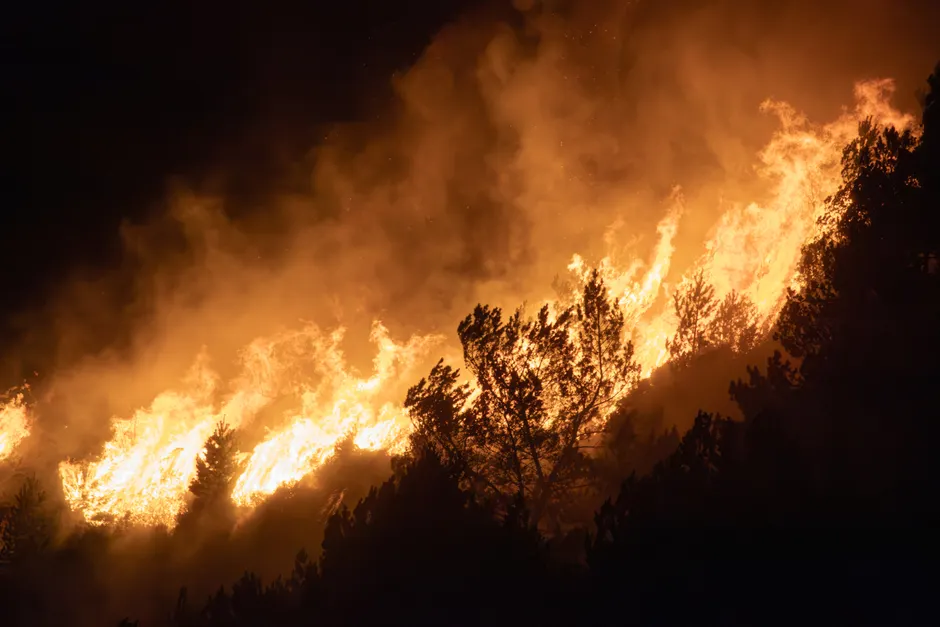
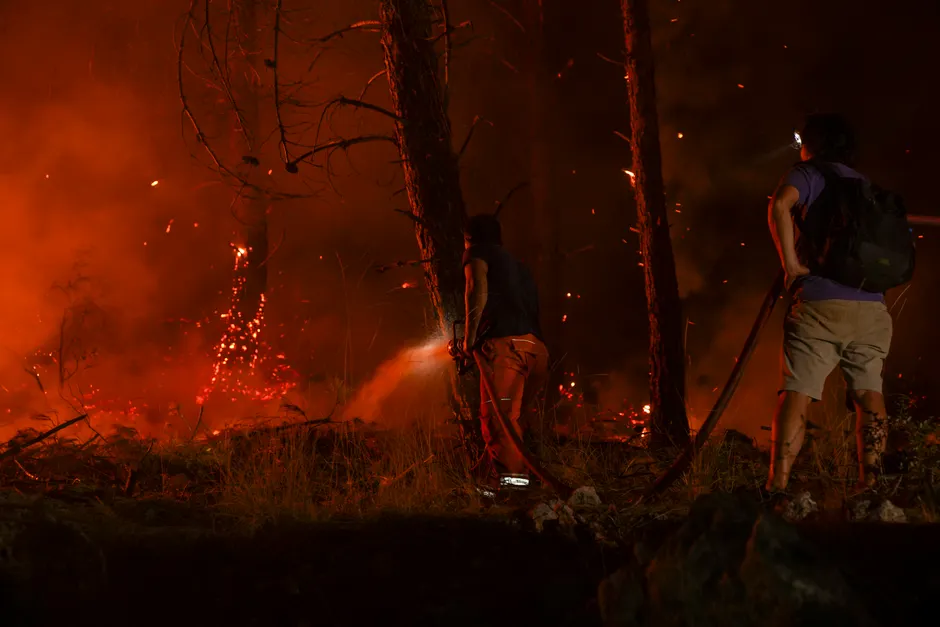
Spain declared a national emergency on July 24, 2026, in response to wildfires raging near Madrid and Avila, as fires across the central belt and southern Europe forced mass evacuations and claimed at least one life.
By July 25, more than 30,000 people had been forced from their homes in the Madrid region alone, while an additional 20,000 were confined indoors under shelter-in-place orders as crews battled flames complicated by high winds (Reuters). The Associated Press placed the total number of evacuees in central Spain at roughly 70,000, with some 34 villages cleared of residents across the affected zone (AP).
Among the hardest-hit communities were Villa del Prado, San Martin de Valdeiglesias, Pelayos de la Presa, and Aldea del Fresno, where more than 10,000 residents were evacuated as fires advanced on the southwestern fringe of metropolitan Madrid (Reuters). Spain's prime minister visited emergency services coordinating the Madrid firefighting effort on July 25 (AP).
A man died in a wildfire near Valencia, authorities reported on July 24, the first confirmed fatality in this fire cycle (Reuters).
The national emergency declaration came after days of escalating fire activity. Spain's largest wildfire of 2026 had been burning for a fifth day as of July 20, and in the central province of Guadalajara, a forest blaze continued uncontrolled for a sixth day by July 21, forcing the evacuation of more than 1,200 people (Reuters). The EU's Copernicus wildfire monitoring service reported that 104,423 hectares had burned across Spain in 2026 as of July 20, a figure that has almost certainly grown substantially since (Reuters).
The crisis extends well beyond Spain's borders. Wildfires across southern Europe have displaced more than a quarter-million people, according to AP reporting, with France also battling significant blazes (AP). That scale of displacement places this episode among the most significant wildfire-driven population movements in recent European memory.
The national emergency declaration is a tool that activates centralized coordination and resource allocation across Spain's autonomous communities, which normally run their own emergency responses. Think of it as the central government stepping in to pool resources regionally when local capacity is overwhelmed. Its invocation signals that regional firefighting capacity had been outstripped by the speed and geographic spread of the fires, and that military emergency units and cross-regional deployment of assets were required. The confinement orders — a less commonly discussed measure alongside evacuations — indicate that authorities judged certain areas too dangerous for either evacuation or remaining outdoors, effectively locking residents in place until conditions changed.
The wind factor is critical. Officials warned that high winds could make fighting the Spanish wildfires harder, complicating aerial suppression operations and raising the risk of spot fires (small new fires ignited ahead of the main fire front by blowing embers). Wind-driven fire behavior is particularly difficult to manage in Spain's central sierras, where steep terrain, dense vegetation after a wet spring, and prolonged heat create conditions for rapid fire spread.
The Copernicus figures matter for context. The 104,423-hectare tally as of July 20 captured only the early phase of what has since escalated into a national-scale event. The Guadalajara fire alone had been burning uncontrolled for six days by that point, and the Madrid and Avila fires that triggered the emergency declaration were still intensifying. The cumulative burned-area figure for 2026 will be substantially higher once the current blazes are contained and assessed.
For European wildfire management, the key variables to watch are whether the wind conditions forecast for the coming days allow aerial assets to operate, whether the military emergency unit deployments can establish containment lines around the Madrid-adjacent fires, and whether the broader southern European fire complex, stretching from Spain through France, draws on EU mutual assistance mechanisms such as rescEU. The displacement of a quarter-million people across the region also raises immediate questions about temporary shelter capacity and the longer-term question of rebuilding in fire-prone peri-urban zones that have expanded into historically forested areas.