A Strike on an Iranian Ship in the Caspian Sea Threatens to Pull Two Conflicts Closer
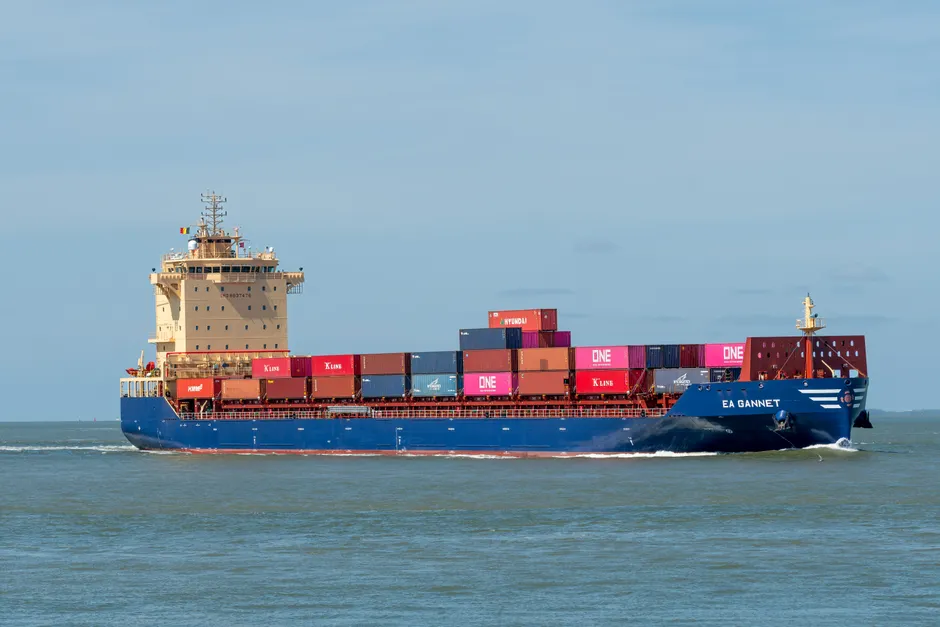
On July 26, 2026, Iran's Ministry of Foreign Affairs issued a forceful statement condemning what it described as a Ukrainian military attack on an Iranian commercial vessel in the Caspian Sea, an incident that killed one sailor and injured several others. The Iranian MFA statement, published on its official English-language website, asserts that "the head of the Ukrainian regime explicitly acknowledged the attack on the Iranian commercial vessel in the Caspian Sea" (Iranian MFA). Reuters first reported the casualty details on July 25 (Reuters), and The Guardian confirmed the death toll the following day in its Ukraine war briefing (The Guardian). Arab News reported that Iran's foreign ministry said the attack caused the ship "to explode, killing one sailor and injuring several others" (Arab News).
By July 27, Iran had escalated its rhetoric. Al Jazeera reported that Tehran warned Ukraine of retaliation and called the attack a "criminal act" (Al Jazeera). The threat of direct retaliatory action from Iran against Ukraine, whether through military force or through proxy channels (intermediary armed groups that Iran supports across the region), adds a new layer of danger for Kyiv in an already complex threat environment.
The New York Times published an analysis on July 28 titled "Ukraine's Strike on an Iranian Ship Could Bring Two Wars Closer" (NYT). The framing captures the central concern: the Caspian Sea has functioned as a logistics corridor linking Iran and Russia, and a Ukrainian strike on a vessel in those waters extends the Russia-Ukraine war's combat reach into a maritime space where Iran has direct coastal interests and a military presence.
Ukraine's justification for the strike, as reported by the Times, is that the Iranian vessel was transporting military cargo between Iran and Russia (NYT). This claim aligns with reporting from May 2026, when the Times documented that U.S. officials said Russia was shipping drone components to Iran via the Caspian Sea, helping Iran rebuild its offensive capabilities (NYT). That earlier reporting established a pattern of dual-use and military-technical cargo flowing along the Caspian route, which Ukraine now appears to have treated as a legitimate target under its broader strategy of intercepting Russian supply lines.
The Caspian Sea is bounded by five littoral (coastal) states: Russia, Iran, Kazakhstan, Azerbaijan, and Turkmenistan. It has no natural outlet to the world ocean, and its legal regime is governed by a 2018 convention among those states. A military strike on a vessel in these waters tests the convention's security assumptions, which were designed for an environment of commercial cooperation rather than active combat. The other three littoral states have not publicly commented on the incident.
Iran's characterization of the vessel as "commercial" directly contests Ukraine's framing of it as a military cargo carrier. This dispute over the ship's classification is not merely rhetorical. Under international law, the legal protections afforded to a commercial vessel differ substantially from those covering a military transport, and the targeting of a civilian ship on the high seas (or in a semi-enclosed body of water like the Caspian) carries different legal consequences than striking a vessel integrated into a military supply chain. Iran's MFA statement deliberately uses the phrase "commercial vessel" throughout, reinforcing its claim that the ship held protected status.
Iran's reference to Ukraine's leadership as "the head of the Ukrainian regime" rather than naming President Volodymyr Zelensky is a standard diplomatic signal of non-recognition or delegitimization, consistent with Iran's broader alignment with Russia's framing of the conflict. The language itself functions as a political posture as much as a legal argument.
The broader context here is the potential convergence of two conflicts that have until now operated in adjacent but largely separate theatres: the Russia-Ukraine war and the network of Iran-aligned military activity across the Middle East. Iran has been a materiel supplier to Russia, principally through Shahed-series loitering munitions (self-propelled explosive drones that circle a target area before striking) used against Ukrainian targets. Ukraine's decision to strike an Iranian-flagged vessel, rather than a Russian one, signals that Kyiv is willing to target Iranian assets directly when it assesses them to be part of Russia's war-sustainment apparatus. That willingness, if repeated, could prompt Iran to reciprocate against Ukrainian interests or assets through channels that extend beyond the Caspian Sea.
Whether Iran's retaliation warning translates into concrete action remains an open question. Iran's capacity to act against Ukraine directly is limited by geography; the two states share no border and sit roughly 1,500 kilometers apart at their closest points. Iran's leverage operates more naturally through its proxy network or through escalation of materiel support to Russia. The Caspian Sea itself, however, is a space where Iran holds naval presence and where future incidents could recur if the dual-use cargo flow continues and Ukraine maintains its interception posture.
The timing of the strike also intersects with the May 2026 U.S. intelligence finding on drone component shipments. If Ukrainian targeting was informed by that intelligence picture, the strike suggests a willingness to act on strategic supply-chain intelligence against Iranian assets, not merely Russian ones. That is a meaningful expansion of the war's target set.


