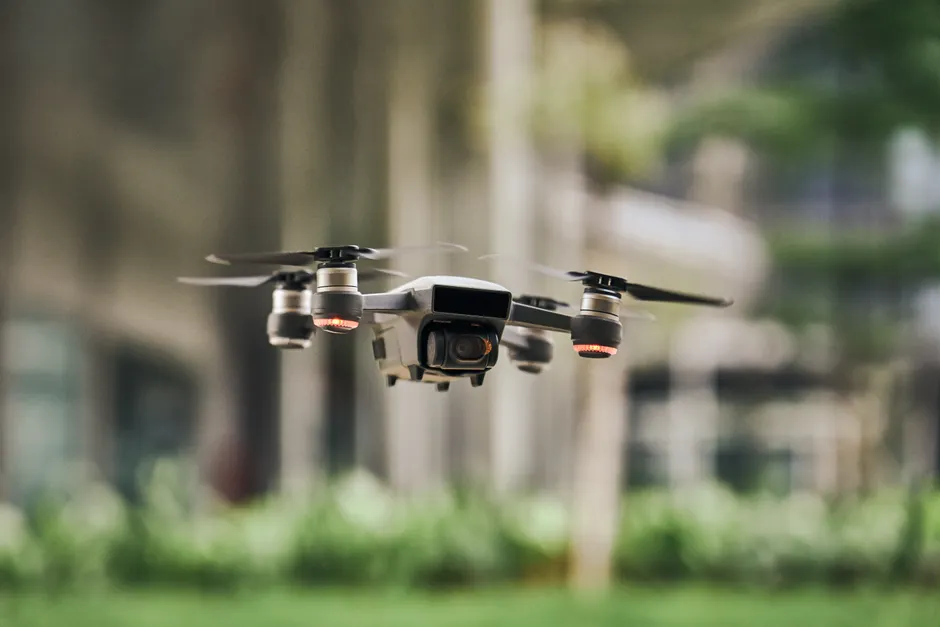
DoorDash Launches Its Own Drone Delivery Operation With FAA Certification

DoorDash has launched an in-house drone delivery service called DoorDash Air, backed by a Part 135 air carrier certification from the U.S. Federal Aviation Administration. That certification authorizes the company to operate a commercial drone delivery service in the United States. Co-founder and Chief Product Officer Stanley Tang announced the initiative in a blog post on July 29, 2026. TechCrunch
DoorDash Air was developed within DoorDash Labs, the company's R&D unit that previously produced Dot, an autonomous sidewalk delivery robot introduced in September 2025. The same team built a software system called the Autonomous Delivery Platform, designed to coordinate deliveries across sidewalk bots, human drivers, and now drones. Tang said the effort started from "what customer problem needed to be solved rather than what cool autonomous tech they could make."
The move into proprietary drone operations does not replace DoorDash's existing aerial delivery partnerships. The company will continue working with Wing, the Alphabet subsidiary, and Flytrex alongside building out its own fleet.
Initial operations will likely take the form of limited pilot programs. The aircraft will travel short distances while remaining within visual line of sight of the operator, the standard starting constraint for newly certified Part 135 operators. Think of it like a learner's permit for new drivers: you can operate, but only under close supervision and within a limited range. Longer-distance autonomous flights, the kind that would make drone delivery economically viable at scale, require FAA approval for Beyond Visual Line of Sight (BVLOS) operations. Amazon, Wing, and Zipline have already received such approval. DoorDash has not.
The regulatory path to BVLOS may be shortening. On July 10, 2026, Reuters reported that the FAA had proposed new rules allowing certified drone operators to fly beyond visual line of sight without individual waivers, with the rules potentially taking effect by the end of 2026. If finalized, that framework would remove one of the primary operational bottlenecks for DoorDash Air and other entrants still working under visual-line-of-sight constraints.
DoorDash is currently running a Drone Delivery Gift Card Giveaway with a $100 prize, open to residents of Dallas-Fort Worth and Charlotte with no purchase necessary. The giveaway signals which markets are likely to host the earliest pilot programs, though the company has not publicly confirmed specific launch cities or timelines.
The broader context here is a food delivery platform extending its logistics operations vertically rather than remaining purely an orchestrator of third-party capacity. DoorDash's existing partnerships with Wing and Flytrex gave it early exposure to aerial delivery without the capital and regulatory overhead of building and certifying its own operation. Launching DoorDash Air in parallel changes that posture. The Autonomous Delivery Platform, which already coordinates sidewalk bots and human drivers, becomes the integration layer that could route orders across all three delivery modes based on distance, payload, and availability.
The Part 135 certification is the critical enabler. It is the same air carrier certificate the FAA requires for any operator conducting commercial drone delivery, and obtaining it means DoorDash has cleared the operational, safety, and maintenance bar the agency sets for scheduled air transportation. The certification process typically takes months and involves demonstrating command-and-control procedures, contingency planning, and aircraft airworthiness.
The competitive landscape DoorDash Air enters is worth flagging. Amazon's Prime Air, Wing, and Zipline have each spent years and significant capital on BVLOS approvals, aircraft design, and last-drop delivery mechanisms. DoorDash is starting from a position of visual-line-of-sight-only operations, which limits useful range and payload economics. The proposed FAA BVLOS rule, if it takes effect by year-end, could narrow that gap quickly by replacing case-by-case waivers with a general regulatory framework. Until then, DoorDash Air's operational range will be constrained.
The decision to maintain partnerships while building a competing in-house capability is a hedge that makes sense at this stage. Wing and Flytrex handle markets and routes where DoorDash's own fleet is not yet operational; DoorDash Air will presumably scale into the highest-density, shortest-range segments first, where visual-line-of-sight constraints are least burdensome. Whether that creates channel conflict with partners who are also competitors remains an open question.
For a company that built its business on a three-sided marketplace of consumers, merchants, and gig-economy drivers, adding an owned aviation layer is a notable expansion of the asset base. The long-arc question is whether drone delivery becomes a meaningful percentage of order volume or stays a marginal capability optimized for narrow use cases. The answer depends less on DoorDash's technology and more on how quickly the FAA's BVLOS framework moves from proposal to enforceable rule.