Prince Harry and Co-Claimants Face £18.3 Million Gap in Legal Costs After Privacy Case Defeat

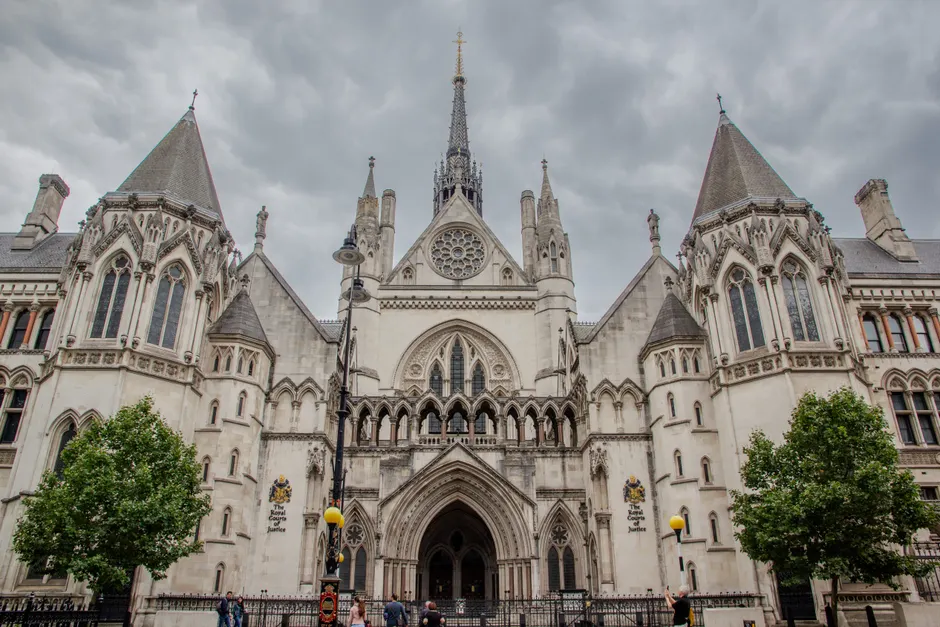
A two-day High Court hearing on legal costs began on July 29, 2026, after Prince Harry and six co-claimants lost their privacy lawsuit against Associated Newspapers Limited (ANL), the publisher of the Daily Mail and Mail on Sunday. The hearing focuses on a large gap between what the claimants' insurance covers and what ANL says it spent defending itself.
On July 7, 2026, Mr Justice Nicklin dismissed the claimants' case in full in a 426-page ruling — styled 'Lawrence & Others -v- Associated' with neutral citation [2026] EWHC 1637 (KB) (The Guardian; judiciary.uk). The seven claimants — Prince Harry, Doreen Lawrence, Elton John, David Furnish, Sadie Frost, Liz Hurley, and Simon Hughes — had sued ANL over allegations of unlawful information gathering, a term covering practices like phone hacking and blagging private information. The judgment references specific Mail on Sunday and Daily Mail articles, including a 2 September 2001 Mail on Sunday article headlined about 'Prince Harry on pram duty' (judiciary.uk).
The financial picture is stark. The claimants' combined insurance cover totals £16.2 million, while ANL's reported defence costs reach £34.5 million, creating a specific shortfall of £18.3 million (The Telegraph). Following the July 7 judgment, The Guardian's live blog reported that the claimants faced a potential legal bill of up to £50 million (The Guardian).
In the UK legal system, the losing party in a civil case typically pays a significant portion of the winner's legal costs. The court is now sorting out how much the claimants owe and on what terms. ANL is seeking an interim costs payment — a partial sum paid before the final costs are settled — of £9,950,624.37. The claimants have offered £8 million (The Guardian).
ANL's barrister Antony White KC argued that costs should be awarded on an indemnity basis. This is a stricter standard than the normal approach: the losing party pays the winner's legal costs without the usual requirement that those costs be proportionate to the case. White alleged the lawsuit was part of a campaign to show ANL had 'misled the Leveson inquiry' — the 2011–2012 public inquiry into British press ethics — and to pressure the government to implement the inquiry's second part. He further alleged that Prince Harry recruited Doreen Lawrence as a 'national treasure' to attract public sympathy and lend credibility to the claims (The Guardian).
The claimants' barrister Nicholas Bacon KC pushed back against indemnity costs. He pointed out that ANL's incurred costs of nearly £34.5 million exceeded its approved legal budget by more than £18.6 million — meaning ANL itself had overspent relative to what the court had previously agreed was reasonable. The claimants' allegations had targeted 77 journalists, editors, and executives, though only 23 were directly involved in the claims (The Guardian).
After the 11-week trial, Prince Harry and Doreen Lawrence issued a statement attacking the judge and calling the ruling a 'complete and obvious whitewash' (The Guardian). Prince Harry subsequently stated that Doreen Lawrence would not have to pay any of the legal costs from the failed case (The Guardian). Following the July 7 ruling, ANL editor-in-chief Paul Dacre issued a public statement (The Guardian).
A related earlier High Court judgment exists styled 'Various Claimants-v-ANL [2025] EWHC 1716 (KB)', published on judiciary.uk in July 2025 (judiciary.uk). The Guardian had previously reported on the case in a January 18, 2026 article headlined 'Prince Harry v the Daily Mail: high-stakes trial could have profound effects on UK media' (The Guardian).
The broader context here is that this costs hearing lays bare the severe financial stakes of high-profile privacy litigation. The £18.3 million gap between the claimants' insurance and ANL's defence costs leaves them in a precarious position as the court works through both the interim payment and the wider costs framework. The dispute over whether the stricter indemnity standard should apply, combined with the revelation that ANL overshot its own budget by a substantial margin, frames the financial argument. And the allegations about the motivations behind the lawsuit, including the claim that a claimant was recruited for public sympathy, inject a political dimension into what might otherwise be a purely financial proceeding.