Fed Holds Rates Steady at 3.50–3.75% in July 2026 — Gold Surges on the News

The Federal Open Market Committee voted at its July 28–29, 2026 meeting to keep the federal funds rate target range at 3-1/2 to 3-3/4 percent, extending a hold that has been in place since the start of the year. The decision was announced in a press release published July 29, 2026. Federal Reserve
In a companion action, the Board of Governors voted unanimously to maintain the interest rate paid on reserve balances (IORB) at 3.65 percent, effective July 30, 2026. The IORB is the rate the Fed pays banks on cash they hold in their reserve accounts at the central bank. It sits 15 basis points below the top of the target range — a basis point being one-hundredth of a percentage point — consistent with the Committee's operating framework for keeping the effective federal funds rate within the band. Federal Reserve
The target range has now been unchanged through all of 2026. The July 2026 Monetary Policy Report, published July 10, confirmed that the FOMC had maintained the 3-1/2 to 3-3/4 percent range since the beginning of the year, making the July decision the latest extension of that stance rather than a fresh pivot. Federal Reserve
A press conference followed the decision on July 29. Federal Reserve
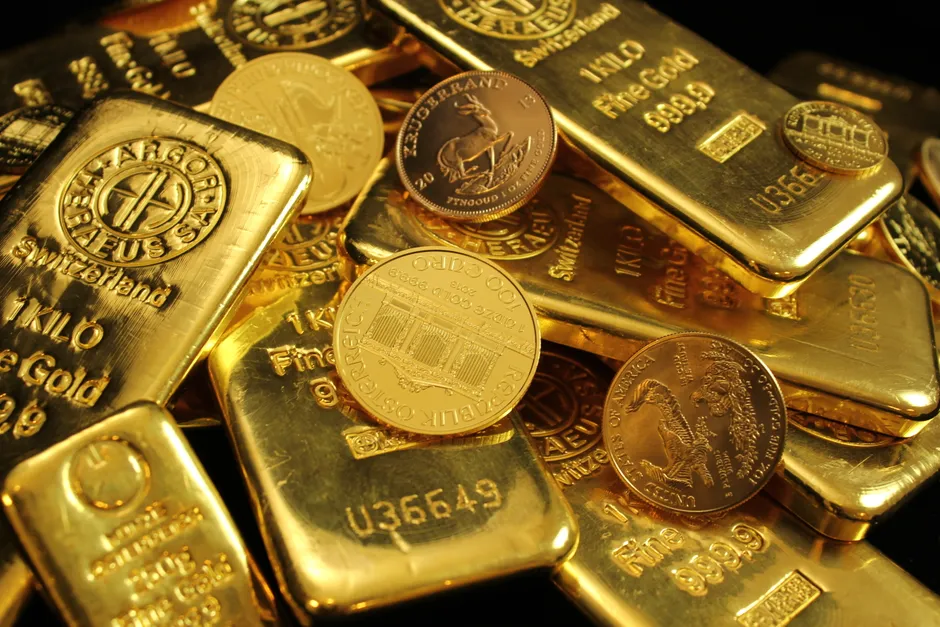
Spot gold rallied on the announcement, rising approximately 2 percent on July 29, 2026. By 2:55 p.m. ET, spot gold was up 1.9 percent at $4,101.99 per ounce. Reuters
The broader context here is that the gold move is the most immediately tradable signal from an otherwise expected decision. A 2 percent single-session rally in gold on a rate hold tells you the market was pricing in at least some probability of a cut, or at minimum a softer shift in the Fed's forward guidance — the signals policymakers give about where rates are heading. When neither materialized, that pricing flowed into gold, which pays no interest and tends to benefit when rate expectations fall. The magnitude, roughly $80 per ounce, is meaningful but not extraordinary for a post-FOMC session.
The IORB at 3.65 percent anchors the floor of the Fed's corridor system — the framework that keeps the effective federal funds rate from drifting outside the target band. Banks earning that rate on reserves held at the Fed have a clear opportunity cost benchmark: parking cash at the central bank earns a known return, which influences what they charge and pay elsewhere. For savers, the practical translation is that money market funds and high-yield deposit accounts continue to offer returns anchored to a 3.50–3.75 percent policy rate. For borrowers, variable-rate credit products, adjustable-rate mortgages, and floating-rate corporate loans remain priced off a federal funds rate that has not moved in seven months.
The unanimous Board vote on the IORB is worth noting. A 7–0 vote removes any public signal of internal dissent on the operational rate, even if the FOMC statement itself may contain more nuanced language about the path ahead. In the current cycle, unanimity at the Board level on a hold decision suggests the Committee sees no near-term urgency to adjust the stance of policy in either direction.
For portfolio managers and allocators, the key question is duration positioning — how far out on the maturity curve they sit. A prolonged hold at 3.50–3.75 percent means the front end of the yield curve remains anchored, and the carry trade on short-duration Treasuries and agency mortgage-backed securities continues to function as designed. The gold rally, meanwhile, signals that some participants were positioned for a dovish surprise they did not get. That positioning will need to unwind, and the pace of that unwind in gold and rate-sensitive equities will be the thing to watch in the sessions ahead.
Separately, for anyone attempting to trace the Fed's press release archive programmatically, the index page at federalreserve.gov/newsevents/pressreleases.htm organizes FOMC press releases by year with labeled sections from 2006 through 2026. The page requires JavaScript to render the full list of linked releases; the no-JavaScript fallback shows only year-navigation labels without individual release links. The page footer states "Last Update: March 13, 2017," suggesting the index structure has not been refreshed at the footer level in nearly a decade despite ongoing additions to the release list.