Two Meteor Showers Peak Together on July 30–31, 2026 — What to Expect

Two meteor showers — the Alpha Capricornids and the Southern Delta Aquarids — reach peak activity on the same nights, July 30–31, 2026, giving skywatchers a brief window of enhanced meteor viewing (Florida Today; News Herald).
What Each Shower Brings
The Alpha Capricornids are what astronomers call a minor shower — a stream of debris that Earth passes through annually, producing relatively few meteors per hour. EarthSky classifies them as peaking during the last week of July, with rates of no more than five meteors per hour at their best (EarthSky). That number falls well below what would count as a major shower. But the Alpha Capricornids compensate with quality rather than quantity: they are known for bright, slow-moving meteors and occasional fireballs — meteors bright enough to rival the planet Venus. A shower producing only five meteors per hour can still be visually striking if some of those are fireball-class. The shower's parent body is comet 169P/NEAT, which leaves behind the debris Earth encounters each year during this period.
The Southern Delta Aquarids add a second radiant to the sky during the same window. A radiant is the point in the sky from which meteors appear to fan outward — think of it like the vanishing point on a railroad track, where parallel rails seem to converge. The Southern Delta Aquarids generally radiate from the southern sky, which means visibility depends on how far north or south you are. The verified sources confirm the overlapping peak dates for both showers but do not provide specific hourly rate figures for the Southern Delta Aquarids.
Where and When to Watch
For observers in the Northern Hemisphere, the Alpha Capricornids' radiant sits in the constellation Capricorn, relatively low in the southern sky during late July. That positioning means southern-tier observers in places like Florida and California are better situated for viewing, which is reflected in regional reporting from those areas (Desert Sun; Florida Today).
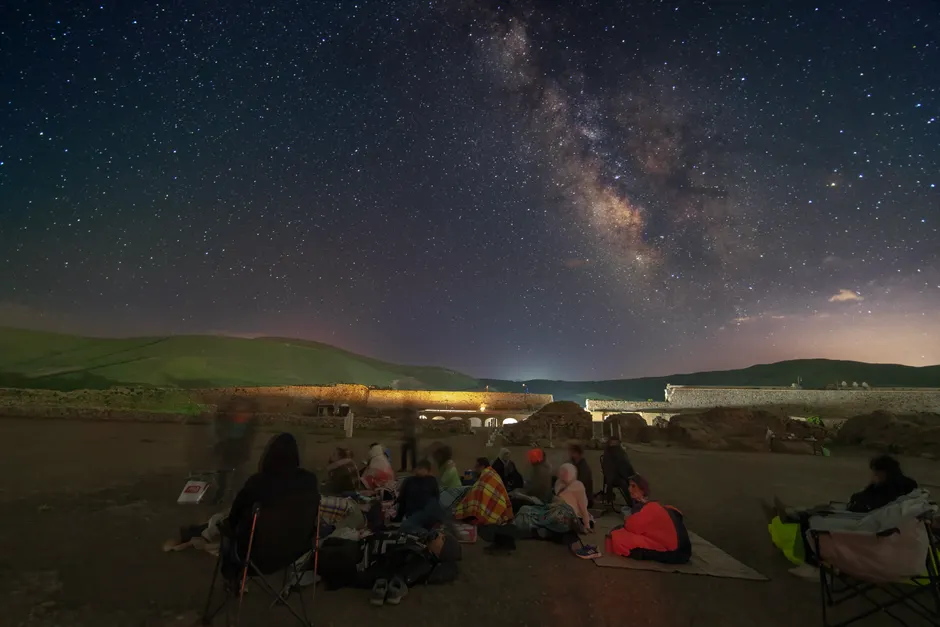
Viewing conditions depend on local weather, light pollution, and lunar illumination. The verified sources do not specify the lunar phase for the 2026 peak, so observers should check current lunar data to gauge how bright the sky will be. In general, the best meteor viewing requires a dark sky site away from urban light, with the radiant above the horizon. For both showers, the hours from after midnight to just before dawn typically offer the best geometry, as the radiant climbs higher in the sky.
The broader context here is that late July through mid-August is a densely packed stretch of the annual meteor shower calendar. The Alpha Capricornids and Southern Delta Aquarids peaks arrive just ahead of the Perseids, which typically peak in mid-August. The late-July dual peak serves as an early marker in a several-week stretch of elevated meteor activity. The overlap also creates a practical opportunity: rather than monitoring a single radiant, observers can watch two at once, increasing the total number of visible meteors even when neither shower is individually prolific.
For Coordinated Observers
The dual peak also matters for meteor observation networks and amateur astronomy groups that run coordinated counting campaigns. When two showers peak simultaneously, telling which shower a given meteor belongs to requires tracing its trail back to the correct radiant point. Meteors from the Alpha Capricornids trace back to Capricorn, while Southern Delta Aquarids meteors trace to a radiant in Aquarius. This disambiguation is standard practice in visual meteor observation, but it becomes more important when two showers contribute to the total visible count at the same time.
For those planning to observe, the nights of July 30 and July 31 are the core window. The Alpha Capricornids' low rate means patience is essential. The Southern Delta Aquarids supplement the count, but without a verified hourly rate figure in the available sources, observers should manage expectations. The combined display is best understood as a modest but accessible celestial event rather than a high-intensity peak — one that rewards sustained observation under dark skies.