Russia Bombards Ukraine, and a Missile Enters Polish Airspace: What We Know
Russia launched large-scale missile strikes on Ukraine around July 29, 2026, killing at least eight people, according to Radio Free Europe/Radio Liberty. The attacks included ballistic missiles — fast, self-propelled weapons that travel in a high arc and are difficult to intercept — targeting Kyiv, as reported by the city's mayor and confirmed by Reuters. Polish Prime Minister Donald Tusk said the strikes also targeted western Ukraine, bringing the bombardment close to NATO's eastern frontier.
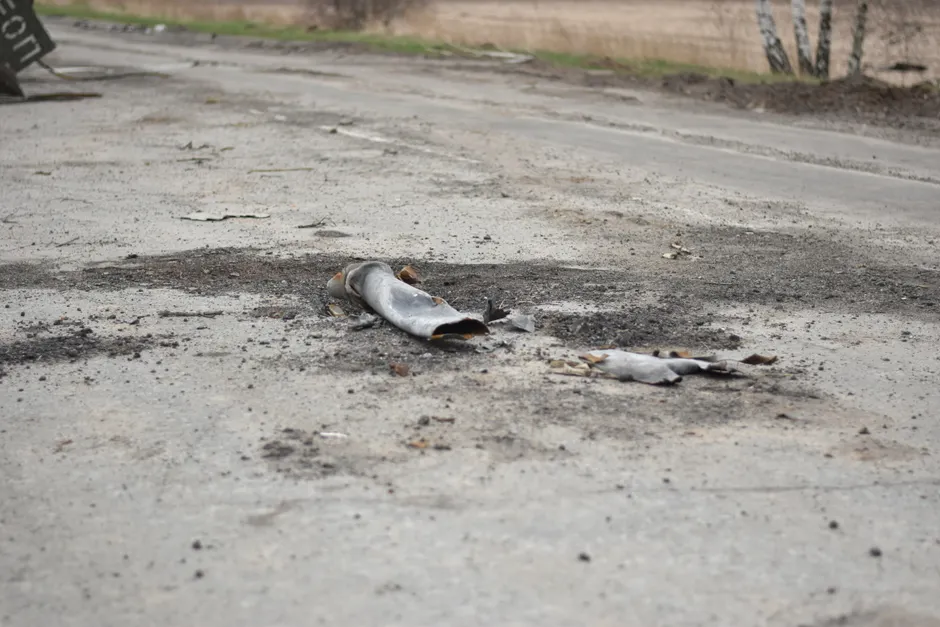
Poland scrambled fighter jets in response to the missile strikes on July 29, as Russian projectiles passed through airspace near the border (Reuters). Tusk stated that a missile apparently fired by Russia landed deep inside Polish territory (CNN). Ukraine's foreign minister confirmed that a Russian cruise missile — a guided, low-flying weapon with its own propulsion — crossed into Poland during the assault, as The Guardian reported. The New York Times noted that the cruise missile entered Polish airspace during the large-scale attack but reported that it remained unclear whether it had actually struck Polish territory.
An explosion was reported in Poland following the Russian missile attack on Ukraine, around July 30 (The Telegraph). Polish authorities launched an investigation into an object that crashed in eastern Poland, as reported by TVP World. The gap between the reported crash site and earlier claims of a deep-penetration strike points to how uncertain information can be during an active missile barrage.
Among the casualties, a Russian missile attack on Ternopil, Ukraine, killed a seven-year-old Polish citizen named Amelia, as documented by the Polish government. The death of a Polish national on Ukrainian soil in a Russian strike adds a bilateral dimension to the incident, separate from the question of whether Russian munitions physically hit Polish territory.
The sequence of events involves two distinct categories of incident that should not be conflated. First, a Russian cruise missile entered Polish airspace during the July 29–30 assault on Ukraine — a violation of NATO airspace that triggered Poland's scramble of fighter aircraft. Second, an object crashed in eastern Poland, prompting an active investigation by Polish authorities. The relationship between the airspace incursion and the crash site has not been definitively established in the reporting now available. Prime Minister Tusk's statement that a missile landed "deep inside Polish territory" is the most pointed assessment from a senior official, while the New York Times flagged that confirmation of an actual strike on Polish soil remained pending.
The broader context here is the persistent risk of spillover from Russia's air campaign against Ukraine into neighboring NATO states. Each such incident forces a real-time test of alliance consultative mechanisms under Article 4 of the Washington Treaty, which allows any NATO member to request a meeting when its territorial integrity or security is threatened. Poland has scrambled jets on multiple occasions during the war when Russian missile trajectories approached its airspace. The investigative process now underway — determining whether the object that crashed in eastern Poland was a Russian cruise missile, a debris fragment, or something else — will shape whether this incident is treated as a confirmed strike on NATO territory or a near-miss.
The death of a Polish citizen in Ternopil complicates the political calculus independently of the airspace question. It gives Warsaw a direct national interest in the attack's consequences regardless of whether Polish soil was struck. How Poland and its allies choose to frame the incident — as a violation requiring a collective response, or as an episode within the established pattern of border-area risk — will signal the threshold at which NATO considers such incursions actionable rather than something it can absorb without a formal response.
The investigation in eastern Poland is ongoing. The verified facts available at this point confirm a Russian cruise missile entered Polish airspace and an unidentified object crashed on Polish territory; they do not yet confirm that the two events involve the same object, nor that a Russian weapon detonated on Polish soil.