Russia's Coordinated Missile Barrage Across Ukraine: What Happened and Why It Matters

A coordinated Russian missile barrage across multiple Ukrainian cities killed at least seven people on 30 July 2026, with ballistic strikes hitting Kyiv, Kryvyi Rih, and Lviv in what Ukrainian officials described as a long-prepared mass attack.
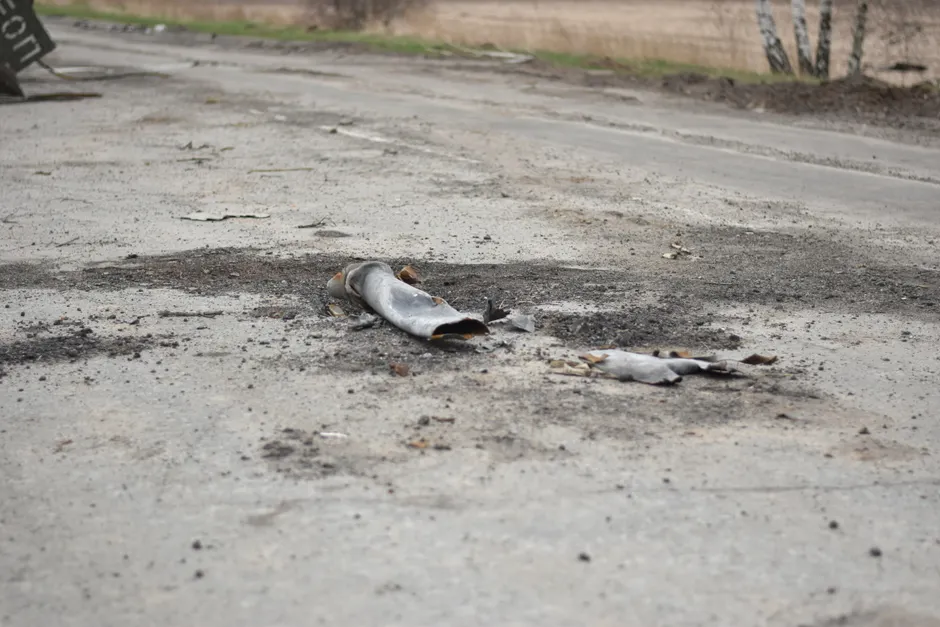
The deadliest single strike hit Kryvyi Rih, where an Iskander-M ballistic missile launched from Voronezh struck a private house housing a large family. Oleksandr Vilkul, head of the city's military administration, reported six killed: two girls aged five and twelve, and four adults. Eight more people were wounded, and Vilkul cautioned that the death toll could rise as rescue operations continued. (The Guardian)
In Kyiv, at least one person was killed. Mayor Vitali Klitschko reported fires breaking out across several districts and confirmed the capital was under attack from ballistic weapons. The strikes on Kyiv and the surrounding region constituted the primary target of the Russian assault, according to President Volodymyr Zelenskyy, who said Moscow had spent several days stockpiling missiles in preparation. (The Guardian)
Lviv, in western Ukraine, also came under fire. Mayor Andriy Sadovyi reported damage to residential buildings from Russian air attacks. The geographic spread of the barrage — from the central Dnipropetrovsk region to the capital and onward to Lviv near the Polish border — suggests a multi-axis targeting strategy designed to stretch Ukrainian air defence across the country's full depth. (The Guardian)
Late on 29 July, Zelenskyy had publicly warned that Russia was preparing a massive attack and assessed a high probability it would be carried out that night. The warning proved accurate within hours. (The Guardian)
The scale and tempo of these strikes fit a recognizable pattern throughout July 2026. On 6 July, Russian missile and drone attacks killed at least 22 people across Ukraine. Two days later, on 8 July, Russia fired 169 long-range weapons at Ukrainian targets in a single wave, killing four, including two in Kyiv. On 24 July, a Russian ballistic missile struck a site near Kyiv hosting defense-related activities, killing ten. (AP News, AP News, AP News) An earlier July attack killed six, including a child, and wounded 29. (AP News) Russian forces have also employed repeated-strike tactics, hitting the same location after first responders arrive. One such follow-on strike in the Odesa region damaged State Emergency Service (DSNS) equipment on 18 July, though rescuers were sheltering at the time and sustained no injuries. (Ukrinform)
The Iskander-M, the weapon system used in the Kryvyi Rih strike, is a road-mobile short-range ballistic missile system with a range of roughly 400 to 500 kilometers. Fired from Voronezh, well inside Russian territory, it can reach central Ukrainian cities on a trajectory that allows minimal interception windows, particularly when air defence interceptors are depleted or absent. Think of it like a fastball in baseball: the shorter the distance and the flatter the arc, the less time a catcher has to react. Kryvyi Rih had previously absorbed an eight-missile Russian salvo earlier in July, according to Ukrinform reporting. (Ukrinform)
Zelenskyy used the aftermath of the 30 July strikes to repeat a standing request to Ukraine's allies: the provision of air defence missiles that Kyiv's current interceptor inventory lacks. The specific gap, as framed by the Ukrainian presidency, concerns ballistic missile defence, where Russia, in Zelenskyy's words, "makes its bet" through sustained Iskander and similar launches. (The Guardian, President of Ukraine)
The attack also reverberated beyond Ukraine's borders. Poland scrambled fighter jets and an early warning aircraft to safeguard its airspace during the Russian barrage, a standard NATO contingency response when Russian missile activity approaches Polish territory but one that reflects the persistent spillover risk of strikes in western Ukraine. (The Guardian)
On Russian soil, a Ukrainian drone strike targeted a Wildberries warehouse in Penza, according to regional governor Oleg Melnichenko, who reported one injury and roughly 200 people evacuated. (The Guardian)
The broader context here is one of escalation and attrition converging. July 2026 has produced multiple mass-casualty ballistic strikes on civilian and defense-adjacent targets, a steady cadence of large-volume long-range weapon launches, and a Ukrainian air defence interceptor shortage that directly affects the survival rate of those under fire. The killing of two children in Kryvyi Rih, aged five and twelve, is not an anomaly in this campaign. It is the predictable output of a targeting methodology that uses ballistic missiles against residential structures when the defender's interceptor inventory cannot reliably engage them. Whether Ukraine's partners respond to the latest air defence appeal with accelerated deliveries will shape whether August follows the same trajectory.