KOSPI Jumps 16% in a Day, but Korean Stocks Are Still Down Big From Their Peak

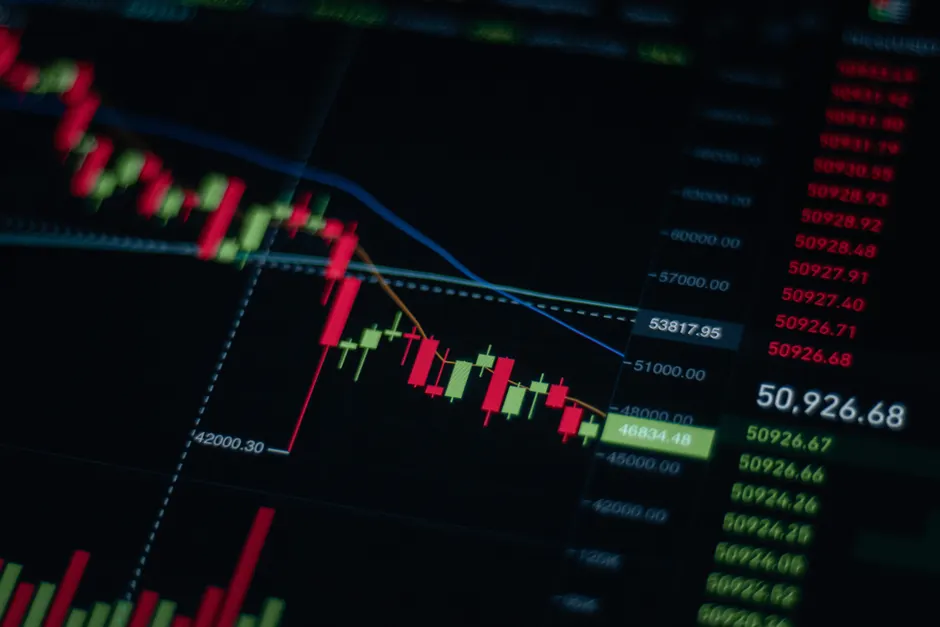
South Korea's KOSPI Composite Index surged more than 16% on July 31, 2026, closing at 6,369.71, up from 5,593.56 the prior session, as a rally in chipmaking stocks led a broader Asian equities rebound. The move, reported by the Wall Street Journal, was attributed to renewed investor enthusiasm around artificial intelligence (WSJ).
The single-day jump arrives after a punishing stretch for Korean equities. The KOSPI had set a record close of 9,114.55 on June 22, 2026, before shedding more than 20% and entering bear-market territory — the standard label for a 20% decline from a recent peak — by July 8 (Reuters). That drawdown was driven by sharp volatility in chipmaker shares, which the WSJ had flagged weeks earlier as pushing the market into a "danger zone" (WSJ). The July 31 close of 6,369.71 still sits well below the June record, meaning the index remains in bear territory by the standard 20% threshold despite the ferocious one-day rebound.
SK Hynix, a central player in the Korean chip trade, had planned a $28 billion offering, a capital-raising event that points to the scale of investment flowing into memory and AI-adjacent semiconductor capacity (WSJ). The offering had been announced earlier in July, before the broader chip selloff intensified.
The renewed AI enthusiasm driving the Korean rally stands in tension with the immediate reaction to U.S. big-tech earnings released the prior week. Alphabet shares fell more than 7% following its Q2 2026 earnings release, even as results were characterized as strong, because the company raised its 2026 capital expenditures forecast to a range of $195 billion to $205 billion, a projected increase of roughly $15 billion (Forbes; Yahoo Finance). Fortune reported that Q2 2026 earnings from Meta, Microsoft, Apple, and Amazon were feeding into a broader market revolt over AI spending levels (Fortune).
The divergence is notable. U.S. investors punished Alphabet for signaling heavier AI infrastructure spending, while Korean semiconductor equities rallied on the same theme. One interpretation is that the KOSPI surge reflects a mean-reversion bounce — a snap back from deeply oversold conditions — rather than fresh fundamental conviction. The index had lost roughly 30% from peak in roughly five weeks before July 31's rebound. Whether that bounce has legs depends on whether the AI capex cycle, which Alphabet's revised forecast confirmed is accelerating, ultimately translates into sustained demand for the memory and logic chips that Korean fabs produce.
Also on July 31, the Bank of Japan concluded a two-day monetary policy meeting and held its short-term policy rate unchanged at 1.0%, as widely expected (Bloomberg; Reuters). The BOJ had lifted its benchmark rate in June before pausing in July. The central bank reiterated its willingness to raise borrowing costs further in the future (Reuters). The BOJ's official Statement on Monetary Policy is published on its English-language website (BOJ).
The yen's reaction was modest. USD/JPY rose to 160.5370 on July 31, up 0.63% on the session, though the Japanese currency had strengthened 1.25% against the dollar over the trailing month (Trading Economics). The rate hold, combined with forward guidance signaling further normalization — a gradual shift away from ultra-low interest rates — leaves the BOJ on a gradual tightening path while markets price the timing of the next move.
The broader context here is that Asian equities are caught between two crosscurrents. On one side, the AI capex cycle is accelerating, with Alphabet alone now guiding to as much as $205 billion in 2026 spending, and Korean chipmakers positioned as critical suppliers in that supply chain. On the other, U.S. equity markets are treating escalating capex with skepticism, particularly when revenue from AI products has not yet caught up to the investment outlay. The KOSPI's 16% single-day surge is the most dramatic expression of that tension to date, but it follows a 30% drawdown that was itself driven by chip-stock volatility. Investors weighing the Korean rally should separate the direction of the AI investment cycle, which the verified earnings data confirm is still accelerating, from the question of whether current chip-stock valuations have adequately priced in the execution risk in that cycle. The WSJ's own characterization of the chips rally as a "danger zone" in late June was not invalidated by one strong session.