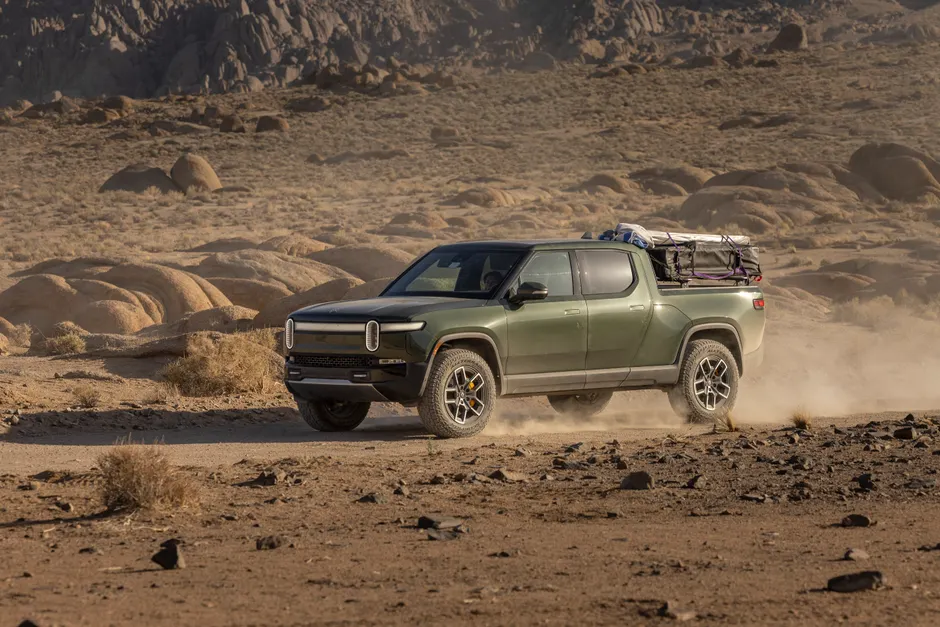
Slate Truck First Drive: A $24,950 EV Pickup Stripped to the Essentials

The Slate Truck, a single-motor, 181-horsepower all-electric pickup from Michigan-based Slate Auto, has had its first press drive. The vehicle that emerged from an hour behind the wheel is defined as much by what it lacks as by what it does. No paint. No stereo. No touchscreen. A small LCD display behind the steering wheel with no elaborate startup sequence. A plastic key fob that must be physically inserted into a dashboard slot to start the vehicle. Drive is engaged by pulling the right stalk down to D. Engadget
The entry price is $24,950, which Slate markets as the "Most Affordable Truck in America." PR Newswire That figure is up from the sub-$20,000 target the company originally announced, an increase attributed to federal policy changes under the Trump administration. Engadget
The Truck is a two-seat vehicle with a five-foot bed rated to haul 1,550 pounds and tow 2,000. Range is up to 205 miles per charge. The 2027 model-year vehicle ships from the factory in a single configuration, built on Slate's proprietary "Slateboard" architecture, which combines body-on-frame construction (the same approach used by most traditional trucks, where the body sits on a separate steel frame) with ultra-high-strength steel. Slate Auto The platform is modular by design, intended for customization and accessorization over time. Slate will sell a $5,000 SUV kit that adds a second row of seats and a hard top covering the bed, allowing the vehicle to be converted into an SUV, work truck, or other configurations. Slate Auto
The company reports the Truck has fewer than half the parts of a typical truck. PR Newswire Body panels are contoured specifically to make vinyl wrapping easy, which matters because the vehicle ships unpainted. The interior relies on tactile controls — physical buttons and switches rather than a central display. PR Newswire
The driving experience, based on the roughly one-hour first drive conducted by Engadget, is modest. Throttle response is relaxed, especially in reverse, and the vehicle runs out of steam by around 30 mph. The reviewer spun the rear wheels twice during the test, which suggests the single motor's 181 horsepower is more than the chassis can always put down cleanly. Interior plastics were described as unpleasant to touch and not much better to look at. Engadget
Slate Auto is backed by Jeff Bezos and raised $650 million in funding in April 2026. Reuters The company has promised deliveries will begin before the end of 2026. Autoweek
The base vehicle is referred to internally and in marketing as a "blank" Slate truck. Reuters The logic is straightforward: by stripping out everything that can be added later, Slate minimizes factory complexity, parts count, and assembly cost. The buyer who wants a stereo, a second row, or a painted finish pays for it through accessories and kits rather than through trim levels negotiated at a dealership.
The broader question is whether this approach finds a market at $24,950. The original sub-$20,000 price would have made the Truck a genuinely disruptive entry point into EV ownership. At $4,950 more, the value proposition narrows, particularly when the $5,000 SUV kit is factored in for buyers who need more than two seats. A configured SUV approaches $30,000 before any additional accessories, which places it in territory occupied by more conventional used and new options.
The parts-reduction strategy is worth examining. Fewer than half the parts of a typical truck means fewer suppliers, fewer assembly steps, and fewer failure points. It also means fewer things to accessorize around if the aftermarket ecosystem Slate is betting on does not materialize. The modular Slateboard platform and the single factory configuration are coherent engineering decisions aimed at keeping manufacturing capital expenditure low. The tradeoff is that the vehicle itself, as delivered, is austere in a way that goes beyond mere minimalism. Unpleasant interior plastics and a drivetrain that tapers off above 30 mph are not features that can be wrapped or accessorized away.
Slate has built a vehicle that is easy to understand and hard to dismiss. A sub-$25,000, American-built EV pickup with a 205-mile range and real utility capacity addresses a segment of the market that no major automaker currently serves at that price point. The question is whether the execution, particularly in drivetrain performance and interior material quality, can clear the bar that the concept sets. The first drive suggests it clears it narrowly, if at all. Deliveries before the end of 2026 will provide the answer.