Greece Battles New Wildfire Surge as France and Spain Enter Recovery

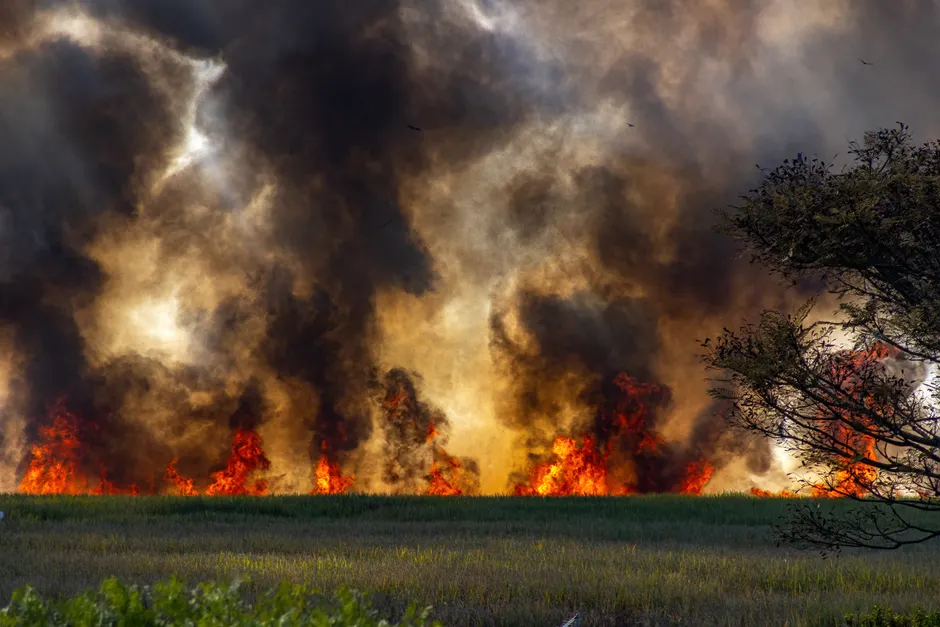
Powerful winds pushed wildfires deeper into western Attica on August 2, forcing Greek authorities to order fresh evacuations as the country's firefighting aircraft were grounded — unable to descend to the sea to collect water. The fire, which started near Agios Vasileios on Friday, swept toward the seaside community of Porto Germeno and into the forested Geraneia mountains west of Athens, threatening villages and an industrial district outside the city of Megara. Three more communities — Kandili, Agia Skepi, and Toutouli — were ordered evacuated as the blaze advanced. The Guardian
Nearly 500 firefighters and 23 aircraft were deployed against the western Attica fire, but the winds intensified the blaze and made it impossible for some aircraft to drop low enough to scoop seawater. Firefighters evacuated 254 people by sea from Agios Vasileios on Friday and another 12 from Porto Germeno on Saturday. Greek prime minister Kyriakos Mitsotakis was briefed on the operation, with authorities particularly concerned about Porto Germeno, a seaside community on the Gulf of Corinth. The Guardian
The Greek fire brigade had been at maximum alert since July 31, warning that fire risk was particularly high across the Attica peninsula. On August 1, authorities flagged extreme wildfire risk across Boeotia, Attica, and Evia for the following day. Nearly 2,500 people were evacuated overnight, and reinforcements were brought in on Saturday when winds were expected to strengthen. Reuters
Three firefighters have died battling the wildfires in Greece, according to Reuters. The fatalities add to three firefighter deaths recorded across southwestern France and central Spain in the 48 hours before July 26, bringing the confirmed firefighter death toll from the 2026 Western European wildfire crisis to at least six. Reuters
The broader crisis spans three countries. In France, the largest wildfire remained contained as of August 2 after 224,000 people were forced to flee — what may have been the largest peacetime evacuation in French history. Active fire pockets still burned across 420 sq km (162 sq miles) of devastated forest. Nearly 3,000 firefighters were deployed against France's Gironde megafire and a second blaze in Provence that had stopped advancing but remained uncontained. The Guardian
Spain's major fires stopped advancing as of August 2, but the combined evacuations across France and Spain have driven roughly a third of a million people from homes and holiday sites. The French evacuation figure alone climbed from approximately 220,000 on July 26 to 224,000 by August 2, while Spain had seen more than 75,000 evacuated with a further 30,000 ordered to evacuate as of July 26. The Guardian
The crisis began intensifying in late July. Around July 23, more than 10,000 people were evacuated overnight in southwestern France as a rapidly spreading wildfire tore through at least 2,400 hectares. By July 30, France, Spain, and Greece were simultaneously battling major wildfires, with Spain bringing one blaze under control but facing new threats. Reuters
The climatic backdrop is stark. Europe has heated at more than twice the global average since the 1980s, according to the EU's Copernicus Climate Change Service. Scientists at World Weather Attribution, a research collaboration that studies how climate change influences individual extreme weather events, calculated in a rapid analysis that human-caused climate change doubled the likelihood of the extreme fire conditions that fuelled the French blazes. The Guardian
The geographic shift in the crisis is notable. France and Spain, which bore the brunt of the evacuations and structural damage in late July, now appear to be in a stabilization phase: fires contained or stopped advancing, even if not fully extinguished. Greece, by contrast, is in the acute phase, with winds actively expanding the fire front and grounded aircraft compounding the challenge. The pattern fits a well-documented dynamic in Mediterranean wildfire response: containment gains can be erased within hours when wind patterns shift, and the loss of aerial water-scooping capability removes the primary rapid-response tool for fires in mountainous terrain where ground access is limited.
The attribution science linking these events to human-caused climate change adds a policy dimension. When World Weather Attribution can state that climate change doubled the likelihood of the conditions behind the French fires, it moves the conversation from general climate trends to specific event accountability. For governments facing reconstruction costs, insurance claims, and the political question of whether current emergency-response capacity is suited to a warming continent, that distinction matters. The Copernicus finding that Europe warms at twice the global rate suggests that the 2026 crisis is not an anomaly but part of a trend, and that operational planning built on historical baselines may be systematically underestimating risk.