The U.S. and Japan Bought Yen Together — What Happened and Why It Matters

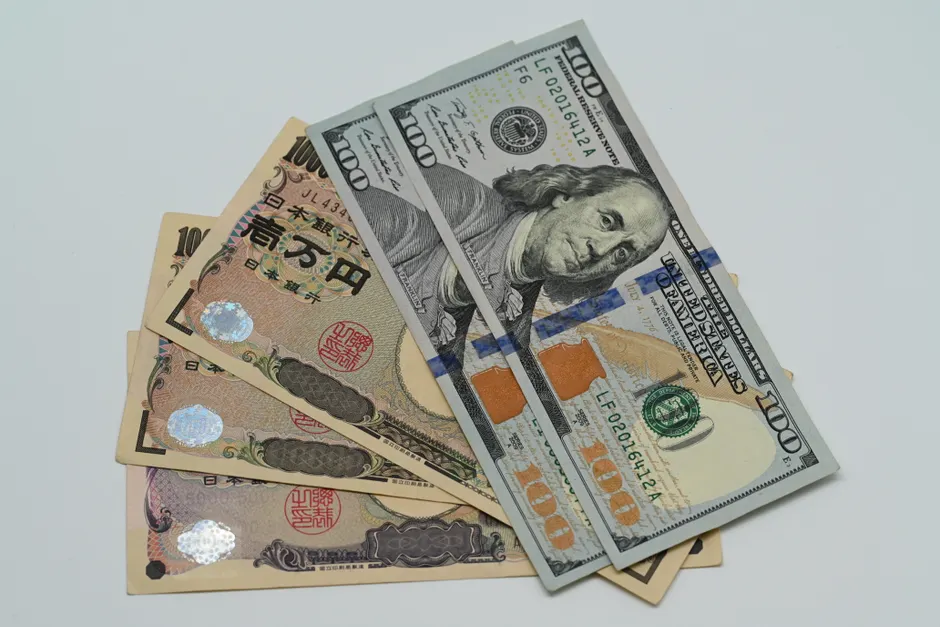
The United States and Japan confirmed a rare, coordinated yen-buying intervention in early August 2026, after the yen slid to 40-year lows against the dollar. The yen surged more than 1% to 155.20 per dollar following the announcement. The U.S. Treasury bought yen to support the Japanese currency, marking Washington's first joint yen-buying intervention with Tokyo (Reuters).
The Japanese government executed its side of the operation during New York trading hours on Thursday, according to a market source (Reuters). Tokyo and Washington then publicly confirmed the joint action, an unusual step for two governments that have carefully managed the optics of currency policy over the past two years (Al Jazeera; Reuters).
This is not the first time the two governments have coordinated on the yen. On June 17, 1998, U.S. monetary authorities intervened in foreign exchange markets, purchasing $833 million worth of Japanese yen in the context of Japan's plans to strengthen its economy. That episode, drawn from the Treasury's own Exchange Stabilization Fund history, remains the prior precedent for joint U.S.-Japan yen support.
The intervention follows a sustained campaign of unilateral Japanese action. Japan's Ministry of Finance conducted foreign exchange intervention operations totaling ¥11,734.9 billion during the period from April 28, 2026 through May 27, 2026 (Ministry of Finance, Japan). That came on top of a ¥5.5 trillion ($35 billion) intervention in July 2024, when pronounced yen depreciation pressure prompted unilateral action (U.S. Treasury FX Report).
According to the U.S. Treasury's July 2026 FX report, Japan's Ministry of Finance has in recent years cited excess volatility or speculative pressures as the rationale for actual or verbal interventions to support the yen (U.S. Treasury July 2026 FX Report). The current round of joint intervention appears to extend that rationale to a bilateral format, though the Treasury's own framing has been measured. A joint statement from the U.S. Treasury and Japan's Ministry of Finance, issued in September 2025, recorded Japan's agreement to continue close consultations with the U.S. on macroeconomic and foreign exchange matters (U.S. Treasury). That consultative commitment now appears to have translated into operational coordination.
The Bank of Japan's monetary policy stance forms part of the backdrop. On June 16, 2026, the BOJ decided to encourage the uncollateralized overnight call rate to remain at around 1.0 percent (Bank of Japan). The central bank had separately committed to reducing its monthly Japanese government bond purchase amount by roughly ¥400 billion each calendar quarter, a plan announced in July 2025 (Bank of Japan).
To understand why the yen keeps sliding despite all this intervention, it helps to know about the interest-rate differential. That is simply the gap between what you earn holding yen-denominated assets versus dollar-denominated ones. When U.S. interest rates are much higher than Japan's, investors have an incentive to sell yen and buy dollars to capture that higher return. This is sometimes called the carry trade: borrow in a low-interest currency (yen), invest in a high-interest currency (dollars), and pocket the difference. As long as the gap stays wide, that trade keeps downward pressure on the yen.
The BOJ's policy rate of 1.0% remains low by developed-market standards. Meanwhile, the bank is engaged in quantitative tightening — gradually reducing its purchases of Japanese government bonds, which nudges long-term interest rates upward over time. But that tightening is happening slowly: ¥400 billion per quarter. The combination of a still-low policy rate and a gradual bond-buying reduction has kept Japan's rates far below U.S. rates, sustaining the differential that drives the carry trade and, with it, downward pressure on the yen.
The broader context here is that unilateral intervention by a single central bank, even at the scale Japan deployed in April and May 2026, faces structural limits when interest-rate differentials remain as wide as they are. The carry trade incentives that pressure the yen do not resolve from a one-time currency purchase. Bringing the U.S. Treasury in as a co-intervenor signals that Japanese authorities concluded their standalone firepower was insufficient to shift the trajectory. Whether this coordinated action proves more durable than unilateral efforts depends on whether policy convergence — particularly the path of U.S. rates relative to the BOJ's 1.0% call rate — narrows the differential that drives the trade.
The last time Washington bought yen alongside Tokyo, in 1998, the intervention preceded a sustained yen recovery, though attributing that reversal solely to the intervention would be simplistic; broader macro conditions and the Asian financial crisis dynamics were also in play. The current episode carries a different set of conditions: a BOJ in the early stages of quantitative tightening, a Federal Reserve whose own rate trajectory is the subject of intense speculation, and a yen that had already absorbed over ¥11 trillion in unilateral intervention this year without holding its ground.