John Oliver on Police Surveillance Tech: What It Does, Where It Falls Short, and Why It Matters
On August 2, 2026, John Oliver devoted a segment of Last Week Tonight (Season 13, Episode 19, titled "Cyclospora & Police Surveillance Technology") to the surveillance technologies now used by US law enforcement and the civil liberties questions they raise (The Guardian).
Oliver's argument had two parts: many of the tools feeding local police surveillance centers have real technical flaws, and some of those same systems have recently been turned against immigrant communities. A local mayor quoted in the segment compared modern police surveillance to "Big Brother on steroids." Oliver responded to that characterization directly in a supplementary YouTube Short published on the Last Week Tonight official channel on August 3, 2026 (YouTube).
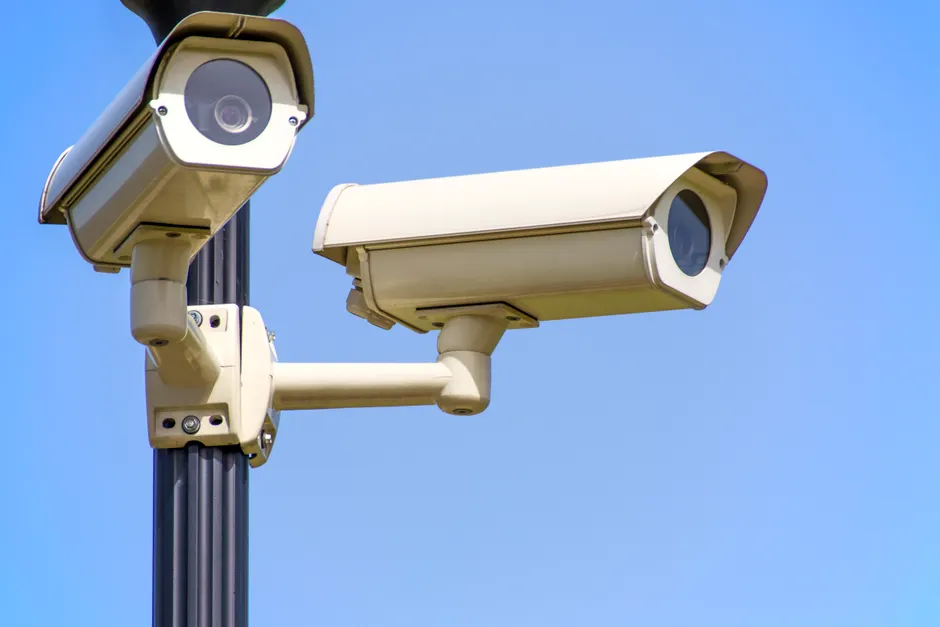
The segment walked through the specific tools that make up what is often called "predictive policing" — a term for systems that use data and sensors to anticipate where crime might occur or who might be involved, rather than only investigating crimes already committed. These tools include cameras, license plate readers, microphones, and cell-site simulators (devices that mimic cell towers to capture phone data). Oliver described the combined effect as a "digital form of stop and frisk," the controversial police practice of detaining and searching people on suspicion alone.
New Orleans illustrates the scale. The city has more than 2,000 surveillance cameras. A New Orleans police officer told the program that without those cameras, they would "absolutely not" have been able to determine who was the shooter and who was the victim in a recent case. That operational benefit is the central tension Oliver identified: the same infrastructure that helps solve violent crimes also creates lasting records of ordinary, lawful movement.
Police also tap into a much larger network — roughly 85,000 privately operated cameras across the United States, including those owned by businesses and homeowners. The software company Fusus has advertised the ability to let police request all camera footage from businesses in a given area "at the click of a button." Fusus is also building tools to let police livestream footage from private homeowners' Ring cameras. In Rialto, California, the relationship between public authorities and private camera operators is formalized in law: businesses there are required to give authorities access to their security footage.
More than 200 US jurisdictions use a microphone system called ShotSpotter, which listens for the acoustic signature of gunfire and alerts police when it thinks it hears gunshots. The problem: ShotSpotter frequently misidentifies fireworks, nail guns, and other loud noises as gunfire, producing false alerts that send officers to locations where no crime has taken place.
Automated license plate readers (ALPRs) photograph every vehicle that passes and keep records of its movements for 30 days. At least 35% of ALPR alerts are false alarms, according to a study cited in the segment. Oliver pointed to a case in Denver where police pulled over a car full of children after the system mistakenly flagged it as stolen. The actual stolen vehicle was a motorcycle from a different state that happened to share the same license plate number.
Oliver argued that even when these systems work exactly as designed, they remain "wildly invasive." Cameras and license plate readers can track a person's movements over time — revealing whether they attended a protest, visited an abortion clinic, or engaged in other constitutionally protected activity. The privacy concern, in his framing, does not depend on malfunction; it is built into the system itself.
The segment aired amid a national debate over how far law enforcement data collection should go, especially where it overlaps with immigration enforcement. Oliver's decision to foreground the use of surveillance tools against immigrant communities places the segment within a broader policy conversation about the role and limits of local police cooperation with federal immigration authorities.
The broader context here is the absence of a coherent federal framework governing local police surveillance. The technologies Oliver catalogued are purchased at the city level, governed by a patchwork of state and local rules, and increasingly woven into private-sector infrastructure through platforms like Fusus. The result is a surveillance network whose reach is shaped less by democratic debate than by vendor sales pitches and police department budget decisions. Oliver's segment does not propose specific legislation, but the reporting it draws together makes visible the gap between the systems already in operation and the legal frameworks meant to constrain them.


