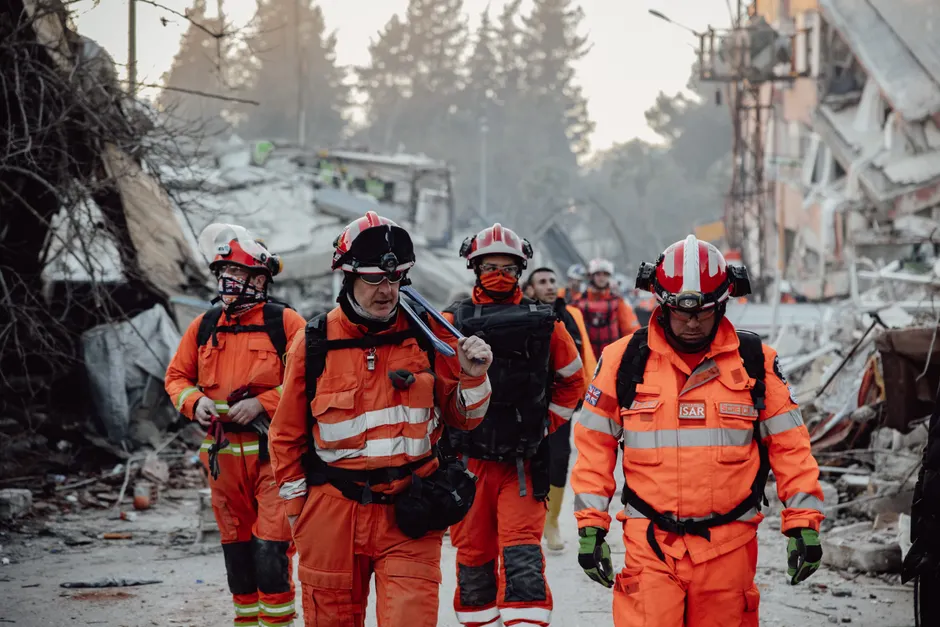
Venezuela's Earthquake Death Toll Tops 6,000 as Recovery Slowly Grinds Forward

Venezuela's confirmed death toll from the June 24 double earthquake has reached 6,125, National Assembly President Jorge Rodriguez announced on August 3, 2026, six weeks after the magnitude 7.2 and 7.5 tremors devastated the coastal state of La Guaira and the capital Caracas (Al Jazeera). Rodriguez also reported that 61,000 people have been treated in hospitals since the disaster.
The figure has climbed steadily through weekly updates. Within 24 hours of the quake, the toll stood at 188 with 1,520 injured. It rose to 1,430 by June 27, then 1,719 by June 29, 4,490 by July 12, 4,829 by July 15, 5,069 by July 17, and 5,546 by July 25, before surpassing 6,000 in the latest count. Earlier National Assembly figures recorded 16,740 injured, 17,907 people affected overall, 6,462 rescued alive, and 430 aftershocks — smaller tremors that follow the main quake. The U.S. Geological Survey had estimated in the immediate aftermath that more than 10,000 deaths were possible.
The physical destruction is staggering by any metric. The World Bank has placed damage at nearly $20 billion. Rodriguez said only 16.5 percent of debris has been removed so far, a figure that six weeks into the crisis reveals the scale of the logistical challenge facing Venezuelan authorities.
Recovery is being managed under the interim presidency of Delcy Rodriguez, who heads the government following the U.S. military raid in January 2026 that abducted former President Nicolas Maduro. That operation removed Venezuela's head of state by force, and the current administration is now steering the country through its worst natural disaster in modern memory under extraordinary political conditions. The search-and-rescue phase drew 1,600 foreign rescuers into the country by late June. The State Major for Transitional Camps is evaluating plans to accelerate housing construction, and on July 31 the National Assembly passed the Law on the Special Regime for the Leasing of Real Estate for Housing, its tenth law of the 2026–2031 constitutional parliamentary period.
The National Assembly has also announced that a political dialogue would begin during the first week of August in Caracas, a development that sits alongside the earthquake response rather than subordinate to it. Whether that dialogue addresses the governance vacuum created by Maduro's removal or focuses on disaster coordination remains an open question, though the Assembly's recent legislative activity — including the authorization of Manuel Castillo as ambassador to Belarus and advances in classifying animal mistreatment as a criminal offense — suggests a legislature attempting to maintain institutional normalcy amid crisis.
The trajectory of the death toll deserves a closer look. The steepest acceleration came in the first three weeks, from 188 on June 25 to 5,069 by July 17, an increase that likely reflects both bodies recovered from collapsed structures and deaths among the injured in overwhelmed hospitals. The pace has slowed since mid-July, with roughly 1,000 additional deaths confirmed over the subsequent two weeks. The 61,000 hospitalizations figure suggests the total affected population remains substantially higher than the 17,907 recorded in the July 25 National Assembly update, though the two metrics are not directly comparable as the latter may count displaced persons rather than medical cases.
Venezuela sits along the boundary between the South American and Caribbean tectonic plates — the large slabs of rock that make up Earth's crust — making seismic activity a structural feature of its northern coast. A simultaneous magnitude 7.2 and 7.5 event striking La Guaira and Caracas in close succession compounds the engineering challenge: buildings weakened by the first shock face catastrophic failure in the second, and rescue operations launched after the first tremor are themselves endangered by the second. The USGS projection of more than 10,000 possible deaths, issued in the quake's immediate aftermath, now appears prescient rather than alarmist, though the confirmed toll has not yet reached that threshold.
The broader context here is one of compounding pressures. At 16.5 percent debris removal after six weeks, the pace of physical recovery is the metric most revealing of capacity constraints. Venezuela's economy, already under years of U.S. sanctions (government-imposed trade and financial restrictions), faces a reconstruction bill approaching $20 billion with no clear external financing pathway. The political dialogue scheduled for August may determine whether that reconstruction proceeds under unified authority or fragmented management.