Guatemala's Fuego Volcano Erupts Again: Evacuations Ordered Amid Lava and Ash

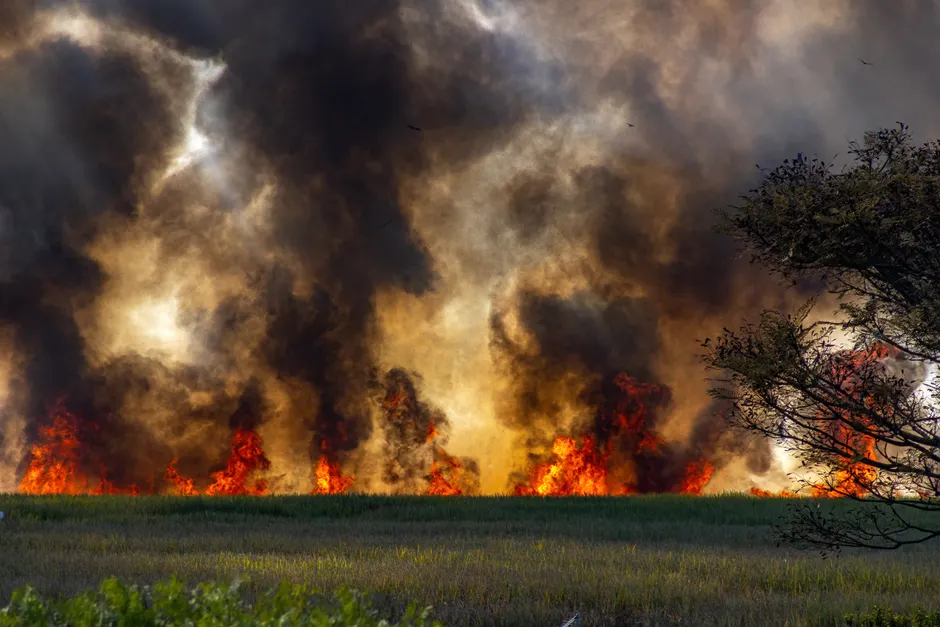
Guatemalan authorities ordered evacuations around the Fuego volcano on 4 August 2026 as the stratovolcano — a tall, cone-shaped volcano built from layers of lava and ash — entered a renewed eruptive phase. Lava flowed from its crater, and pyroclastic currents (fast-moving, superheated clouds of gas, ash, and rock fragments) descended its south-eastern slope AP News. At least two villages on the volcano's flanks have been evacuated BBC News. Guatemala's disaster management agency, Conred, issued a nationwide orange alert — the second-highest alert level — in response to the escalation BBC News.
The current eruption began on Monday, with Fuego spewing lava and ash. Pyroclastic flows continued to move down the south-eastern flank early Tuesday BBC News. Lava was visible emanating from the crater on 4 August, observed from San Juan Alotenango AP News. Conred warned that the eruption could produce further pyroclastic flows and billowing ash clouds, and urged residents to keep windows and doors closed BBC News.
A bulletin published by Conred on 3 August 2026 detailed its actions during the current eruptive phase and specifically warned the public not to cross or remain in river channels, known locally as cauces, during the descent of lahars from the volcano Conred. Lahars are volcanic mudflows — mixtures of pyroclastic debris and water that rush down river valleys at high speed, not unlike concrete pouring down a slope. They pose a particular secondary hazard in areas downstream. The 2026 lahar season at Fuego was confirmed as underway by INSIVUMEH, Guatemala's national institute of seismology, in a bulletin dated 24 April 2026 INSIVUMEH.
Fuego is one of the most active volcanoes in the Western Hemisphere, located 16km west of Antigua, a UNESCO World Heritage site and major tourist destination BBC News. Conred has warned visitors and locals to refrain from approaching or remaining in areas at risk, particularly on the volcano's slopes BBC News. Lessons were cancelled in schools close to the volcano due to the eruption BBC News.
The current activity follows months of sustained eruptive behavior. An INSIVUMEH bulletin dated 25 February 2026 noted that Fuego is characterized by recurrent explosive activity of 5 to 15 events per hour INSIVUMEH. On that same date, Conred reported up to 12 explosions per hour at the volcano Conred. By 14 April 2026, Conred reported up to 11 explosions per hour, generating gas and ash columns reaching 4,800 meters Conred. Conred has also noted that the volcano maintains vulcanian-type activity — short, explosive bursts typical of volcanoes with thick, sticky magma — with weak explosions during the night and early morning producing ash columns of 4,200 to 4,500 meters Conred.
For hazard monitoring, INSIVUMEH has maintained permanent monitoring of Fuego during its eruptive phase, working in coordination with Conred's continuous monitoring efforts INSIVUMEH. On 20 July 2026, INSIVUMEH reported that the volcano was maintaining ash dispersion. Conred's most recent informational bulletin, No. 235-2026, confirms that Fuego continues to exhibit activity with ash emission Conred. Within the broader regional context, Conred has reported that the Fuego, Pacaya, and Santiaguito volcanoes remained within their average activity parameters, with Fuego registering weak and moderate explosions at a rate of 7 to 13 per hour and ash columns reaching approximately 4,000 meters Conred.
The stakes of this eruption are grounded in recent history. More than 200 people were killed when Fuego erupted in 2018, many caught in fast-flowing pyroclastic flows in the Las Lajas ravine BBC News. The 2018 disaster drew attention to the lethal speed of pyroclastic density currents — the same type of flow now descending Fuego's south-eastern flank. An INSIVUMEH bulletin documented that a Fuego eruption on 9 and 10 March produced pyroclastic density currents, a reminder of the persistent hazard these flows present during the current eruptive cycle INSIVUMEH.
The coordination between INSIVUMEH and Conred reflects a framework designed to provide early warning and continuous situational awareness during sustained volcanic activity. The issuance of a nationwide orange alert places Guatemala's civil protection system at its second-highest readiness level, mobilizing resources for evacuations and public safety measures as the current eruptive phase continues.
The broader context here is that Fuego's recurring activity tests the resilience of Guatemala's monitoring and evacuation systems each time the volcano enters a new eruptive phase. With the memory of 2018 still fresh, the speed of Conred's response and public compliance with evacuation orders will likely determine how this episode compares to past ones. The volcano's pattern of frequent, moderate explosions punctuated by more intense phases means that sustained vigilance, rather than one-time evacuations, is the operational norm for communities living on its slopes.