Spokane Arson Arrest: What the Case Against Aaron Farinacci Reveals

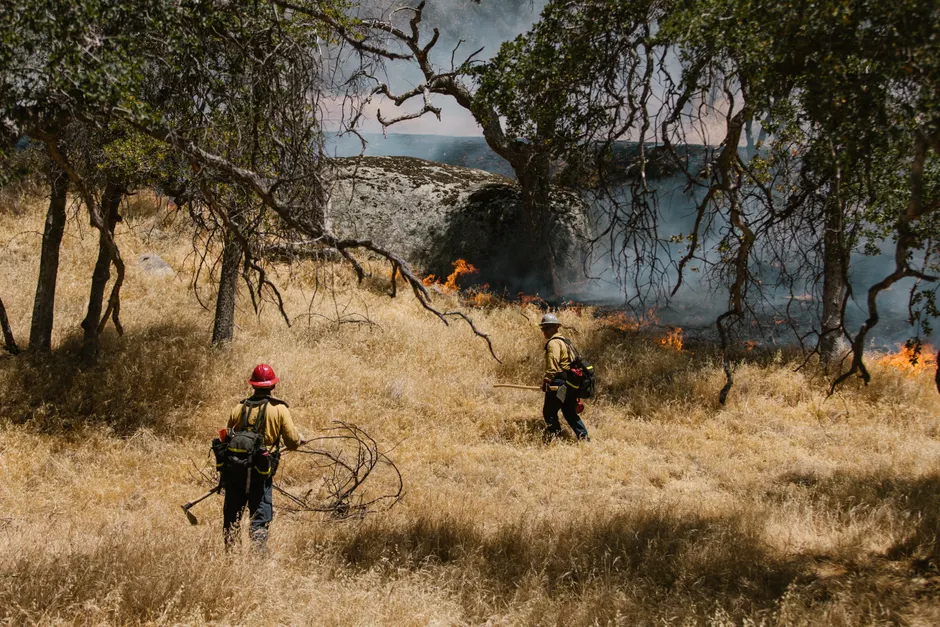
Spokane County authorities arrested Aaron Farinacci, 37, on August 3, 2026, charging him with first-degree arson for allegedly starting the Old Trails fire, the largest of three major wildfires burning across the county. The fire was first reported on August 1 at approximately 12:00 p.m. and has contributed to a wildfire crisis across Washington state, where more than a dozen large blazes are active. Fires around Spokane have scorched more than 10,000 acres (The Guardian).
Farinacci was taken into custody without incident with the assistance of a SWAT team after a judge signed an arrest warrant (NBC News). He is being held on $1 million bail. Spokane County's official arrest announcement identified Farinacci as a convicted felon (Spokane County CivicAlerts).
Law enforcement first contacted Farinacci shortly after the Old Trails fire began. Spokane County Sheriff John Nowels said witnesses identified Farinacci kneeling in brush near the fire's origin point. He was initially released without charges while investigators worked to build enough evidence to justify an arrest, a standard known as probable cause (The Spokesman-Review). Upon his eventual arrest, authorities reported that Farinacci had waterproof matches, cigarettes, and a butane lighter in his possession. Farinacci has denied setting the fire (The Guardian).
Farinacci's criminal history extends well beyond Washington. He previously served approximately a decade in prison for manslaughter and aggravated assault stemming from the 2010 killing of his father in Arizona. He was released from probation in early 2024. A probation officer at the time noted that Farinacci had a stable residence but had not completed a court-ordered mental health evaluation or domestic violence treatment program (The Guardian).
The Old Trails arrest was not Farinacci's first encounter with fire investigators. He was questioned in connection with two separate fire investigations in 2025 but was not charged in either case. In July 2025, several "bus-sized" fires occurred near the Spokane River and Farinacci's apartment. The following month, police searching for a wildfire suspect at a state park found Farinacci sitting on a bench, appearing out of breath and wearing a green T-shirt, the same color shirt he was seen wearing on the day of the Old Trails fire (The Guardian).
The arrest comes as Spokane confronts an extraordinary fire season. The Old Trails fire is the largest wildfire burning in the Spokane area, one of three major incidents in Spokane County alone (OPB). Statewide, more than a dozen large blazes are stretching firefighting resources across Washington.
The broader context here matters for how the case may unfold. The gap between Farinacci's initial questioning and his arrest, during which he was released and later re-apprehended with a SWAT team, reflects the standard investigative approach in arson cases. Witness identification alone often does not meet the probable cause threshold, the level of evidence police need to make an arrest, without supporting physical evidence or fire-origin analysis. The items reportedly found in his possession at arrest, combined with the witness placement near the fire's origin, likely furnished the additional weight prosecutors needed.
Farinacci's documented history of prior fire-related contacts in 2025, none of which resulted in charges, creates both an evidentiary opportunity and a potential vulnerability for the prosecution. Prior uncharged conduct can support a pattern argument at trial but may also give the defense grounds to argue investigative bias or a rush to judgment after failed prior cases.
The incomplete court-ordered mental health and domestic violence treatment, flagged by his probation officer before his release from supervision in early 2024, raises questions about post-incarceration oversight. Whether those gaps in compliance were pursued aggressively enough, or whether the probation system lacked the leverage to enforce them once Farinacci was no longer under active supervision, is a question that may surface as the case proceeds through the courts.
First-degree arson in Washington carries severe sentencing exposure, particularly when the offense involves a wildfire that endangers life and property. Farinacci's prior felony record, including a violent offense, could enhance sentencing if he is convicted.