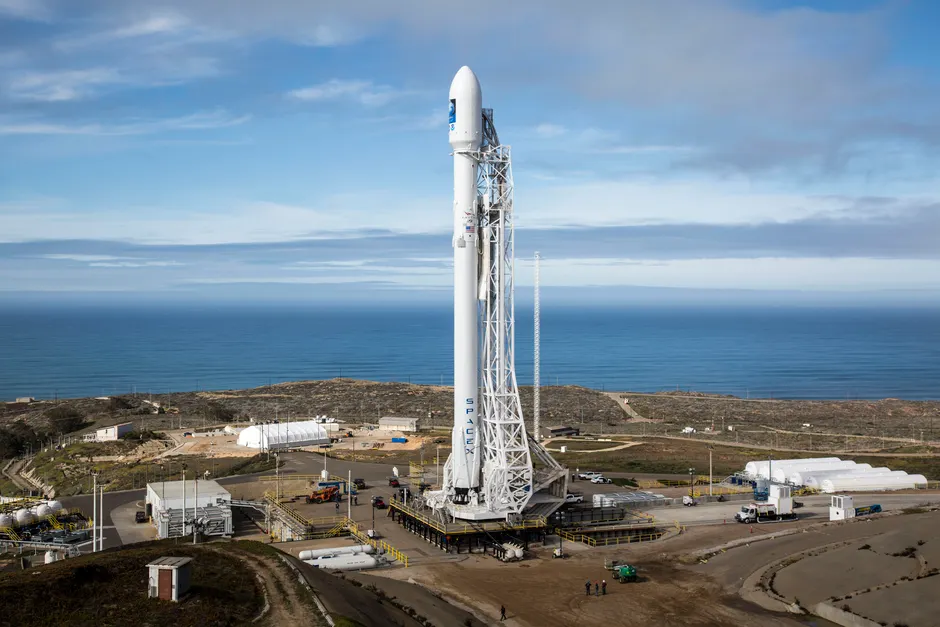
SpaceX's First Public Earnings: Revenue Doubles, but the Stock Drops Anyway

SpaceX reported second-quarter 2026 revenue of $7.8 billion, up 92% from $4.1 billion in the same quarter a year ago. The company also posted a net loss of $541 million, which was $467 million better than the prior-year period. The results, released after market close on August 4, 2026, are SpaceX's first quarterly filing as a public company following its $86 billion IPO in June (Reuters).
On a per-share basis, SpaceX lost 9 cents in the quarter, well below the 26-cent loss analysts had expected. Revenue nearly doubling year-over-year is a growth rate few companies of this size achieve. Still, the headline beat was not enough to hold the stock. Shares fell 7% in late trading on Tuesday after rising 9.4% during the regular session — a whipsaw that mirrors the volatility the stock has shown since its June debut (Reuters).
The post-IPO journey has been turbulent. SpaceX shares surged past a $2 trillion market capitalization in their Nasdaq debut, gaining 19% on the first day of trading and closing in on Amazon's valuation. That euphoria proved short-lived. By mid-July, the stock had tumbled 33% from its post-IPO peak, trading as low as $132.15 before closing at $135.27 on July 15. A two-day plunge erased roughly $660 billion in market capitalization as shares fell below the $135 IPO price (Reuters).
The pullback has weighed heavily on retail investors, who received approximately 20% of IPO allocations — a far higher proportion than is typical for an offering of this magnitude. By mid-July, those who bought at the $135 IPO price were down roughly 10%; those who entered at the June 16 peak were deeper underwater. The stock's decline below the IPO reference price turned what had been a blockbuster listing into a confidence test, with disproportionate exposure falling on individual investors rather than institutions (Reuters).
The valuation compression is rooted in a multiple that remains demanding even after the selloff. Shares have been trading at roughly 77 times earnings, meaning investors are paying $77 for every $1 of profit. A ratio that high requires sustained, rapid revenue growth and a credible path to profitability under standard accounting rules (GAAP). A 92% revenue surge and $467 million in year-over-year loss improvement move things in the right direction, but whether they recalibrate the multiple depends on forward guidance, capital spending, and the opacity of AI-related spending that Reuters flagged as a focal point for Wall Street scrutiny (Reuters).
The broader context here is that the lockup expiry looms as the next inflection point. Insider and pre-IPO shareholder restrictions typically lift 180 days after pricing, and the selloff that began in mid-July suggests the market is already pricing in the possibility of a supply overhang. When a stock trades below its IPO price heading into a lockup release, existing holders have an incentive to sell before further erosion, which can amplify downward pressure. The retail-heavy allocation structure compounds this dynamic: institutional holders with cost bases well below the IPO price can absorb paper losses more easily, while retail investors sitting on double-digit deficits face a steeper risk calculus.
The EU prospectus approved by BaFin on June 5, 2026, set a par value of $0.001 per share and a maximum offering price of $162.00, establishing the regulatory framework for the international tranche of the listing. That ceiling now sits well above where the stock has settled, a reminder that the IPO's pricing was calibrated to peak demand conditions that have since cooled materially.
The first quarterly print as a public company delivered a clear operational signal: revenue is scaling at an extraordinary rate, and losses are shrinking in absolute terms. But the market's verdict, reflected in the after-hours decline, suggests the bar for justifying the valuation was set even higher than the beat could clear. The gap between the operational story and the valuation story remains the central tension, and it will likely persist until SpaceX shows a trajectory toward sustained profitability that narrows the distance between its growth profile and its earnings multiple.
For investors and analysts tracking this name, the second-quarter results provide the first hard data points against which to build a public-market model. The 9-cent loss versus 26 cents expected, $7.8 billion in revenue, and $467 million in loss improvement are the anchors. Everything else — the path to profitability, the scope of capital deployment, and the durability of the revenue growth rate — will be tested in subsequent quarters.