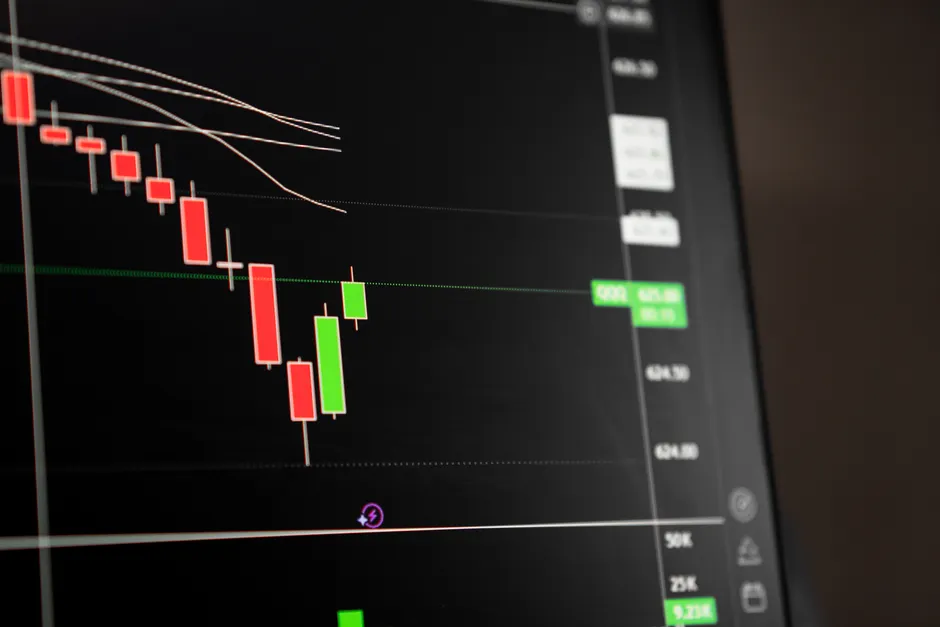
SK Hynix's 30% Flash Crash: A Mechanical Plunge, Not a Message

SK Hynix shares plunged 30% in a pre-market flash crash on South Korea's Nextrade bourse at 8 a.m. local time on August 6, 2026, before recovering to close the 50-minute pre-market session down roughly 2%, according to Bloomberg.
Only eleven shares changed hands at 1,168,000 won each, hitting Nextrade's daily lower price limit of 30%, according to Nextrade data reported by Bloomberg and The Edge Markets. The session then recovered most of the loss, ending the pre-market window down about 2%.
This was SK Hynix's second short-lived pre-market share plunge, The Edge Markets reported.
The August 6 flash crash follows a July 29 episode in which a rogue pre-market trade in SK Hynix shares triggered a 20% flash drop in crypto perpetual contracts on Hyperliquid, resulting in approximately $17.4 million in crypto losses, according to The Economic Times. Perpetual contracts are crypto derivatives that let traders bet on price moves without owning the underlying asset; they rely on reference prices from spot markets to value positions. When those reference prices come from thin, low-volume trading sessions, a single dislocated print can cascade into forced liquidations across leveraged crypto positions.
The broader context here is one of elevated volatility for SK Hynix following its high-profile US listing. The company's American depositary shares — essentially certificates that let US investors trade a foreign stock on a US exchange — debuted in a listing worth $26.5 billion (Bloomberg). On July 13, 2026, the second US trading day, the ADRs fell 9.3% amid a broader AI-fueled equity selloff that spilled over from South Korea (Bloomberg). Since then, pre-market dislocations on Nextrade have now occurred at least twice, raising structural questions about price formation during low-volume windows.
What stands out is the mechanics, not the magnitude. An 11-share trade flooring a stock to its daily limit is textbook thin-book pathology. Think of a market's order book as a ladder of buy and sell orders. In a thin book, there are very few rungs. A single marketable order can sweep through that near-empty ladder and lock the stock at its price limit until enough restoring orders arrive to absorb it. The fact that the price recovered to a roughly 2% deficit within the same 50-minute window confirms the crash was mechanical, not informational. No news catalyst was apparent in the verified reporting.
For traders and risk managers, the recurring pattern has two practical implications. Pre-market liquidity on Nextrade in names with high international attention is structurally fragile, and the bar for triggering a limit-down move is demonstrably low. The July 29 contagion to Hyperliquid also shows that such dislocations do not stay contained within the equity venue. Crypto derivatives platforms that source spot reference prices from thin pre-market equity books are exposed to flash crashes unrelated to fundamental value. The $17.4 million in liquidations on Hyperliquid happened because perpetual contract liquidations cascaded as the underlying reference price gapped, forcing leveraged positions to unwind.
The HBM (high-bandwidth memory) cycle and AI memory demand that underpin SK Hynix's fundamental investment case are not what moved the stock at 8 a.m. on August 6. What moved it was market microstructure — the plumbing of how trades are matched and priced. When a stock trades at the intersection of a massive US listing, retail and algorithmic attention, and a relatively shallow domestic alternative venue, pre-market sessions become accident-prone. Two flash crashes in roughly two weeks is a pattern, not a coincidence, though whether Nextrade adjusts its pre-market guardrails is an open question.
For institutional participants, the takeaway is operational: pre-market SK Hynix quotes on Nextrade are not reliable reference prices during the opening minutes, and any systematic strategy or derivative product keyed to those prints carries gap risk that the July 29 Hyperliquid episode quantified at eight figures. For retail investors holding SK Hynix through these episodes, the recovered close offers little comfort about what could happen if the next flash crash finds no restoring bid.