Iran Cracks Down at Home as War Diplomacy Stalls
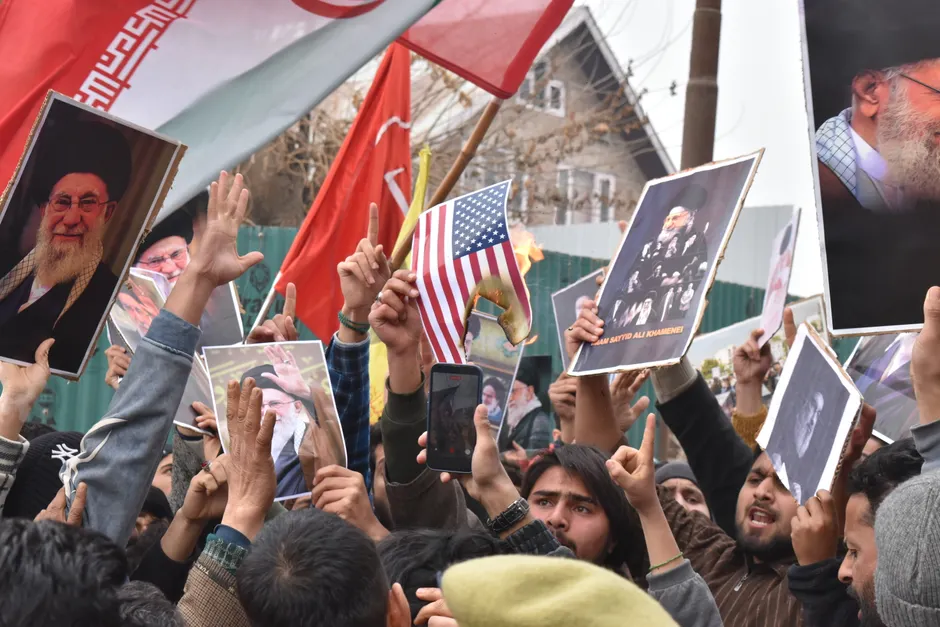
Iranian authorities have tightened internal security controls across the country, especially in the capital, Tehran, as diplomatic efforts to end the US-Israel war on Iran remain uncertain, Al Jazeera reported on August 6, 2026. Security forces and the religious morality police have stepped up restrictions, arrests, and punishments targeting individuals and businesses deemed noncompliant with state regulations on practices the authorities consider immoral and un-Islamic. The morality police enforced compulsory hijab (the required head covering for women), business closures, and pressure on students, lawyers, and other groups.
The crackdown follows nationwide anti-government protests in January 2026, during which thousands were killed and many more arrested and executed. The Iranian government has stated that 3,117 people were killed during the January unrest, mostly on the nights of January 8 and 9, 2026, a figure that disputes higher numbers cited by rights groups and US officials. Iranian authorities designated the January protests a "coup" attempt orchestrated by the United States and Israel, alleging that armed agents of the CIA and Mossad posed among protesters.
President Masoud Pezeshkian, in a televised interview released on the night of August 5, 2026, called the January events "bitter and unforgettable." He accused US President Donald Trump and Israeli Prime Minister Benjamin Netanyahu of orchestrating protests across multiple Iranian cities to destabilize the Islamic Republic. Iranian clerical, political, and military-security officials have emphasized the need to "stand united" against foreign aggression while showing declining tolerance for dissent or non-compliance. Iran's security apparatus has combined executions with arrests, asset seizures, and internet and media controls.
The scale and visibility of the punishment has grown. On July 28, 2026, two young men were publicly hanged in Isfahan's Alikhani Square from a crane and scaffolding amid a heavy security presence. They were charged with moharebeh ("waging war against God") and "corruption on Earth," linked to alleged involvement in arson and the deaths of security personnel during the nationwide unrest. Families and residents attempted to interrupt the execution but were forcibly dispersed; videos circulating on social media appeared to show shots being fired. Two more young men had already been executed in the same Isfahan case, and the US-based Human Rights Activists News Agency reported that a third avoided hanging after suffering a stroke hours before the scheduled execution but remained at risk. Eight people still faced execution in the 16-defendant Isfahan case, with similar proceedings ongoing in Isfahan province and elsewhere, most of which go unreported by the authorities.
The Isfahan case is one node in a wider pattern. On August 5, 2026, UN human rights chief Volker Turk stated that Iran had executed at least 56 people since the January protests. Amnesty International reported in July 2026 that Iranian authorities had arbitrarily executed at least 26 people since the beginning of 2026 who were convicted of offences connected to the January protests. In May, Amnesty documented that authorities were using what they called "wartime conditions" to intensify repression of dissent through mass arbitrary arrests and political executions, and that since the US-Israeli attacks on Iran began on February 28, 2026, at least 36 people had been arbitrarily executed. In March 2026, Amnesty reported that four men had been arbitrarily executed in secret within 24 hours and that seven protesters and dissidents faced imminent execution. Teenage protester Amirhossein Hatami was arbitrarily executed in Ghezel Hesar prison on April 2, 2026.
Arrests have proceeded in parallel. In March 2026, one month after the outbreak of the war, Iranian security forces carried out a sweeping new wave of detentions, arresting at least 1,500 people as the state intensified its domestic crackdown. In July 2026, UN experts urged Iran to quash death sentences imposed on 12 young men for involvement in the January protests, all handed down in a single hearing.
The current wave of repression carries distinct continuities with earlier protest cycles. In January 2023, Iran hanged two men accused of killing a security agent during protests, and dozens of public figures were arrested and faced harsh sentences. In December 2022, Iran carried out its second execution linked to the wave of anti-government protests, publicly hanging a man whom state media said had been convicted of killing two members of the security forces. Rights group HRNA recorded arrests of 705 people on political or security charges in connection with an earlier period of unrest, as reported by Reuters in June 2025. In January 2026, Iranian state media reported that a 26-year-old man arrested during protests in Karaj would not be given the death sentence.
The broader context here is a state simultaneously managing an active external conflict and an internal security posture that treats domestic dissent as an extension of that conflict. Wartime conditions provide both the justification and the operational cover for tightening social control. The morality police's return to compulsory hijab enforcement, business closures, and pressure on students and lawyers signals that the security apparatus is not limiting itself to protest-related prosecutions but is broadening its reach across society. The designation of the January protests as a "coup" framed in terms of foreign intelligence infiltration serves to collapse the distinction between dissent and treason, placing ordinary acts of noncompliance on a continuum with armed subversion.
The execution tallies also raise questions about institutional capacity. The Isfahan case alone, with 16 defendants and four already executed, illustrates a judicial process capable of processing large groups through capital charges with speed. UN experts' intervention over death sentences handed to 12 men in a single hearing points to due process concerns that extend beyond individual cases. With eight more facing execution in Isfahan and similar cases reported elsewhere, the trajectory suggests the January protests will continue to generate judicial outcomes for months to come.
Whether diplomatic efforts to end the war succeed or fail, the internal crackdown has acquired its own momentum, driven by institutional incentives within the security apparatus and a political leadership that frames unity as incompatible with tolerance for non-compliance.


