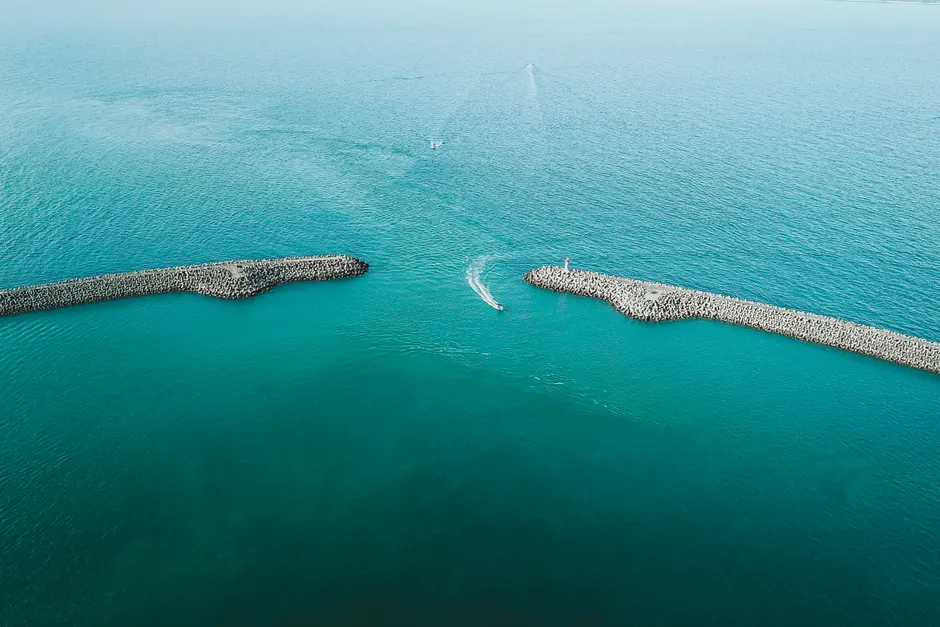
Strait of Hormuz Deal Near Completion as Trump Signals End to Iran Conflict

US President Donald Trump said on 7 August 2026 that he expects the conflict with Iran to end "pretty soon," as Tehran and Oman reported that an agreement to reopen the Strait of Hormuz is "on the verge of being finalised" Al Jazeera.
The comments follow several days of accelerating diplomacy. On 5 August, Trump told reporters the US and Iran were having "very good discussions" regarding a potential deal Reuters. Two days earlier, on 2 August, he said talks were under way and warned it was a "last chance" for Tehran to sign a good deal to end the five-month conflict Reuters.
The proposed agreement centers on new arrangements for commercial shipping through the Strait of Hormuz rather than a full reopening of the waterway, according to CBS News CBS News. Iran's deputy foreign minister said on 6 August that Iran and Oman were close to finalizing a proposed framework for commercial shipping through the strait CNN. Reuters reported on 5 August that the deal would give Iran control over inbound traffic through the Strait of Hormuz and help end the five-month war Reuters.
A senior Gulf official assessed on 5 August that there was a "50-50" chance Iran and Oman would reach a deal on the Strait of Hormuz by Friday CNN. By 7 August, Tehran was reporting the agreement as nearly done.
Yet Trump's public optimism contrasts with the structural dilemma he faces. Reuters reported on 6 August that the president was caught between an emerging interim deal negotiated by Iran and Oman, which would give Tehran control over the Strait of Hormuz, leaving him stuck in a war with no clear exit Reuters.
The broader context here is the tension running through the entire diplomatic track. The deal on offer addresses the maritime chokepoint at the center of the conflict — the Strait of Hormuz, a narrow passage through which a significant share of global seaborne oil transits — but it does so by ceding authority over inbound traffic to Iran, the very adversary the US has been fighting for five months. The distinction between "new arrangements for commercial shipping" and a "full reopening" matters considerably for how the agreement would function in practice.
A framework that institutionalizes Iranian control over inbound traffic would be a structural shift in how commercial vessels access the Persian Gulf. Think of it this way: rather than removing a roadblock, the deal would install a tollbooth operator. Tehran would be embedded as a gatekeeper rather than an obstruction. For Gulf states and energy markets, the difference between a deal that restores freedom of navigation and one that formalizes a new regulatory regime under Iranian authority is not incidental.
Oman's role as intermediary fits its long-standing position as a neutral Gulf broker between Iran and Western powers. The sultanate has historically maintained channels to Tehran even when other Gulf Cooperation Council members have broken off engagement, making it a natural go-between for an arrangement that requires Iranian buy-in and Western acquiescence.
Trump's rhetorical arc — from "last chance" on 2 August, to "very good discussions" on 5 August, to an expectation that the war would end "pretty soon" by 7 August — suggests a negotiating posture designed to compress timelines. The question is whether the deal being finalized between Tehran and Muscat meets Washington's minimum conditions, or whether Trump is accepting terms that fall short of his stated objectives in order to exit a conflict he has concluded is no longer sustainable.
The 50-50 assessment from the Gulf official on 5 August and the more optimistic language from Tehran on 7 August may reflect genuine movement. They may equally reflect each party's interest in projecting momentum. Iran has an evident incentive to signal that a deal is imminent to discourage further US military action while the framework is still being finalized. Trump has a political incentive to frame any outcome as a resolution.
What remains unresolved, based on the available facts, is whether Washington has formally signed off on the terms Iran and Oman are finalizing. Trump's comments express optimism and he has characterized the discussions positively. But the Reuters framing of his dilemma, published on 6 August, indicates he has not yet committed to an exit. The gap between "on the verge of being finalised" and a concluded agreement with US endorsement may still be where this process stalls.