Trump Says the US-Iran War Is Near an End, but the Signals Point Both Ways
President Donald Trump told reporters on Thursday that the US-Iran war is nearing an end, and promised that petrol prices will fall once the conflict concludes. Speaking in the Oval Office, Trump said: "I think it's going to end pretty soon. I don't think they can go much longer." He also confirmed he is involved in negotiations with Tehran, adding: "I think we're doing fine" Al Jazeera.
Iran has denied holding direct talks with the United States, saying it is speaking solely to Oman about control of the Strait of Hormuz. That discrepancy over whether bilateral US-Iran negotiations are actually underway adds another layer of ambiguity to a diplomatic landscape already clouded by mixed signals from both capitals.
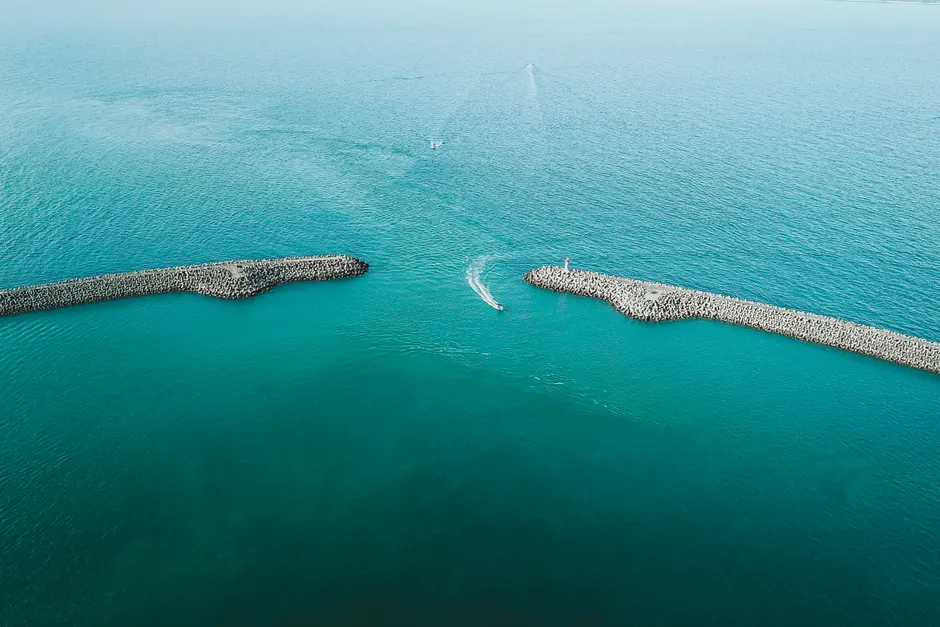
On Thursday, Iran and Oman agreed on coordinates for shipping routes through the Strait of Hormuz, whose closure has triggered a global energy crisis. The agreement on coordinates is a concrete, if narrow, step toward restoring maritime traffic through one of the world's most critical oil transit chokepoints — a narrow passage where roughly a fifth of global oil supply normally flows. It addresses only the management of the strait, however, not the broader conflict.
At the same time, Iran's Fars news agency, citing an unnamed lawmaker, reported that a parliamentary committee is reviewing a preliminary bill that would bar US, Israeli, and other "hostile" vessels from transiting the strait. A draft of the bill, reported a day earlier, would impose fines of up to 20% of a ship's cargo value for violations of the proposed restrictions Reuters. Oil prices settled up about $3 on the news Reuters.
The two developments side by side — an agreement on shipping coordinates alongside a bill to exclude US and Israeli vessels — suggest a Tehran strategy of asserting maximal legal authority over the waterway while selectively engaging on practical traffic management.
Trump's optimism about the war's end comes against a backdrop of repeated escalations and reversals. On Saturday of the previous week, Trump cancelled a planned large-scale military attack on Iran, claiming that Tehran and other regional governments had asked the US to call off the strikes because a diplomatic breakthrough was close. In April, Trump issued an ultimatum, threatening that "a whole civilisation will die tonight, never to be brought back again" if Iran did not open the strait. With two hours remaining on that deadline, he rescinded the threat and announced a two-week ceasefire instead.
Trump also reacted angrily to US media reports that American forces may be running low on weapons in the region. Michael Stephens, a senior associate fellow at the Royal United Services Institute, said reports for months indicated the US was running low on interceptors — defensive missiles designed to shoot down incoming threats — and would continue to do so if the war continued. Stephens said the missile shortages make it more dangerous for US military personnel to operate in the region and put strain on other commands in East Asia, implying a tradeoff between sustained Middle East operations and deterrence posture in the Indo-Pacific.
The pattern of threatened escalation followed by last-minute cancellation has drawn sharp criticism from analysts. Trita Parsi, executive vice president of the Quincy Institute for Responsible Statecraft, said Trump's repeated escalations and cancellations have harmed prospects for a negotiated settlement. Parsi argued that the pattern degrades the credibility of negotiations, of sticking to a deal, and of both incentives and threats. This critique is particularly pointed given the current moment: if Washington is indeed negotiating with Tehran, the credibility of any US commitment is the central asset on which a deal would rest.
Experts have cautioned that even if management of the Strait of Hormuz is resolved, it will not spell the end of the US-Iran war. Broader talks, they note, will have to restart from a position of mutual suspicion deepened by months of alternating threats and pauses. The strait is the immediate crisis. The underlying confrontation, encompassing Iran's regional posture, US military presence, and the unresolved questions that preceded the conflict, is a separate and more intractable problem.
The competing signals from this week capture the difficulty. Iran and Oman have agreed on shipping coordinates, suggesting a practical channel remains open. Yet Iran's parliament is advancing legislation to exclude US and Israeli vessels entirely, a move that, if enacted, would directly challenge the freedom of navigation the US has cited as a reason for war. Trump insists the war is ending and that he is negotiating; Iran insists there are no direct talks. Oil markets, which have absorbed the shocks of the strait's closure, rose on the parliamentary bill even as the Iran-Oman agreement raised tentative hopes of a corridor for commerce.


