Japan's Nikkei 225 Drops Nearly 1% as Chip Stocks and Middle East Conflict Weigh on Markets
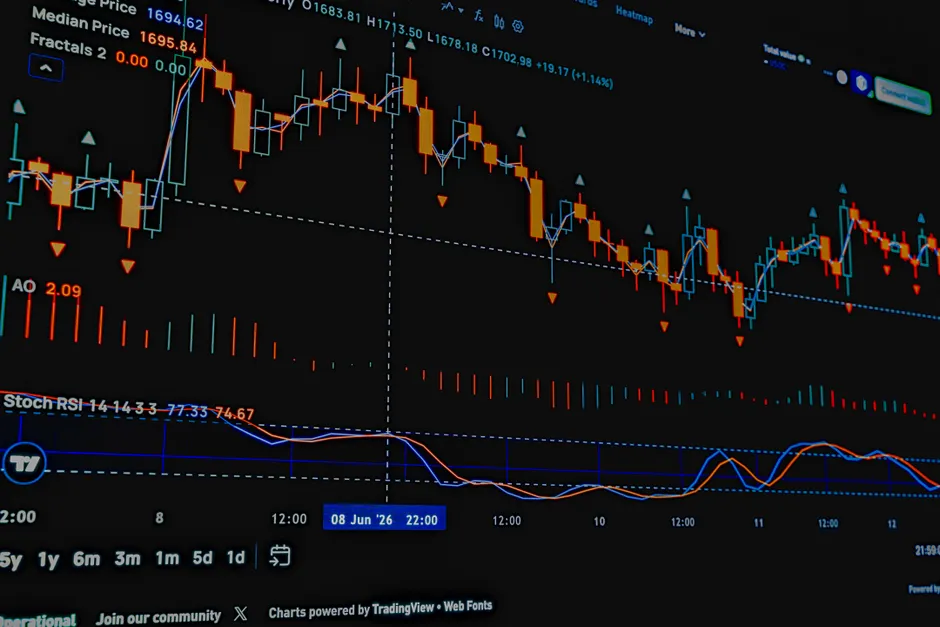
Japan's Nikkei 225 fell 648 points, or 0.98%, to close at 65,652 on August 7, 2026, with Taiyo Yuden (-11.24%) and GS Yuasa (-10.07%) leading the index lower (TradingEconomics).
The session extends a rough stretch for Japanese stocks that goes back weeks. On July 17, the Nikkei tumbled into correction territory — a decline of roughly 10% from a recent peak — as a global selloff in semiconductor shares and escalating Middle East conflict weighed on the index (Reuters). The prior session, reported at 0014 GMT by The Wall Street Journal, saw the Nikkei fall 2.6%, dragged down by chip and metals stocks (WSJ). FRED data trace the index's path through late July: it closed at 61,434.19 on July 29, 61,867.43 on July 30, 64,362.02 on July 31, and 63,754.90 on August 3 (FRED). On August 5, the index opened at 64,565.27, traded in a range between 64,555.52 and 66,302.52, and closed at 66,300.44 (Yahoo Finance). The August 7 close at 65,652 represents a pullback of roughly 650 points from that level.
The selling is not confined to Tokyo. In the same session reported by The Japan Times, South Korea's Kospi dropped 0.9% and Hong Kong's Hang Seng declined 0.9% as the Middle East war continued (Japan Times). The regional weakness fits a broader pattern: on July 17, global share indexes tumbled as large chip stocks plunged for a third consecutive day, while oil rose on Middle East escalation (Reuters). U.S. markets felt the pressure too — the S&P 500 closed lower and the Nasdaq fell more than 1% on July 16 as chip stocks suffered, following a decline in chipmakers while the U.S. continued to strike Iran overnight (CNBC).
The Middle East conflict has been a persistent undercurrent throughout this period. Around June 7, the Nikkei dropped 3.9% as the AI rally stalled, while oil rose on Middle East uncertainties but settled below session highs (Reuters). By July 20, major global stock indexes fell as investors remained cautious about developments in the U.S.-Iran war and ahead of corporate earnings (Reuters).
The semiconductor sector is the other dominant thread. On August 5, AMD shares slipped after its results beat analysts' estimates but fell short of investor expectations (Reuters). That gap matters: when a company tops the forecasts that sell-side analysts publish and the stock still falls, it signals that investors had already priced in something well above those published estimates. Think of it like a student who scores 95 on a test but still disappoints — because everyone expected a 100. For fund managers running semiconductor holdings, that dynamic narrows the range of acceptable outcomes heading into the rest of earnings season.
The August 7 session's worst performers carry their own signal. Taiyo Yuden, an electronic components manufacturer, and GS Yuasa, a battery producer, posted double-digit declines. These are not headline chip names, but they are deeply tied to the same electronics supply chain. When selling spreads from large-cap chip designers into components and battery suppliers, it suggests investors are reducing risk across the broader technology manufacturing complex, not just trimming specific positions.
The Nikkei's trajectory from the June 7 plunge through the July correction and into August reveals an index caught between two forces that show no sign of easing. Middle East escalation continues to push oil higher and pressure risk appetite across Asia, while the semiconductor sector — the engine of Japan's equity market rally — is simultaneously dealing with fading AI-driven momentum and earnings expectations that have outrun consensus. The FRED data showing the index recovering from the 61,434 close on July 29 to above 66,000 on August 5, only to give back 650 points by August 7, captures the choppy, directionless price action that typifies a market searching for a floor it has not yet found.
The broader question for investors is whether these two headwinds — geopolitical conflict and semiconductor weakness — are connected risks or independent shocks. If Middle East escalation keeps lifting energy costs while also depressing semiconductor demand through slower global growth, the Nikkei faces a twin squeeze on both its export-heavy index composition and its trade balance. If, instead, the chip selloff is a sector-specific repricing and the geopolitical risk premium stabilizes, the index's downside may be more contained than the recent volatility suggests. The data available through August 7 does not yet resolve that question.