U.S. Poised to Restore Colombia's Drug-War Partner Status as Leadership Shifts
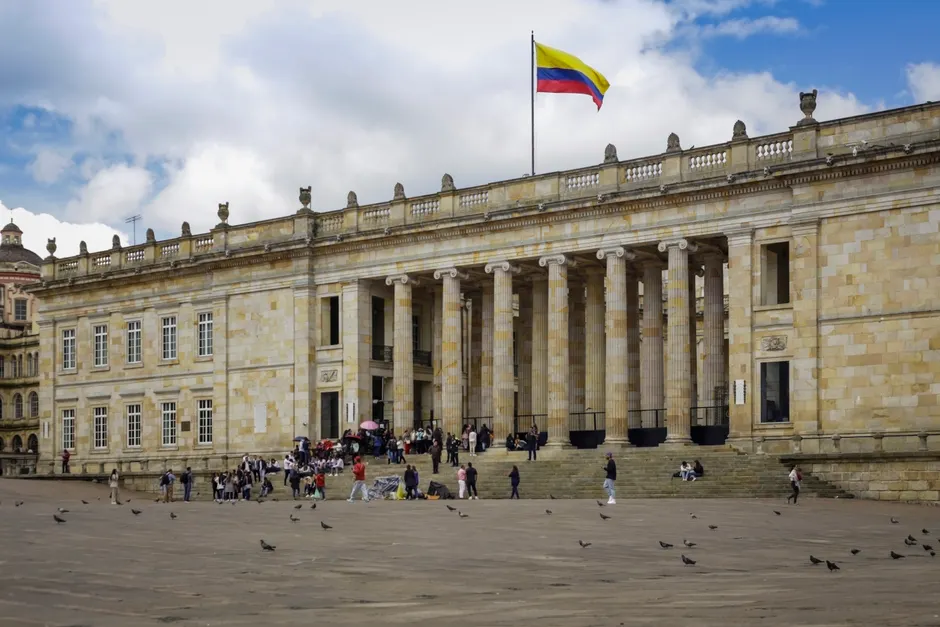
The Trump administration is expected to recertify Colombia as a counternarcotics cooperation partner, reversing a September 2025 decision that ended nearly three decades of continuous U.S. recognition of Colombia's drug-control efforts and imposed sanctions on a sitting Colombian president for the first time. The expected reversal comes as Colombia's political landscape shifts dramatically, with hardline presidential candidate Abelardo De La Espriella — who has vowed to destroy drug traffickers using military force — appearing set to become the country's next leader. New York Times
The September 2025 decertification was the first in nearly 30 years. Secretary of State Marco Rubio formally announced it under the authority of the Department of State, Foreign Operations, and Related Programs Appropriations Act. The State Department simultaneously imposed sanctions on Colombian officials it identified as involved in the global illicit drug trade. State Department
Days earlier, President Trump had announced tariffs and an end to U.S. aid to Colombia, calling President Gustavo Petro an "illegal drug leader." The Treasury Department followed with sanctions directly targeting Petro, accusing him of allowing drug trafficking to flourish. The moves placed millions of dollars in U.S. military and development funding in jeopardy and threatened to unravel a security partnership that had anchored U.S. counternarcotics strategy in the Andes for decades. AP News New York Times New York Times
The rift between Washington and Bogotá has unfolded against a worsening security environment. The National Liberation Army (ELN), one of Colombia's oldest guerrilla groups, took refuge in Venezuela and expanded its operations there, growing wealthier through drug trafficking and tripling in size to roughly 6,000 members. The group's cross-border growth has complicated any framework for bilateral or multilateral pressure on Colombian drug networks, since the ELN now operates with significant infrastructure outside Colombian jurisdiction. New York Times
Trump has also declined to rule out the use of military force against drug-trafficking targets in countries including Colombia and Mexico, a stance that injected additional uncertainty into bilateral security arrangements already under strain. Reuters
Colombia's counternarcotics infrastructure, built with substantial U.S. support, remains in place despite the funding disruptions. The Joint Eradication Task Force conducts manual coca eradication with 1,700 personnel, while the Counternarcotics and Transnational Threats Command, established in February 2021, fields an elite force of 7,000 soldiers tasked with combating criminal groups. On the U.S. side, the Joint Interagency Task Force South coordinates with international partners to counter transnational organized crime, a mission architecture that depends heavily on Colombian cooperation. State Department INCSR 2024 State Department State Department INCSR 2023
The broader context here is a convergence of two transitions: a prospective change in Colombian leadership and a recalibration of U.S. enforcement posture. De La Espriella's militarized approach to drug trafficking aligns more closely with Trump's stated preferences for a force-forward counternarcotics strategy. If recertification proceeds, it would restore the legal basis for bilateral funding just as a new administration in Bogotá may be more willing to deploy military assets against trafficking networks, including against groups like the ELN that have established themselves across the Venezuelan border.
The sequencing matters. Recertification before De La Espriella takes office would signal that Washington is positioning itself to support the incoming government's security agenda rather than rewarding the outgoing Petro administration. The Petro-era decertification and personal sanctions created a break in the U.S.-Colombia security relationship that, if reversed, would reconstitute one of the most significant bilateral counternarcotics partnerships in the Western Hemisphere. Whether that reconstitution comes with conditions, expanded U.S. operational involvement, or new frameworks for addressing the ELN's Venezuelan sanctuary remains the operational question for both capitals.


