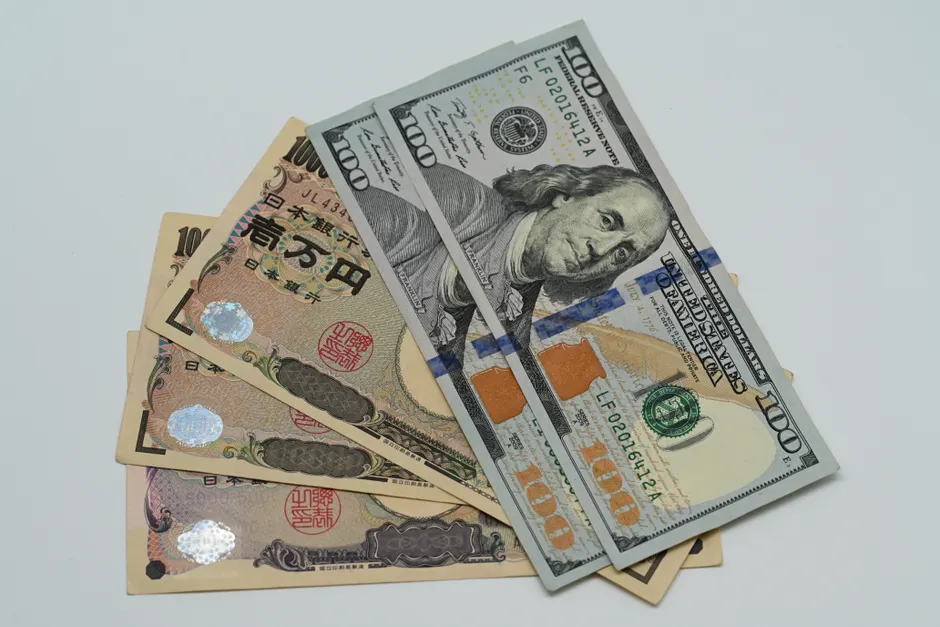
Asian Currencies Steady as Markets Bet Against Another Fed Rate Hike

Asian currencies held firm against the dollar in early trading on August 10, 2026, as traders scaled back expectations of further Federal Reserve rate increases. A weaker-dollar narrative has been gaining traction since July's surprising U.S. jobs report, and the latest positioning data suggest the market is essentially pricing out the Fed's next hike.
The WSJ Dollar Index rose 0.56% over the week to 97.60, a modest bounce that did little to interrupt the broader downtrend. The dollar had already dropped to a seven-week low against a basket of currencies after July nonfarm payrolls posted an unexpected decline, pushing traders to lower the odds of additional tightening — that is, further rate hikes that would make borrowing more expensive (Reuters). The euro rose 0.39% against the dollar to $1.1568, and the yen strengthened to 160.17 per dollar.
The Federal Reserve held its benchmark rate at 3.50%–3.75% at its most recent decision, a vote that drew three dissents from the 12-member Federal Open Market Committee (FOMC). The central bank's own projections showed nine officials anticipating one rate hike in 2026. Yet market pricing has diverged sharply from that signal. After the August 7 jobs release, rate futures reduced the odds of a September hike, though a meaningful group of economists still expected one (Reuters). The FOMC minutes from June 16–17 noted that market pricing suggested one hike was priced in for mid-2027, with the SOMA (System Open Market Account) manager cautioning that these measures were likely boosted in part by other factors (Federal Reserve).
ING predicts the Fed will leave policy unchanged in September 2026, which should see the dollar drift lower against cyclical currencies — those tied to economic growth cycles — including the euro (ING). J.P. Morgan Global Research, as of August 5, expected the Fed to hike in December 2026, partly because the central bank had not yet laid out a roadmap for its policy path. The spread across sell-side forecasts is striking: ING sees a hold, J.P. Morgan sees a December hike, and futures markets are pricing something close to no move at all before mid-2027.
For Asia specifically, MUFG Research expects the regional currency basket to appreciate modestly against the dollar in the second half of 2026, supported by a softer dollar trend and easing financial conditions (MUFG Research). That call aligns with the current picture: Asian currencies were consolidating rather than extending losses, and the reduced probability of a Fed hike lowers the carry-cost pressure that has weighed on regional currencies throughout the tightening cycle. Carry cost here refers to the expense of holding lower-yielding Asian currencies when U.S. rates are high — a dynamic that tends to pull capital toward the dollar.
The yen's trajectory adds a separate wrinkle. On August 3, the dollar extended its slide as a joint U.S.–Japan intervention to support the yen compounded losses already triggered by the prior week's Fed decision. That intervention signals authorities' discomfort with yen levels near 160 per dollar, and it introduces a two-way risk — the possibility of moves in either direction — that pure interest-rate-difference models would not capture.
The broader context here is a policy regime in transition. The Fed has held rates steady, but its dot plot — the anonymous survey of where each FOMC member sees rates heading — still signals a hike. Three members dissented. The chair's succession adds another layer of uncertainty: Kevin Hassett was the frontrunner to succeed Jerome Powell, and investors were dialing back expectations of rate cuts in 2026 as skepticism mounted about the successor's dovishness, or willingness to favor lower rates. A more hawkish Fed chair could re-anchor rate-hike expectations, though the jobs data have made that case harder to sell in the near term.
Geopolitical risk has receded on one front. Iran and Israel agreed to halt strikes, reducing a premium that had supported the dollar as a safe-haven asset — a currency investors flock to during periods of uncertainty. That easing removes a marginal tailwind for the greenback just as the interest-rate gaps that underpinned it are narrowing in market pricing.
For currency traders, the actionable question is whether the consolidation in Asian currencies is a pause before further losses or a platform for gains. The structural case for a softer dollar in the second half rests on the Fed pausing, easing financial conditions, and a broadening of global growth. The risk case rests on the dot plot, a potentially hawkish succession at the Fed, and the possibility that July's payrolls miss was a one-off rather than a trend. The market is pricing the former. The FOMC median is pointing to the latter. That gap will not resolve itself before September.