DRC Ebola Outbreak: 515 Confirmed Cases, a PHEIC Declaration, and a Response Under Fire
The State of Play
As of June 6, 2026, the Democratic Republic of Congo's seventeenth recorded Ebola outbreak had produced 515 confirmed cases and 91 confirmed deaths — a case fatality rate of 17.7% — according to the WHO Disease Outbreak News. A separate Al Jazeera report dated June 9, 2026, placed confirmed deaths at 101, reflecting the fluid pace at which the figures are moving. The causative agent is the Bundibugyo species of Ebola virus (Bundibugyo ebolavirus), a phylogenetically distinct clade from the more lethal Zaire strain that drove the catastrophic 2014–16 West Africa epidemic. Bundibugyo's historically lower case fatality ratios — documented outbreaks have ranged between roughly 25% and 36% for confirmed-plus-probable cases — make this outbreak's 17.7% confirmed CFR a figure worth watching as laboratory confirmation rates catch up with the suspected caseload.
The suspected burden remains considerably heavier. A DRC health ministry statement cited by Al Jazeera reported 204 deaths across 867 suspected cases spanning three provinces. That gap between confirmed and suspected counts is not statistical noise; it is a direct measure of how severely surveillance and specimen transport capacity are strained in the affected zones.
Epidemiological Trajectory
The outbreak's acceleration is visible in the case counts across reporting periods. By May 16, 2026, Ituri Province alone accounted for eight laboratory-confirmed cases, 246 suspected cases, and 80 suspected deaths, per WHO. Three days later, Reuters reported deaths among suspected cases in eastern Congo had reached 131, with 543 suspected cases total and only 33 confirmed — illustrating just how narrow the diagnostic window was in the outbreak's opening weeks.
By May 24, WHO Director-General Tedros Adhanom Ghebreyesus noted more than 900 suspected cases had been identified in-country. By May 26–27, the confirmed tally had reached 125–128 with 17–18 confirmed deaths, set against a suspected pool of more than 1,000 cases and over 220 suspected deaths — figures drawn from the WHO DON605 report and corroborated by Tulane School of Public Health. The jump to 515 confirmed cases by June 6 represents a roughly fourfold increase in confirmed counts over ten days, suggesting either a genuine transmission surge, a belated laboratory pipeline clearing, or most likely both.
The outbreak has also crossed an international border. As of June 8, ECDC confirmed that Uganda is affected alongside DRC, a development that amplifies response complexity and regional risk calculus significantly.
PHEIC: What the Declaration Means
On May 15, 2026, WHO Director-General Tedros invoked Article 12 of the International Health Regulations (2005) to declare the outbreak a Public Health Emergency of International Concern (PHEIC) — the highest alert tier available under international law, confirmed by AFRO WHO. The formal WHO announcement followed the next day.
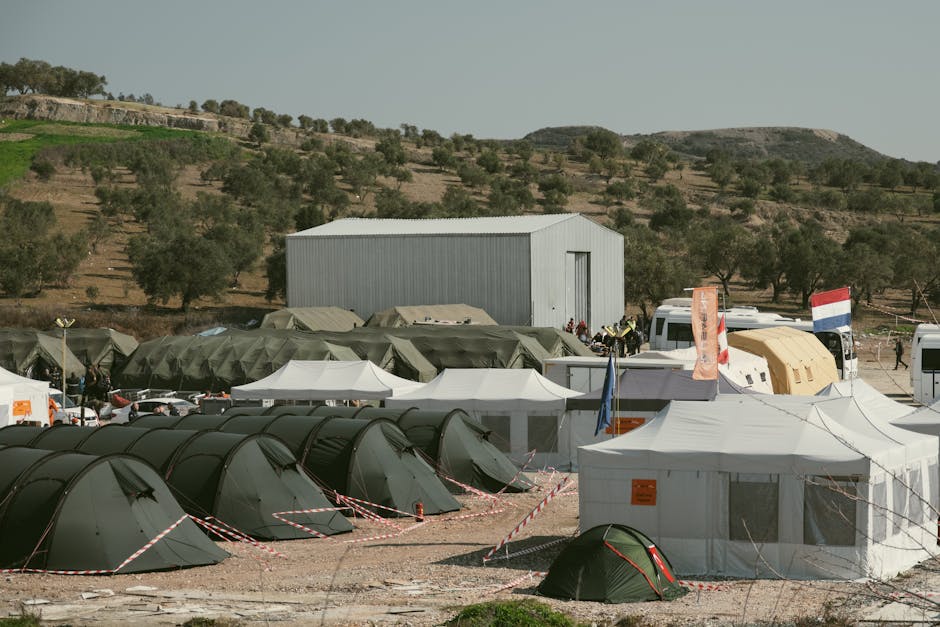
A PHEIC is not a travel ban or a quarantine order; it is a legal trigger. Under the IHR, it requires all 196 States Parties to implement coordinated measures and obliges WHO to issue Temporary Recommendations. Practically, the declaration is the mechanism by which emergency procurement pipelines open, donor pledges accelerate, and cross-border coordination frameworks are activated. For the DRC — where every previous major Ebola response has depended on international financing to sustain contact tracing, ring vaccination, and safe burial teams — the timing and speed of the PHEIC matters as much as the declaration itself.
It is worth noting that a prior DRC Ebola outbreak had been declared concluded only in December 2025, per AFRO WHO. The interval between the end of that outbreak and the confirmation of this one underscores a structural reality: eastern DRC is not between outbreaks so much as it cycles through them, a pattern driven by ecological, infrastructural, and security conditions that no single response operation resolves.
The Security Constraint
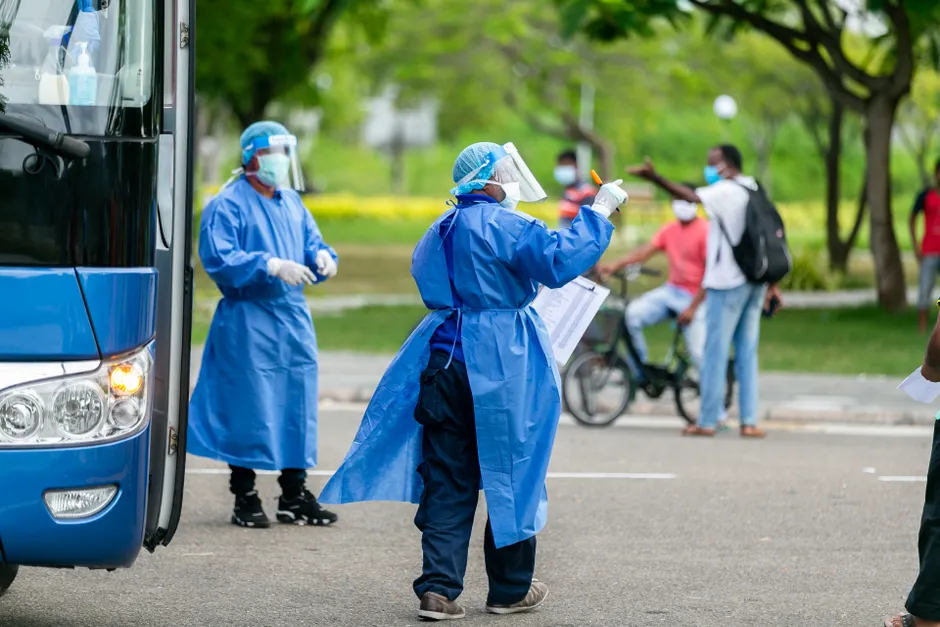
The most operationally limiting factor in this response is not the pathogen's biology. Armed groups operating in the affected provinces are actively hindering outbreak containment, according to both Al Jazeera and Reuters reporting. This is a recurring feature of DRC Ebola responses — most acutely during the 2018–2020 North Kivu and Ituri outbreak, which became the second-largest Ebola epidemic on record in part because contact tracers, vaccinators, and treatment center staff faced sustained armed attacks.
The constraint operates at multiple levels. At the tactical level, health teams cannot safely access communities to isolate cases, conduct contact tracing, or perform safe burials — the three pillars of filovirus containment. At the epidemiological level, insecurity creates population displacement, which seeds cases in new geographic areas and fragments the contact networks that ring vaccination depends on. At the diagnostic level, armed activity degrades specimen transport, inflating the suspected-to-confirmed ratio and making it harder for epidemiologists to assess true transmission chains.
The Bundibugyo species may carry a somewhat lower CFR than Zaire ebolavirus, but it is no less transmissible through direct contact with infectious bodily fluids. In a conflict-affected setting with impaired surveillance, that biological distinction provides limited operational comfort.
Historical Pattern
We have seen this configuration before. The 2018–2020 Kivu outbreak — DRC's tenth — was also declared a PHEIC, also unfolded in Ituri Province, and also contended with armed group interference throughout its 22-month duration. Ultimately it required more than $900 million in international funding and the deployment of an experimental vaccine (rVSV-ZEBOV, trade name Ervebo) on a compassionate-use basis before it was brought under control. That vaccine, however, is Zaire-strain specific. Bundibugyo ebolavirus requires different candidate immunogens; the pipeline for Bundibugyo-specific vaccines remains at earlier clinical stages, meaning ring vaccination with a proven product is not straightforwardly available in 2026 the way it was by 2018.
The CDC notes this is the seventeenth recorded Ebola outbreak in DRC since the virus's identification in 1976 following an outbreak along the Ebola River in what is now the DRC — a country that has carried a disproportionate share of filovirus burden for fifty years.
What Comes Next
The epidemiological trajectory over the next four to six weeks will be telling. If the confirmed case count continues to outpace suspected case resolution — rather than the reverse — it may indicate improving laboratory throughput, which would be a response positive even as it raises the headline number. If suspected deaths continue to accumulate faster than confirmed cases, that divergence points to under-detection and incomplete outbreak mapping.
The cross-border dimension with Uganda introduces new variables: Uganda's relatively stronger health infrastructure and its prior experience containing Ebola in 2022 may enable faster case isolation on that side of the border, but cross-border transmission chains complicate contact tracing jurisdictionally and logistically.
For donor governments, multilateral agencies, and NGOs operating in the region, the PHEIC declaration has crystallized the resource mobilization mandate. The critical question is not whether to respond but whether the security environment will permit a response adequate to the transmission dynamics already in motion.