Iran-Israel Strike Halt: What the Fragile Ceasefire Architecture Means for Oil Markets and Diplomacy

The Pause That Dare Not Call Itself Peace
Iran and Israel announced on June 8–9, 2026 that they have halted strikes on each other following their first direct exchange of fire since the April 2026 ceasefire framework took hold, according to Reuters and AP. The Iranian military's joint command confirmed it was suspending offensive operations, and both sides lifted reciprocal restrictions as part of the pause. This is not a new peace agreement. It is the re-stabilisation of an existing, visibly stressed architecture — one that has been breached at least once before, and which multiple parties have now publicly flagged as on the verge of collapse.
To understand where things stand, the sequence matters.
The April Architecture: Operation Epic Fury and Its Terms
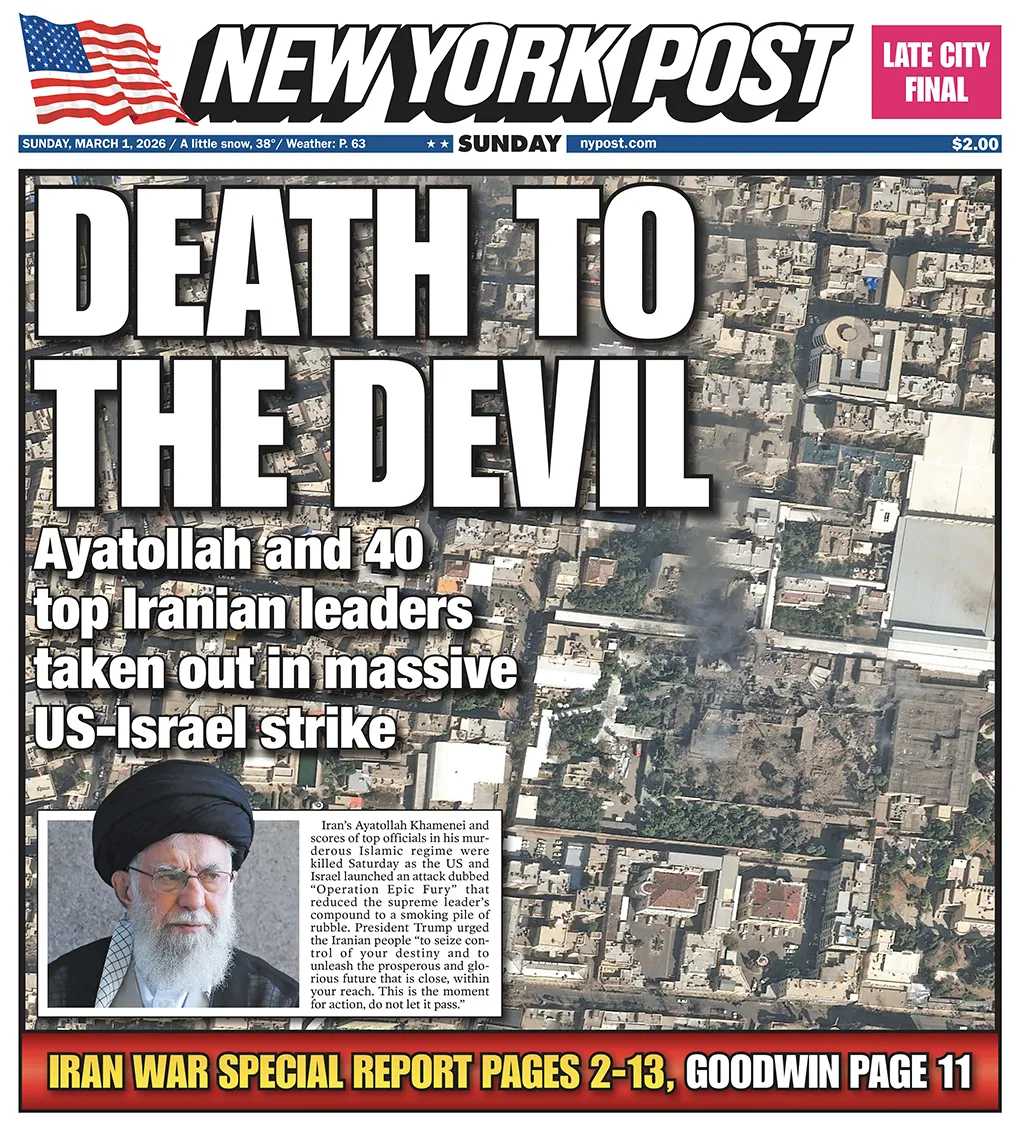
The baseline was set on April 8, 2026, when the White House announced that Iran had agreed to a ceasefire and the reopening of the Strait of Hormuz as part of Trump administration negotiations for a broader peace framework — branded Operation Epic Fury. On the same day, Israel's Prime Minister's Office stated that Israel supported President Trump's decision to suspend strikes against Iran for two weeks, contingent on Iran immediately opening the Strait.
Critically, the Israeli government was explicit from the outset about one carve-out: the ceasefire with Iran did not apply to Hezbollah. That clarification, reaffirmed by the Israeli government as recently as June 4, 2026 and citing President Trump's own statement, is the structural fault line that has driven every subsequent flashpoint.
A ten-day cessation of hostilities between Israel and Lebanon was separately announced on April 16, 2026 at 17:00 EST, per the State Department, to enable peace negotiations. The State Department's legal analysis of Operation Epic Fury, published April 21, described the post-June 2025 strike period as one in which parties observed a ceasefire specifically to allow diplomacy to address Iran's continuing regional conduct.
Stress Fractures: June 2026
By the first week of June 2026, the framework was visibly under strain. On June 2, Iran's Foreign Ministry accused the United States and Israel of serially violating ceasefire agreements on all fronts. On the same date, Iranian parliament speaker Mohammad Baqer Ghalibaf warned that nuclear talks could be suspended if Israeli attacks in Lebanon continued — a direct linkage between the Lebanon theatre and the broader diplomatic track that Tehran has repeatedly drawn.
On June 3, the United States, Lebanon, and Israel issued a joint trilateral statement following high-level talks, with all three parties condemning Iranian attacks. The trilateral format itself signals that Washington is still actively brokering — the mechanism has not broken down, even if the ceasefire has frayed at the edges.
Iranian Foreign Minister Abbas Araghchi, in a statement from the Iranian mission in Brussels, declared the original US-Israel military campaign a "strategic failure" aimed at destroying diplomacy, while simultaneously signalling Iran's readiness for talks premised on mutual respect. The simultaneous hardening of rhetoric and keeping of diplomatic channels open is a posture Tehran has maintained consistently since the spring.
The Hormuz Variable and the Oil Market Transmission
The Strait of Hormuz is not background colour here — it is the primary transmission mechanism between this conflict and global financial conditions. When Iran blocked shipments through the Strait following the March 2026 US-Israel strikes, Bloomberg reported that oil and gas commodity prices jumped sharply, compounded by Iran's attack on Qatari LNG infrastructure. Roughly 20% of globally traded oil transits the Strait; a sustained closure is not an incremental supply disruption but a structural shock.
The macro transmission was spelled out plainly in a Bloomberg analysis from March 3, 2026: sustained elevated oil prices stemming from the conflict would simultaneously push up inflation and suppress growth, placing central banks in the classic stagflationary bind — tighten to contain price pressure and deepen the demand contraction, or hold and risk inflation expectations drifting. Goldman Sachs had flagged the specific nuclear-facility strike scenario as a discrete supply disruption risk as early as May 2025.
Fereidun Fesharaki of FGE characterised elevated prices as a concrete probability rather than a tail risk in the event of further escalation. The reopening of the Strait as part of the April ceasefire terms was therefore not diplomatic window-dressing; it was the act that directly deflated the most acute market risk premium embedded in crude since the conflict's intensification.
Precedent and the Pattern of Fragile Ceasefires
We have seen this pattern before — most instructively in the 2006 Lebanon War, where the cessation of hostilities between Israel and Hezbollah was formally codified in UN Security Council Resolution 1701 but immediately contested on implementation. The written agreement held; the operational reality was disputed from day one, with both sides accusing the other of violations while preserving the notional framework. The current architecture has a similar character: the April 2026 ceasefire is formally intact, re-stabilised by the June 8–9 halt, but operationally contested — specifically in the Lebanon theatre where the Hezbollah carve-out creates a live legal and military ambiguity that neither side has resolved.
The June 2025 episode is also instructive. A State Department press briefing from June 24, 2025 confirmed that President Trump had publicly expressed displeasure with both Israel and Iran for breaching a ceasefire deal — an unusually symmetric criticism that illustrated the difficulty of holding all parties to a single framework when their respective objectives are not fully aligned.
What the Current Halt Does and Does Not Settle
The June 2026 halt restores the April status quo ante. It does not resolve the Hezbollah question, which is the most immediate friction point. It does not eliminate Iran's stated willingness to retaliate — Araghchi's warning that the ceasefire remains fragile and Tehran is prepared to respond to violations remains on the record. And it does not address the underlying nuclear diplomacy track, which Ghalibaf's June 2 warning explicitly tied to Israeli conduct in Lebanon.
For market practitioners, the relevant variables are: the operational status of the Strait of Hormuz, the durability of the Israel-Lebanon track, and whether the US-Iran diplomatic channel — which Iran has kept open even while levelling ceasefire-violation accusations — produces anything concrete before the next flashpoint.
The March 9, 2026 Israeli daily status update had already framed the core demand plainly: Iran must immediately cease strikes against countries in the region. That demand remains outstanding. The ceasefire architecture built atop it remains, for now, functional — but only just.
The structural tension between the Iran ceasefire and the Hezbollah carve-out is not a bug in the April framework; it was a known design feature from the moment Jerusalem endorsed it. Until that gap is either explicitly negotiated or one side acts to close it by force, the probability of further exchanges — and further stress tests of the Hormuz risk premium — stays elevated above any peacetime baseline.