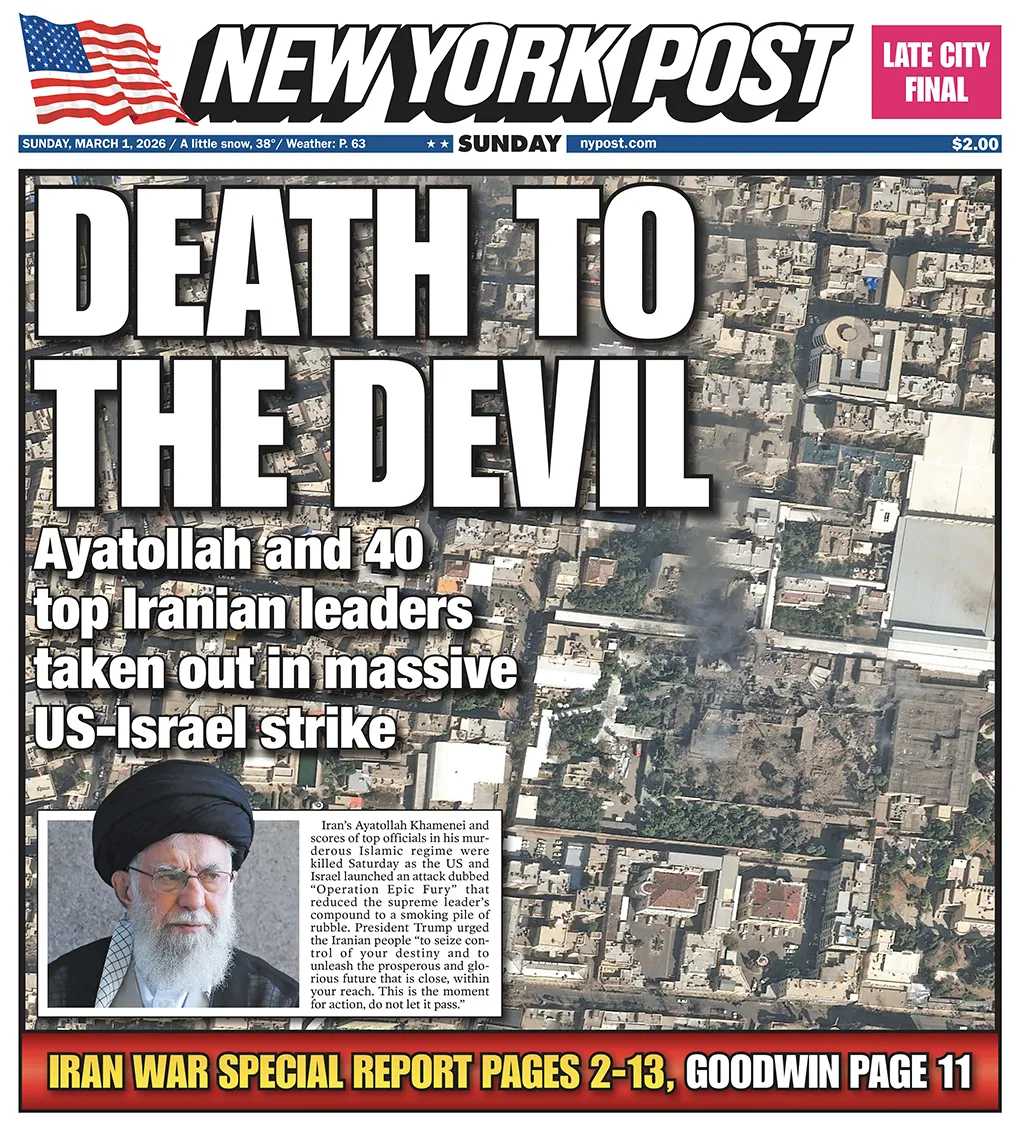
U.S.-Iran Peace Deal Reached, Ending Nearly Four Months of Conflict

The United States and Iran announced a peace deal on Sunday, June 15, 2026, ending a conflict that had run for nearly four months and rattled energy markets throughout its duration. The Wall Street Journal reported on the fragility of the final negotiating stretch, with Iran threatening at one point to withdraw from talks after Israeli strikes near Beirut threatened to derail the process.
The deal's foundations were laid on April 8, when a two-week ceasefire brokered by Pakistan halted active hostilities and created the diplomatic runway that led to Sunday's agreement. Pakistan's role as mediator was a notable feature of that interim arrangement — Islamabad leveraging its position as a non-belligerent with credible lines to both Washington and Tehran.
Energy Markets: The Direct Read-Through
For traders and risk desks, the immediate question is what a durable U.S.-Iran peace does to the Gulf risk premium embedded in crude and natgas forward curves. The conflict had kept a persistent bid under energy prices; its resolution removes one of the more concrete geopolitical tail risks that had structured positioning across the complex since February.
Natural gas markets are already navigating a supply-heavy fundamental backdrop that predates the ceasefire. The EIA's Short-Term Energy Outlook projects U.S. marketed natural gas production to grow 3.3% in 2026 — roughly 3.9 billion cubic feet per day — adding to a market that has repeatedly demonstrated its sensitivity to demand-side shocks. That demand sensitivity was on full display in January 2025, when an Arctic Blast drove consumption to a record 181.2 Bcf/d for the Lower 48 on January 21, per Boe Report. The flip side came within days: warmer forecast revisions sent front-month futures down roughly 7%, with demand snapping back to pre-event levels by late January, as AGA's market indicators documented.
That episode is a useful reference point. Weather-driven volatility in natgas can be sharp and fast. Geopolitical risk, by contrast, tends to be slower-moving and stickier — it builds into the curve over weeks, not hours. The peace deal's unwind of the Gulf premium will likely play out over sessions rather than a single tape, as traders reassess Iranian export capacity, Strait of Hormuz transit risk, and LNG re-routing flows that may have developed during the conflict.
What the Deal Doesn't Resolve
A peace announcement is not a settlement of underlying disputes. The talks almost collapsed as recently as June 14, when Israeli military activity near Beirut prompted Tehran to threaten withdrawal — a reminder that third-party dynamics in the region remain capable of destabilizing bilateral agreements between Washington and Tehran. Whether Israel is a party to or bound by the terms of Sunday's deal is material to its durability, and that detail has not been confirmed in available reporting.
Separately, the path from peace deal to normalized Iranian crude output is neither automatic nor fast. Sanctions architecture, production infrastructure maintenance backlogs, and OPEC+ quota dynamics would all bear on how quickly — and whether — Iranian barrels return to international markets in volume. Market participants pricing a large, immediate supply response are getting ahead of the operational and political timeline.
The supply picture for U.S. natgas, meanwhile, turns on domestic fundamentals more than on Gulf geopolitics. With marketed production on track to add nearly 3.9 Bcf/d this year, the structural direction of the natgas market is set by the Permian and Haynesville, not by the Strait of Hormuz. The peace deal removes a risk premium; it does not alter the supply growth trajectory that is the dominant force in U.S. natgas pricing through the remainder of 2026.