Russian Strike Sets Kyiv's Dormition Cathedral Ablaze as Barrage Kills 11 Across Ukraine
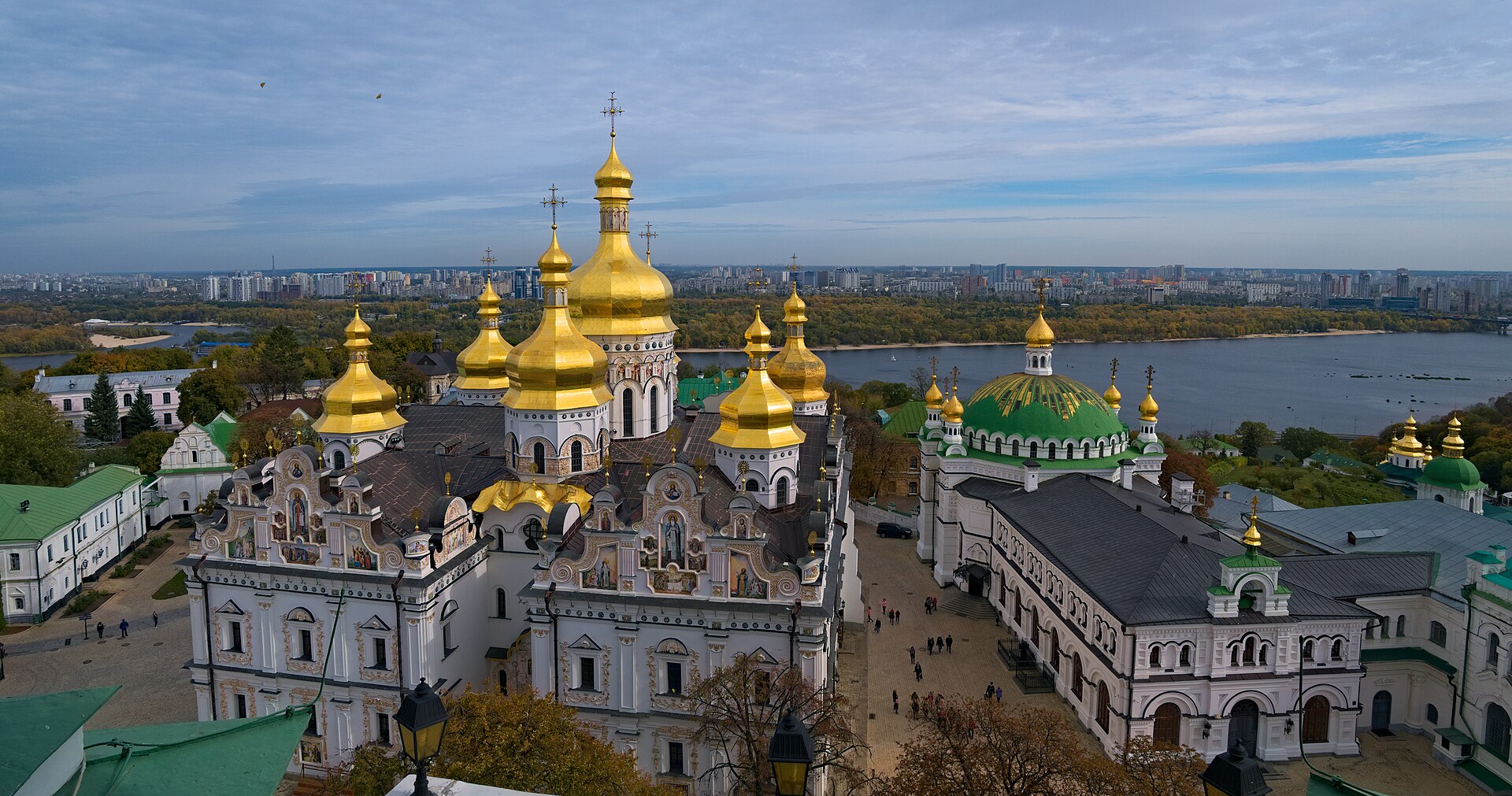
A Russian strike on June 15, 2026 set fire to the Dormition Cathedral inside the Kyiv-Pechersk Lavra monastery complex, one of the oldest and most revered Orthodox Christian sites in the former Soviet space, while a broader barrage across Ukraine's major cities killed at least 11 people and wounded dozens more, including children.
AP News reports five of those deaths confirmed in Kyiv alone, with Mayor Vitali Klitschko putting the city's casualty count at no fewer than 30 wounded. The Times of Israel notes the attacks reached Ukraine's largest urban centers simultaneously, a pattern consistent with Russian doctrine of massed strikes designed to saturate air defenses and maximize psychological impact alongside physical damage.
The Lavra and What Was Lost
The Dormition Cathedral's roots go back to the 11th century, making it one of the foundational structures of Kyivan Rus-era Christianity. Reuters details the cathedral's layered history: original construction under Yaroslav the Wise, destruction by the Mongols in 1240, reconstruction over subsequent centuries, and demolition by Soviet forces in 1941 — an act Moscow long attributed to retreating German troops before Soviet-era documents confirmed otherwise. The post-independence Ukrainian government rebuilt the cathedral, which was reconsecrated in 2000. That the structure survived a Soviet demolition and decades of communist-era repression only to sustain fire damage in 2026 carries its own weight for Ukrainians.
The Kyiv-Pechersk Lavra — "Monastery of the Caves" — sits on a bluff above the Dnipro River and has been a UNESCO World Heritage Site since 1990. Control of the complex has itself been contested: the Ukrainian government began transferring portions of it from the Russian Orthodox Church's Ukrainian branch to state authority in 2023, a legal dispute that gave the site added political salience well before this strike.
Competing Accounts of the Strike
Russia denied direct responsibility. Reuters reports Moscow's claim that the fire resulted from a U.S.-made Patriot surface-to-air missile — an interceptor from Ukraine's own air defenses — rather than any Russian munition. That claim cannot be independently verified from available sourcing, and Russia has used comparable deflection language after high-profile strikes on civilian infrastructure throughout the war. Ukrainian officials and Western governments have consistently rejected such attributions in prior incidents.
The Patriot counterclaim is not entirely without precedent as a physical mechanism: interceptors can fall back to earth and cause secondary fires or structural damage, and both sides have acknowledged such incidents at various points in the conflict. Whether that scenario applies here is a matter for technical forensic analysis that has not yet been published.
The Broader Strike
Beyond the Lavra, the June 15 barrage extended to Kharkiv and other cities, per AP's photo documentation. The attack's geographic spread and simultaneous targeting of multiple urban centers fits the operational profile of large-scale drone and missile strikes Russia has conducted periodically since 2022 — timed, analysts have noted in prior attacks, to coincide with diplomatic pressure points or Ukrainian military momentum. No specific tactical rationale for the June 15 timing has been confirmed in the available sourcing.
The human toll — at minimum 11 dead and dozens wounded across the country — places this among the deadlier single-day strikes of recent months, though the full picture will sharpen as emergency services complete their assessments.
The destruction at the Dormition Cathedral will land differently from a strike on a power substation or military logistics hub. Heritage sites carry legal protections under the 1954 Hague Convention for the Protection of Cultural Property in the Event of Armed Conflict, to which both Russia and Ukraine are parties. Documented strikes on protected sites have previously been cited in international criminal proceedings; the International Criminal Court's ongoing work on the Ukraine conflict means the evidentiary record from June 15 will almost certainly be preserved for potential future use, regardless of how the war ultimately resolves.


