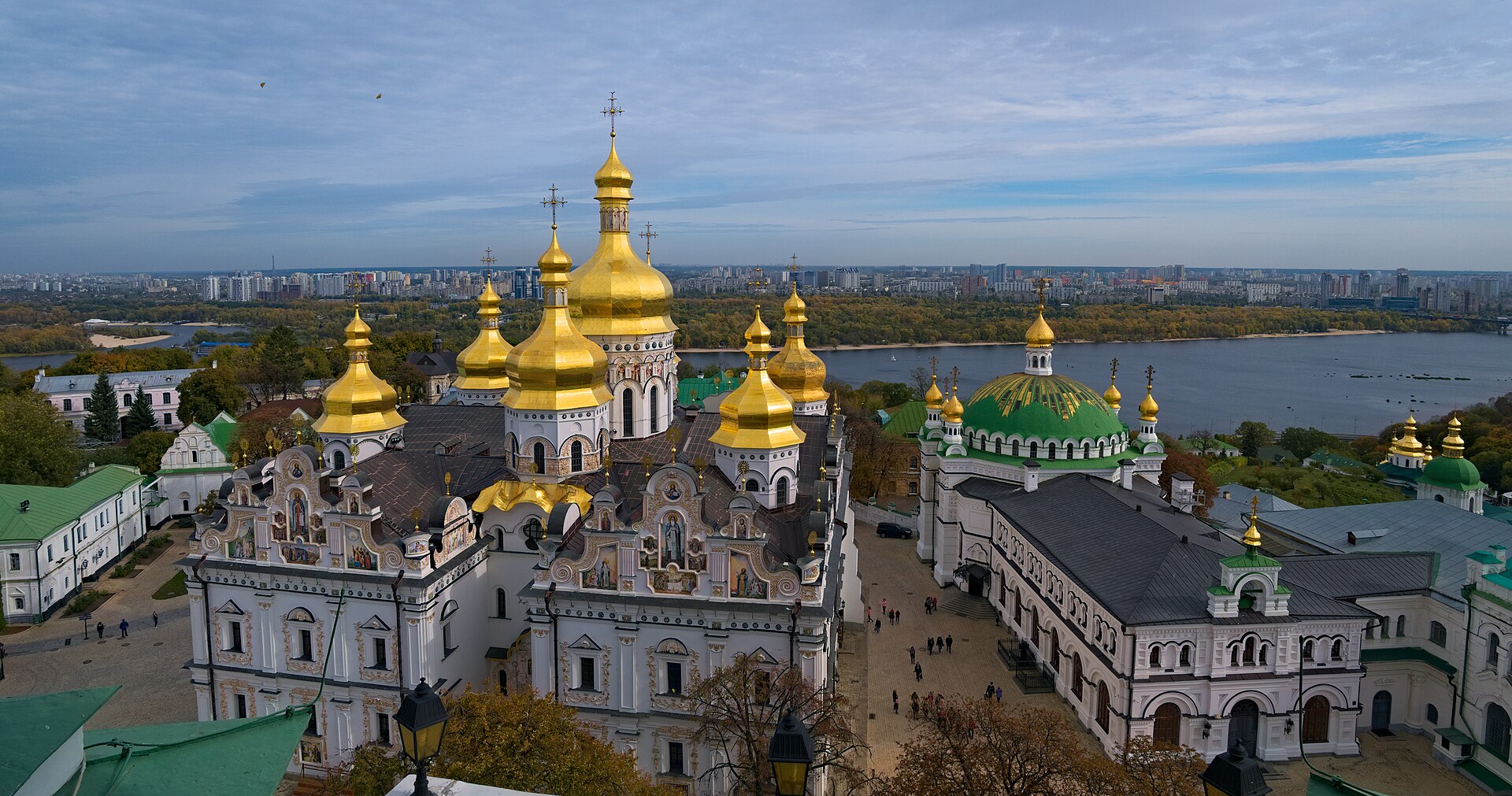
Russian UAV Strike Sets Dormition Cathedral Ablaze at Kyiv-Pechersk Lavra

Russian UAVs struck the roof of the Dormition Cathedral at the Kyiv-Pechersk Lavra in the early hours of June 15, 2026, triggering fires across the UNESCO World Heritage monastery complex that emergency services ultimately brought under control, according to Ukraine's Verkhovna Rada.
Fires broke out at both the Dormition Cathedral and the adjacent Mystetskyi Arsenal before first responders extinguished them, according to a statement from President Volodymyr Zelensky's office, which noted that Zelensky personally thanked all services involved in the response. The extent of structural damage to the cathedral had not been fully assessed as of the statement's publication.
The Dormition Cathedral — the architectural and spiritual centerpiece of the Pechersk Lavra complex in Kyiv's historic Pechersk district — is among the most symbolically weighted structures in Eastern Orthodox Christianity. The cathedral was originally constructed in the eleventh century, destroyed by Soviet authorities in 1941, and rebuilt following Ukrainian independence. Metropolitan Epiphanius, head of the Orthodox Church of Ukraine, leads the institution most closely associated with the complex since the Ukrainian government's transfer of monastery grounds away from the Russian Orthodox-affiliated congregation, a process that generated sustained diplomatic and legal friction well before this strike.
The attack fits within a documented, escalating pattern of damage to Ukrainian religious and cultural heritage. Ukraine's Ministry of Foreign Affairs has recorded over 700 religious sites damaged across the country since Russia's full-scale invasion began in February 2022. Interior Ministry data captures the broader cultural toll: between February 24, 2022 and December 25, 2023, 872 cultural heritage objects were destroyed or damaged. A January 2026 Russian attack on Kyiv had already caused damage to Kyiv-Pechersk Lavra buildings, establishing a direct prior incident at the same complex.
The Pechersk Lavra's UNESCO World Heritage designation under the 1972 Convention obliges all state parties — including Russia — to refrain from deliberately targeting cultural property. Deliberate strikes on protected heritage sites also engage obligations under the 1954 Hague Convention for the Protection of Cultural Property in the Event of Armed Conflict and its Second Protocol, to which Ukraine is a party. Evidence of intentional targeting, if established, could support war crimes documentation efforts already underway at the International Criminal Court.
The strategic calculus behind targeting a site of this profile is not difficult to read. The Kyiv-Pechersk Lavra sits at the intersection of Ukrainian national identity, Orthodox ecclesiastical politics, and the contested historical narrative Russia has used to frame its justification for the war. Striking it inflicts psychological damage that extends well beyond the physical. Whether the cathedral's roof was a deliberate aim or incidental to a broader Kyiv strike package, the effect lands on one of the most internationally legible symbols of Ukrainian cultural continuity.
What happens next will depend partly on the damage assessment and partly on international response. Kyiv has consistently used documented heritage destruction to sustain Western political attention and bolster its case in multilateral forums; the optics of a burning Orthodox cathedral broadcast globally give that effort fresh material. For Russia, the strike adds to a record that UNESCO, the ICC, and partner governments have been methodically compiling for four years.