Russian Strike Hits Kyiv's Pechersk Lavra, Killing Five

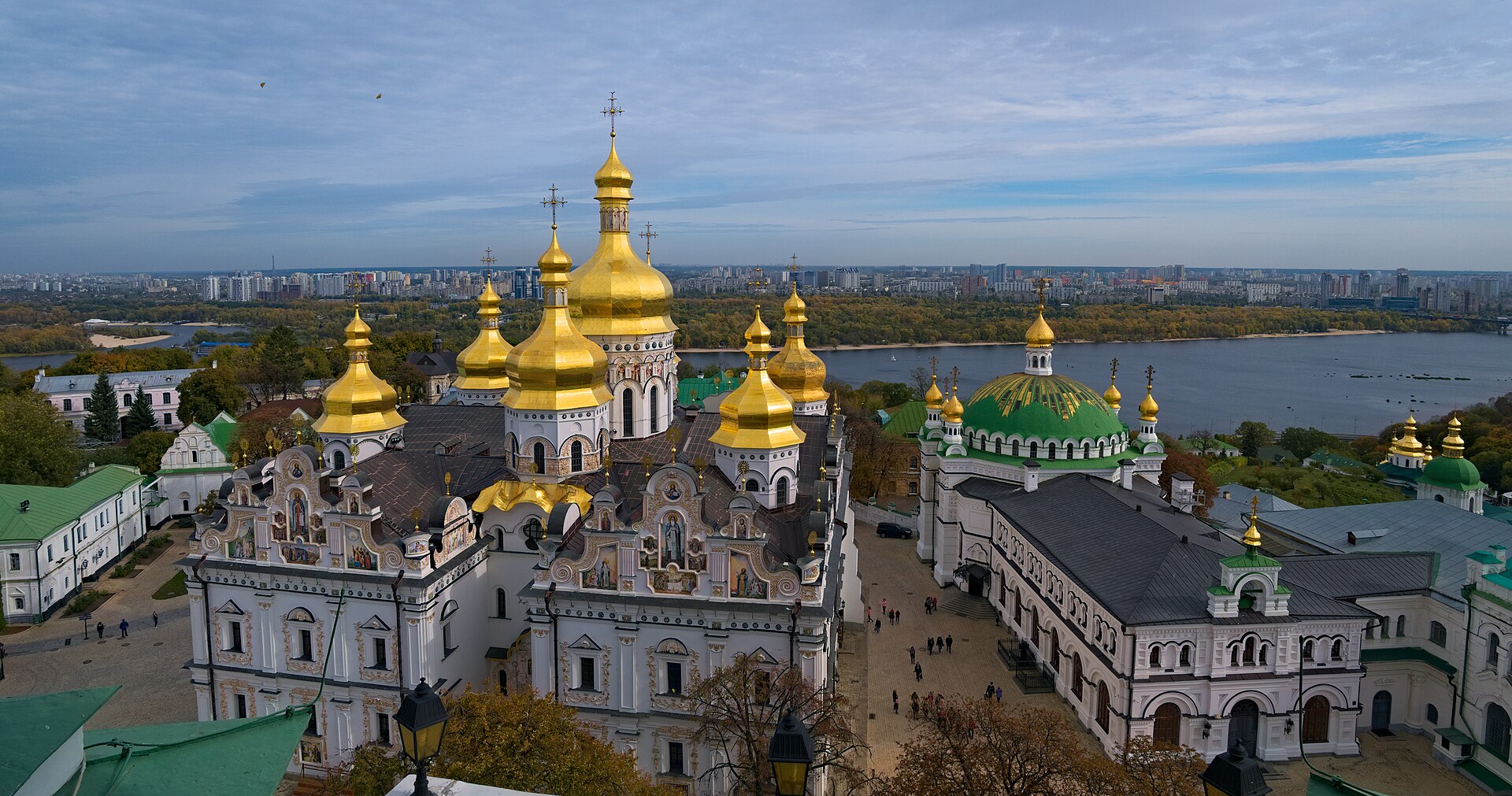
A large-scale Russian aerial attack on Kyiv on June 14, 2024 struck the Pechersk Lavra monastery complex, igniting a fire on the roof of the Dormition cathedral and killing at least five people — among them rescue workers. At least 20 others were wounded across the capital, according to NPR and Reuters.
The death of rescue workers is a grim detail that demands its own weight. Ukrainian emergency personnel operate under the doctrine of secondary-strike risk, aware that Russian targeting patterns have, on documented occasions, included follow-on strikes timed to catch first responders. That five people died — with responders among them — points to the scale of the initial barrage and to the cascading danger of the attack's aftermath.
The Pechersk Lavra — the Monastery of the Caves — sits on a bluff above the Dnipro in Kyiv's historic Pechersk district. Founded in the eleventh century, it is one of the most consequential sites in Eastern Orthodox Christianity and a UNESCO World Heritage property. The complex has for centuries served as both a religious center and a repository of Ukrainian cultural memory: its Dormition cathedral, now partially damaged by fire, was itself rebuilt in the Soviet era after being destroyed in 1941, in a demolition whose attribution remains contested between Soviet and German culpability. The monastery's layered history of destruction and reconstruction is, in this context, more than backdrop — it is the very reason the site carries such symbolic freight for Kyiv and for international cultural heritage bodies.
Russia and Ukraine have contested jurisdiction over the Lavra since the early stages of the full-scale invasion. Ukrainian authorities moved to evict the Ukrainian Orthodox Church of the Moscow Patriarchate from portions of the complex in late 2022 and 2023, part of a broader legal and ecclesiastical restructuring that Moscow condemned as persecution of canonical Orthodoxy. The strike now lands on territory that was already at the center of an identity dispute, adding a layer of cultural confrontation to the military one.
Under the 1954 Hague Convention for the Protection of Cultural Property in the Event of Armed Conflict and its protocols, UNESCO World Heritage sites carry a degree of protected status in warfare, though enforcement mechanisms are limited and depend heavily on political will at the UN Security Council — where Russia holds a permanent veto. Documenting the strike will matter for any eventual accountability process, but the legal pathway remains narrow.
The broader operational picture of the June 14 attack is still being assembled by open-source analysts and Ukrainian air defense authorities. Large-scale combined strikes on Kyiv — typically involving ballistic missiles, cruise missiles, and Shahed-series drones in coordinated waves — are designed to saturate air defense systems and force prioritization choices. When layered strikes reach residential and historic districts, the resulting civilian toll and infrastructure damage tend to be geographically dispersed, complicating both rescue operations and damage assessment.
The international response will be watched closely. Strikes on UNESCO-listed sites have, in this conflict, generated diplomatic statements from Paris and Brussels and periodic UN Security Council sessions, but they have not altered the operational tempo on either side. The destruction of cultural property has become a documented pattern in the war; whether the Pechersk Lavra's prominence accelerates any specific legal or diplomatic action is an open question that the next several days will begin to answer.