Australia's Electricity Grid Faces Mounting Pressure as Housing and Climate Demands Collide
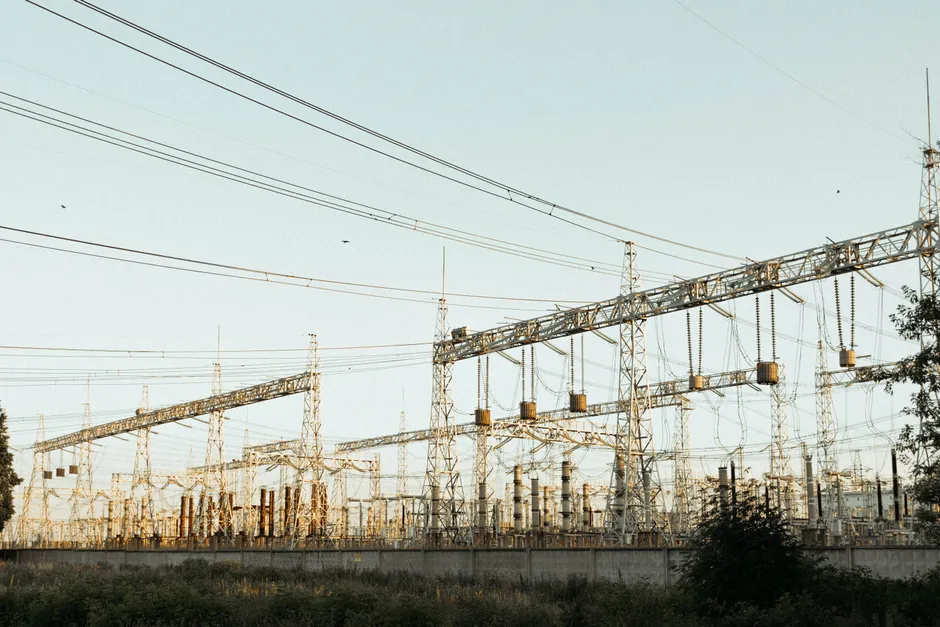
Australia's electricity distribution infrastructure is being stress-tested by converging pressures — electrification policy, extreme weather events, and a housing sector in flux — exposing structural vulnerabilities that state-level grid operators and regulators are only beginning to address systematically.
The Grid Beneath the Cities
The scale of the distribution network is easy to underestimate. Integral Energy's footprint in New South Wales alone encompasses 25,000 transmission, zone, and distribution substations, 370,000 power poles, and 150,000 streetlights. Zone substations — the critical mid-tier nodes that step down voltage from 66 kV sub-transmission lines for local distribution — are embedded throughout urban and regional centres. Each one is a single point of failure for the households and businesses it serves.
That physical footprint matters because it is now being asked to carry a fundamentally different load profile. Victoria's ban on natural gas connections to new homes, which took effect in 2024 as part of the state's emissions reduction strategy, is the clearest legislative signal that residential electrification is not a distant aspiration but a current policy reality. NSW has not enacted an equivalent measure, but the directional pressure across the National Electricity Market is consistent: more end-uses, from space heating to cooking to vehicle charging, are migrating onto the grid.
When Demand Spikes and Infrastructure Fails
The risk that concentrated demand poses to aging distribution assets is not theoretical. During a January 2018 heat wave, more than 10,000 homes in Victoria — Australia's second most populous state — lost power as surge demand overwhelmed local capacity. That event predates the electrification acceleration that is now underway. The margin for error is narrower today.
Fire risk compounds the load-management problem. Substations in NSW are subject to a dedicated fire protection and detection standards regime, with cost trade-offs for suppression systems assessed through a Fire Risk Evaluation Model — a framework published in 2021 that reflects growing regulatory attention to thermal and ignition hazards within high-voltage infrastructure. The concern is not purely internal: substations situated in or near residential zones create exposure in both directions, with bushfire fronts capable of destroying surface infrastructure just as readily as an internal fault.
December 2025 made that bidirectional risk concrete. A fast-moving fire in NSW's Central Coast region destroyed 16 homes over a single weekend, part of a broader multi-state bushfire event that killed at least one firefighter. Distribution lines and substations in fire-affected corridors face repeated exposure as the climate extends the fire season's reach into periurban zones that were historically lower-risk.
The Housing Wildcard
Overlaying all of this is a housing market under considerable strain. CoreLogic data recorded national house price falls of 1.6% in July and 1.3% in June — consecutive monthly declines that, taken together, indicate a softening cycle with potential consequences for the pace and geography of new residential construction. Slower housing starts in greenfield areas ease near-term grid augmentation pressure, but they also reduce the rate at which newer, more efficient building stock — designed from the outset for all-electric loads — enters the market.
The interaction between housing economics and grid investment is underappreciated in public debate. Network businesses plan augmentation on forecast load growth. When that growth is delayed by a construction slowdown, investment cycles can shift, leaving existing infrastructure — much of it mid-century vintage in the major cities — operating closer to design limits for longer.
The picture that emerges is not one of imminent collapse. Australia's grid operators have navigated heat events, policy transitions, and natural disasters before. But the simultaneity of electrification mandates, extreme weather frequency, bushfire exposure, and housing-market uncertainty represents a concentration of variables that no single prior cycle has combined in quite this configuration. The regulatory frameworks — from Victoria's gas ban to NSW's substation fire standards — reflect awareness of individual pressures. Whether they add up to a coherent response to their combined effect is the harder question, and one that distribution network service providers, AEMO, and state energy ministers will be working through for years.


