Russian Frigate Fires Warning Shots at British Yacht in the English Channel

The Russian frigate Admiral Grigorovich fired warning shots within 500 metres of a British-flagged yacht in the English Channel on June 16, 2026, in an incident that drew immediate attention from the Royal Fleet Auxiliary and prompted a sharp public response from the yacht's crew.
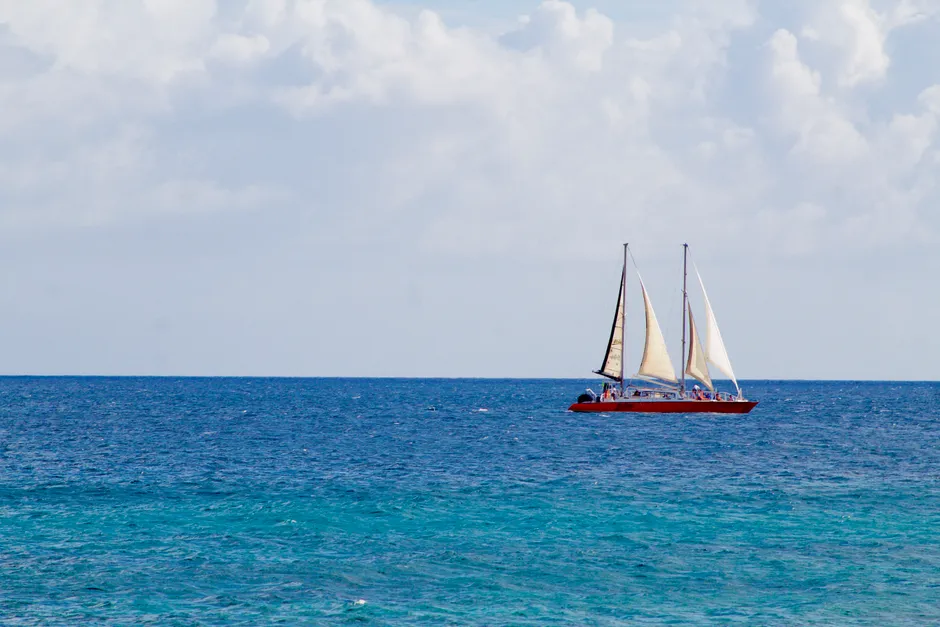
The vessel targeted — if that word can apply to what Moscow will likely frame as a lawful navigation warning — was the Bright Future, a 40-foot yacht crewed by Jane and Alan Kelvey, a retired couple aged 68 and 70, sailing from Lymington, Hampshire to France. No injuries or damage resulted, according to Yahoo News. The Kelveys told The Telegraph they "did nothing wrong."
At the time of the incident, Britain's RFA Tideforce was already monitoring the Admiral Grigorovich, per CBC News. The size disparity alone frames the encounter: the Admiral Grigorovich is a 409-foot Krivak III-class guided-missile frigate; the Bright Future is a 40-foot sailing yacht. Warning shots from a warship of that displacement directed at a civilian vessel of that scale are not a routine navigational communication.
Context and Legal Terrain
The English Channel is among the busiest and most legally codified maritime corridors in the world. Under the UN Convention on the Law of the Sea (UNCLOS), all vessels — including warships — enjoy the right of innocent passage through territorial seas and transit passage through international straits. The Channel itself spans international waters in its central lane, though its approaches touch both British and French territorial seas. Russian naval vessels transiting the Channel is not novel; the Royal Navy and RFA have shadowed them for years under standard NATO burden-sharing protocols. The RFA Tideforce's presence alongside the Grigorovich fits that established pattern.
What sits outside routine is the use of warning shots against a civilian vessel. Under international maritime law, warning shots — rounds fired across a vessel's bow or nearby to compel it to stop or alter course — are a coercive measure ordinarily reserved for law enforcement operations or armed conflict. Their use by a warship against a private yacht in peacetime transit waters is legally contentious and operationally unusual. Russia has invoked safety exclusion zones and claimed harassment from civilian vessels near its naval movements in European waters before, but those assertions have consistently been disputed by NATO member states.
What Comes Next
The British government's formal response, if any, will shape how this incident is read institutionally. A diplomatic protest — a note verbale through the Russian embassy, or a formal démarche — would be the minimum expected from London under current UK-Russia relations, which have remained adversarial since 2022. A harder public statement from the Ministry of Defence or the Foreign Office would signal that Whitehall intends to use the incident for broader political purposes, including within NATO consultations.
For the Kelveys, the legal and personal exposure is over: no charges, no damage, and a clear public statement establishing their account of events. Their framing — "we did nothing wrong" — is both a personal declaration and a legally significant one, given that any Russian justification for the warning shots would rest on characterising the yacht as a navigational hazard or a vessel in non-compliance with instructions.
The Admiral Grigorovich has a history worth noting. The frigate, commissioned in 2016 and based with Russia's Black Sea Fleet, has operated in the Mediterranean and Atlantic and has previously been tracked by NATO assets during Channel transits. Its presence in the Channel on June 16 was therefore not unexpected — the RFA Tideforce was already on station.
What is less easy to normalise is the discharge of weapons. Even if the shots caused no physical harm, they crossed a threshold. In a Channel where maritime law governs the interaction between warships and civilian traffic, that threshold has weight — and London, Brussels, and NATO headquarters will be deciding precisely how much weight to assign it.