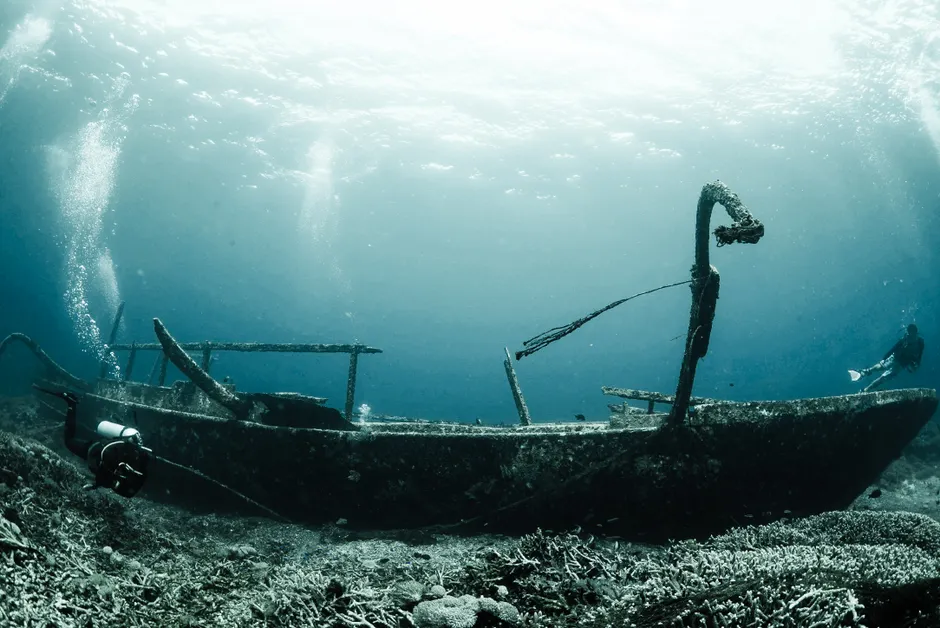
A French Whaler's 1851 Wreck Becomes a Korea-France Cultural Bridge

Bigeumdo, a small island off South Korea's South Jeolla coast, is staging a festival built around a 175-year-old maritime disaster: the 1851 wreck of the French whaling vessel Le Narval in the surrounding waters, according to Asiae. The event, titled "The Encounter of Champagne and Makgeolli," pairs the two drinks as a shorthand for the Franco-Korean contact that followed the shipwreck.
The historical episode itself is well-documented in the academic record. Le Narval ran aground somewhere in the waters of Jeolla province in 1851, and at least part of its crew eventually made it to Shanghai, according to the International Journal of Korean History. The precise landfall on Bigeumdo — and the island's particular role in the survivors' ordeal — is the detail that local organizers have chosen to anchor the festival around. The crew's passage through a remote Korean island and eventual escape to China's largest port encapsulates the mid-19th century Pacific whaling circuit, in which French, American, and British ships routinely pushed into Northeast Asian waters in pursuit of sperm and right whales as Atlantic stocks collapsed.
The festival's name does cultural work that the history itself barely requires. Champagne stands in for France; makgeolli, the milky fermented rice wine long associated with Korean rural and maritime communities, stands in for the island. The pairing is deliberately unpretentious — neither drink is the prestige choice of its respective country's elite — which fits Bigeumdo's profile as a working island rather than a heritage tourism showpiece.
The broader context here is a growing pattern of Korean localities mining hyper-local historical encounters with the outside world as festival material. The Bigeumdo event is modest in scale, but it sits within a wider effort by South Korean provincial governments to develop culturally distinctive tourism anchors beyond the standard K-pop and Joseon-dynasty circuits. A shipwreck that left no lasting diplomatic trace, involving a mid-rank whaling vessel from an era before formal Franco-Korean relations, becomes precisely the kind of story amenable to local repackaging: specific enough to be distinctive, obscure enough to carry genuine novelty.
For France, Le Narval's story belongs to the same forgotten chapter of Pacific history as dozens of other whaling casualties. French whaling peaked in the mid-19th century and collapsed by the century's end; the ships and their crews left thin documentary trails outside specialist maritime archives. That a Korean island has now made one such vessel the centerpiece of a recurring cultural event is, if nothing else, a form of preservation that the French maritime record did not itself produce.
What happens at the festival — tasting sessions, historical exhibits, a commemoration of the crew's arrival — matters less than the institutional bet it represents. Bigeumdo's organizers are wagering that a bilateral cultural hook, however slender, can generate durable visitor interest. Given that the island lacks the infrastructure or celebrity of better-known Korean festival destinations, the historical angle may be its strongest differentiating asset. Whether that is enough to sustain the event beyond its inaugural edition is an open question, but the underlying instinct — to treat a maritime accident as a point of cultural contact rather than a footnote — is sound historical thinking.