The Champagne Wreck: How a 19th-Century French Shipwreck Became a Korean Island's Festival

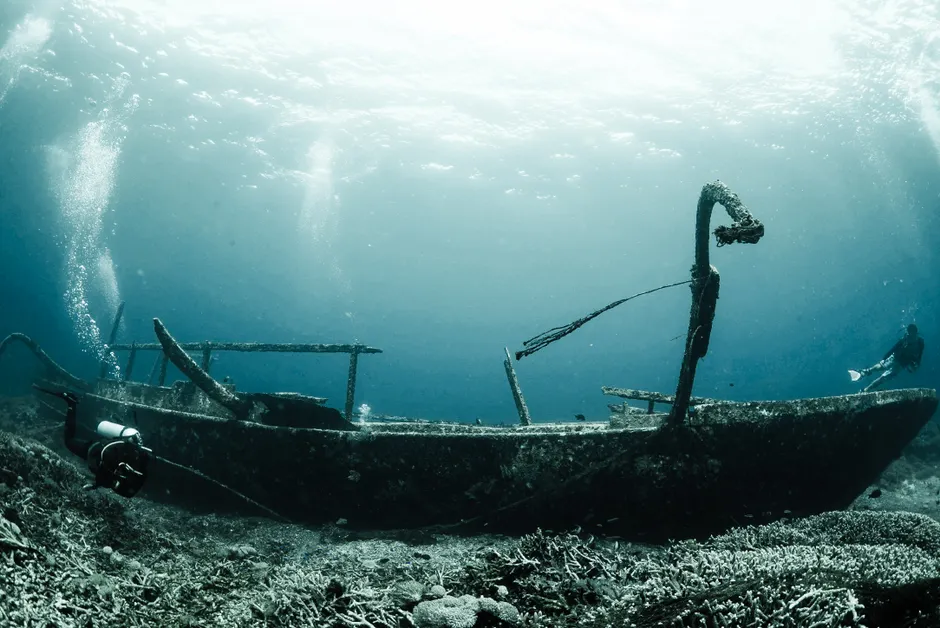
The island of Bigeum, off South Korea's southwest coast, is holding a wine festival rooted in a maritime accident that most of recorded history had filed away and forgotten: the 1851 wreck of Le Narval, a French whaling vessel, on its shores.
The festival, reported by The New York Times on June 20, 2026, draws its identity directly from that wreck. The vessel's cargo reportedly included champagne, and the story of how local residents rescued the stranded French sailors has, after more than 170 years, been folded into an act of cultural diplomacy — one small enough to escape the machinery of state summits, but pointed enough to carry meaning.
The Wreck and What It Left Behind
The historical record of Le Narval's grounding is thin by design — mid-19th-century Korea, then the Joseon dynasty, was deeply closed to foreign contact, and maritime incidents involving Western vessels rarely generated documentation on the Korean side. Academic work published in the International Journal of Korean History in August 2016 situates the wreck within a broader pattern of European whaling and commercial vessels that encountered the peninsula's coastline during a period when Joseon authorities were actively resisting foreign encroachment.
That the sailors were rescued rather than detained or expelled is, in context, notable. Joseon's posture toward uninvited Western arrivals in the mid-19th century ranged from cautious to hostile — the 1866 French Campaign (Byeong-in yangyo) would follow just fifteen years later, triggered in part by the execution of French Catholic missionaries. The Bigeum episode, by contrast, appears to have been a moment of localized, quiet humanity — ordinary islanders responding to a shipwreck before official policy could intervene.
From Footnote to Festival
Korean authorities plan to formalize that memory with a commemorative park on Bigeum, according to korea.net, dedicated to the rescue and the Franco-Korean encounter it briefly created. The wine festival is the cultural face of the same impulse: a regional community converting an obscure archival curiosity into an economic and soft-power asset.
The mechanics here are familiar from other heritage-tourism plays. A local government identifies a historically marginal but narratively rich event, attaches a product — wine, in this case, with its obvious resonance to a French cargo — and builds an annual event that draws visitors and press. Bigeum is a small island in the Shinan County archipelago, an area that has leaned into distinctive identity projects before; the "Purple Island" color-theming initiative in the same county drew international coverage. The champagne festival follows a similar logic: specificity as brand.
The France angle adds a layer that generic heritage tourism lacks. Franco-South Korean relations sit within a dense web of bilateral trade, defense cooperation — France is a significant arms supplier and partner in Seoul's efforts to diversify its security dependencies — and cultural exchange. Neither government appears to have elevated the Bigeum story to the level of official bilateral diplomacy, but that distance from the ministerial level is arguably what gives it traction. It circulates as a human story rather than a managed one.
The broader pattern worth tracking is how subnational actors — island municipalities, regional governments — increasingly use historical micro-events to generate international visibility without waiting for central government imprimatur. Bigeum's festival will not reshape the ROK-France relationship. What it does is anchor a specific, verifiable episode of cross-cultural contact to a place and a date, giving journalists, tourists, and cultural programmers a peg that purely invented festivals cannot provide. The wreck happened. The rescue happened. That factual foundation is the festival's durable asset, and it is likely what extends its life well beyond a first-year novelty cycle.
Whether the wine served bears any resemblance to what was aboard Le Narval in 1851 is a separate question — and probably the right one to ask over a glass on Bigeum.