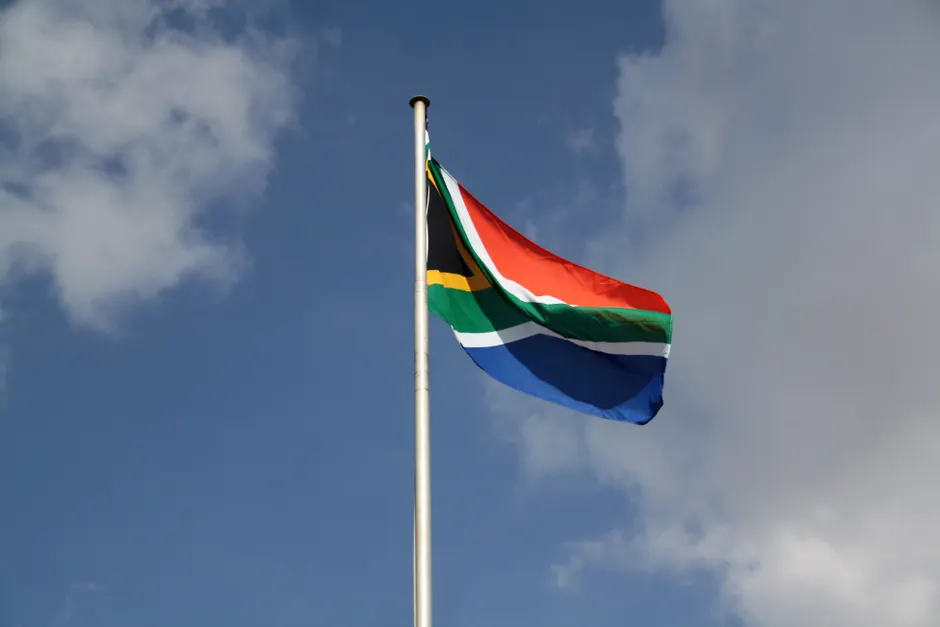
South Africa's Anti-Migrant Deadline Looms as Police Tighten Security

Anti-migrant groups in South Africa, including opposition party ActionSA, set June 30, 2024 as a self-imposed deadline for undocumented migrants to leave the country — and as the date approached, South African police tightened security across affected areas.
The deadline carried no legal weight. It was not issued by the government, courts, or any immigration authority. It was a pressure tactic, and its proximity has sharpened an already volatile domestic debate over undocumented migration, economic strain, and the limits of civil-society vigilantism.
The Groups Behind the Deadline
ActionSA — a populist opposition party founded by former Johannesburg mayor Herman Mashaba — was among those who backed the June 30 date. But the deadline did not emerge from party politics alone. The Conversation reported that a group called March and March emerged in Durban in 2024, organizing what it described as "clean up" campaigns to remove undocumented foreigners from the city. The framing — civic, procedural, democratic in register — is deliberate and analytically significant. Anti-migrant mobilization in South Africa has increasingly borrowed the language of rights and accountability to insulate itself from the xenophobia label.
Operation Dudula, whose name translates from Zulu as "to force out," has been the most sustained of these movements. It has conducted raids on businesses owned by foreign nationals and compelled shops to close, according to BBC reporting. The group subsequently registered as a political party for the 2024 elections, crossing from street activism into formal electoral competition.
The Government's Position
Pretoria has tried to walk a narrow line. The government has stated publicly that it must not allow legitimate concerns about service delivery and undocumented migration to give rise to xenophobia directed at African nationals or others, according to a statement on the DIRCO website. That statement was prompted by Ghana's request for an African Union debate on xenophobic attacks in South Africa — a signal that the issue has diplomatic traction beyond South Africa's borders.
The distinction matters operationally. South Africa hosts significant diaspora populations from Zimbabwe, Mozambique, Nigeria, and elsewhere across the continent, many of whom are undocumented but economically embedded in communities. Raids and forced shop closures do not distinguish between legal status and nationality; in practice, the line between anti-undocumented-migration enforcement and anti-foreigner violence is porous.
What the Deadline Actually Does
A self-imposed deadline with no enforcement mechanism is nonetheless consequential. It sets a social clock. It concentrates attention, signals to migrant communities that they are unwelcome regardless of legal status, and creates a window during which confrontations become more likely. The police security posture ahead of June 30 reflects an official acknowledgment of exactly that dynamic.
South Africa has experienced cyclical waves of xenophobic violence since the watershed 2008 attacks that killed more than 60 people. Each subsequent episode — 2015, 2019 — followed a period of political mobilization and inflammatory rhetoric. The pattern is familiar to analysts and to South Africa's neighbors, which is why Ghana felt warranted in raising it at the AU.
The broader structural driver is unemployment. South Africa's official unemployment rate has consistently exceeded 30 percent, with youth unemployment running substantially higher. In that environment, the political market for scapegoating external labor competition is durable. Anti-migrant groups have been effective at fusing genuine economic grievance with ethnic antagonism — a combination that mainstream parties have historically struggled to counter without appearing to dismiss working-class concerns.
ActionSA's involvement shifts the calculus somewhat. A registered party with parliamentary ambitions has institutional exposure that a street movement does not — legal liability, electoral accountability, reputational risk with international investors and multilateral institutions. Whether that constrains or merely launders the underlying politics is an open question as June 30 arrives.