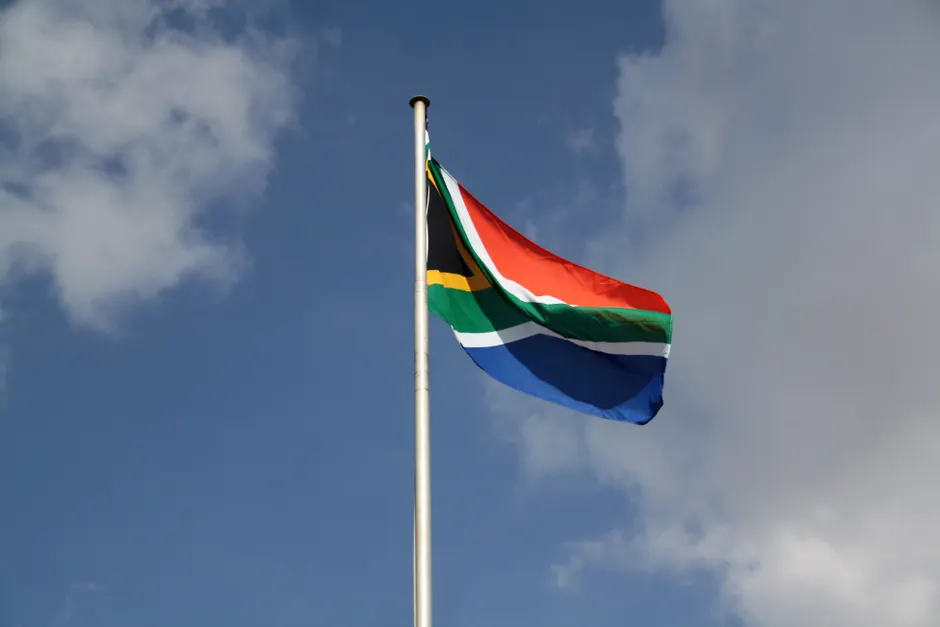
South Africa's June 30 Migrant Deadline: Vigilante Ultimatum, Government Pushback, and Four Days of Risk

South Africa's Inter-Ministerial Committee on Migration issued a statement on June 26, 2026 condemning violent incitement spreading across social media platforms tied to a self-imposed June 30 deadline for undocumented migrants to leave the country — a deadline set not by the state but by vigilante groups, as AFP Fact Check confirmed as early as June 3.
The distinction matters. What has circulated widely as a government ultimatum is, in fact, the product of anti-migrant protest movements that emerged from broader frustrations over unemployment and informal-sector competition. President Cyril Ramaphosa addressed the nation on migration from the Union Buildings in Tshwane on June 7, and publicly described the June 30 deadline as unnecessary, per BBC reporting. The Inter-Ministerial Committee followed with a media briefing on June 10 to coordinate the government's response across departments.
The human cost had already become visible before any of that. Reuters reported on June 2 that Mozambique confirmed five of its nationals died in anti-immigrant attacks in South Africa in early June — a data point that shifts the story from political noise to a documented casualty toll. South African police began tightening security as the June 30 date drew closer, with deployments reported across flashpoint areas, according to Al Jazeera.
The Government's Posture
The official position has been layered. On the regulatory side, the Department of Home Affairs issued Immigration Directive No. 7 of 2026 in March, extending a temporary concession for certain categories of foreign nationals — a measure that runs counter to the narrative of an imminent state-led expulsion. The Inter-Ministerial Committee's June 26 statement on social media incitement sharpens that posture further: the government is now explicitly on the record against the vigilante timeline, not merely silent on it.
Labour unions have aligned with that position. Multiple union bodies issued statements in mid-June urging workers to stay away from anti-migrant demonstrations — an important signal in a country where organised labour retains significant social authority. Whether that translates into reduced mobilisation on the ground remains an open question as of June 26.
What the Deadline Reveals
The June 30 episode is, structurally, a disinformation challenge grafted onto a real governance problem. Vigilante groups set a date; social media amplified it with enough authority that it required presidential rebuttal and a dedicated inter-ministerial response. The government's credibility problem is not that it issued the deadline — it did not — but that large segments of the public, and some foreign governments receiving frightened nationals, may have treated the vigilante pronouncement as equivalent to state policy.
South Africa's migration politics have long been volatile. Periodic waves of xenophobic violence, stretching back to 2008, have targeted migrants from Zimbabwe, Mozambique, Malawi, and other parts of the continent. The structural drivers — high unemployment, crowded informal labour markets, stretched public services — have not changed materially. What changes cycle to cycle is the trigger and the amplification mechanism. This time, the trigger is a manufactured deadline, and the amplifier is coordinated social media activity serious enough to draw an explicit government counter-statement four days before the date.
The Inter-Ministerial Committee's June 26 statement naming "violent incitement" on social media platforms is not boilerplate. It signals that authorities are tracking specific content and, potentially, specific actors. Whether that results in prosecutions, platform takedowns, or simply a paper trail will tell a good deal about the state's capacity and political will to act against domestic actors rather than migrant populations.
Four days remain before June 30. Police security has been tightened; the government has formally rejected the deadline; unions have counselled restraint. What happens in communities where vigilante networks have organisational depth, away from cameras and official statements, is the variable that none of the institutional responses fully controls.