Dan Jarvis Sets 5% GDP Defence Target at RUSI Land Warfare Conference
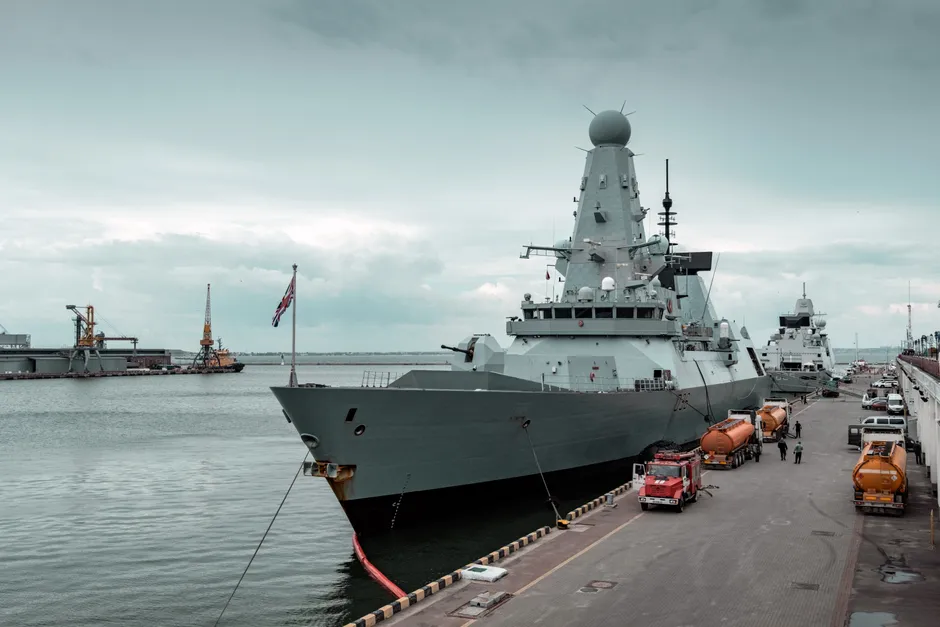
UK Defence Secretary Dan Jarvis used a speech at the RUSI Land Warfare Conference on 23 June 2026 to lay out the government's commitment to raising defence expenditure to 5% of GDP by 2035, framing the target as the centrepiece of a broader repositioning of British defence posture ahead of the NATO summit in Ankara.
The 5% figure, first trailed in BBC reporting on 18 June, would place the UK among the highest-spending NATO members relative to economic output — a bracket currently occupied by a small number of allies, none of them in Western Europe at that level. Current UK defence spending sits at approximately 2.3% of GDP, meaning the trajectory implied by the 2035 target demands a sustained and substantial annual uplift across two spending review cycles, almost certainly requiring structural decisions about the force mix, acquisition timelines, and the balance between platforms and readiness.
Jarvis delivered the remarks at RUSI's Land Warfare Conference, the annual forum that draws senior military commanders, defence contractors, and allied officials specifically focused on ground combat capability. The choice of venue matters: land warfare is where the European security debate has sharpened most acutely since 2022, and speaking there signals that the ambition is not merely a budgetary headline but is connected to specific capability questions — armour, artillery, stockpiles, and the reconstitution of mass.
The Ankara summit provides the immediate diplomatic context. NATO heads of state are expected to confront a widening gap between the alliance's stated defence investment benchmarks and actual member contributions, with the United States having made burden-sharing a persistent pressure point. A UK commitment to 5% by 2035 is a direct bid to insulate Britain from that criticism and to position London as a credible voice in debates about NATO's eastern flank posture and deterrence architecture.
The strategic logic running beneath that political calculation is worth tracing. Britain's land forces — the British Army — have undergone a decade of managed contraction. The Integrated Review of 2021 and its subsequent refresh reduced the regular army headcount further and deferred key capability programmes. A 5% GDP target, if it translates into actual appropriations rather than accounting reclassification, would need to reverse that trajectory substantially: growing the force, accelerating programmes like the Ajax armoured vehicle, funding deep fires, and addressing the munitions depth that Ukraine has exposed as a systemic NATO vulnerability.
Whether the 2035 deadline is politically durable is a separate question. Spending targets that extend beyond a single parliament have a mixed record in British defence policy; the 2% NATO threshold itself was nominally hit partly through the inclusion of items outside traditional force-investment categories. Analysts will scrutinise the baseline definition the government uses for 5% — whether it includes intelligence, cyber, nuclear, and veterans' commitments that can inflate headline figures without adding warfighting capacity.
For allied capitals, particularly Warsaw, Tallinn, and Washington, the signal is nonetheless consequential. The UK remains one of NATO's two nuclear-armed European powers and the alliance's second-largest European defence spender in absolute terms. A credible long-range spending commitment from London strengthens the hand of those pushing for a broader European uplift, and provides some diplomatic ballast at Ankara for a summit that will otherwise be dominated by bilateral friction over contributions.
What Ankara produces in formal communiqué language — and whether other European allies follow with comparable commitments — will determine how much load this announcement can bear. The 5% target is the anchor. The architecture around it is still being built.