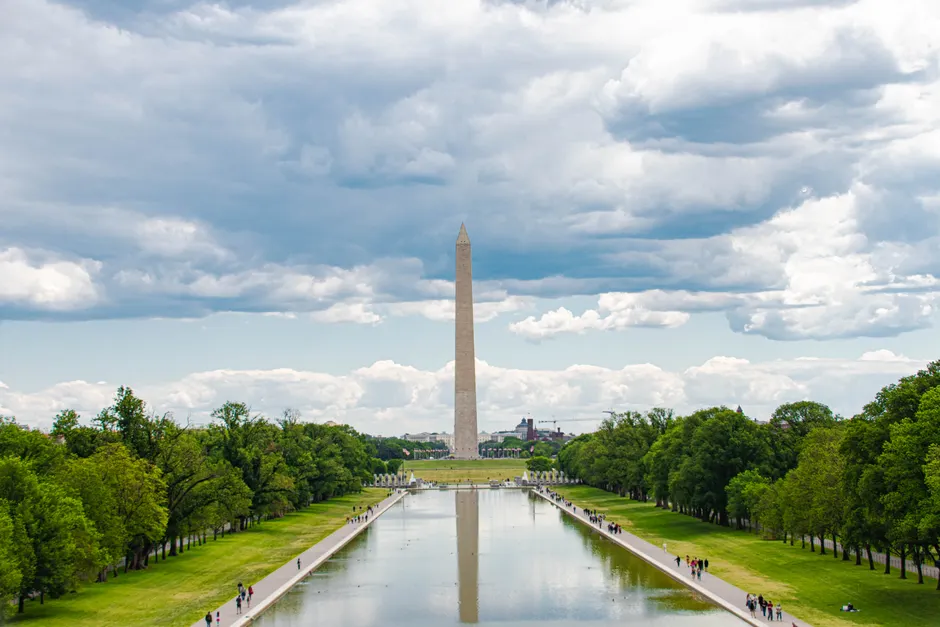
Trump Blames Vandals for Reflecting Pool's Latest Woes — But the Project's Troubles Predate Any Sabotage

President Trump posted on Truth Social on June 21 alleging that vandals had slashed the lining of the Lincoln Memorial Reflecting Pool and poured chemicals into the water, and that arrests had been made — the latest episode in a renovation saga that has attracted sustained public scrutiny since the project broke ground in early April 2026.
The $14 million overhaul was ordered personally by Trump during his second term, and from the outset carried a distinctive aesthetic mandate: Trump wanted the pool repainted in American-flag blue, departing from the natural-bottom appearance that had characterized the iconic monument-axis feature for decades. The White House amplified the effort with two promotional videos — "President Trump is Making the Reflecting Pool Beautiful Again" on April 23, and "Restoring the Reflecting Pool" on May 8 — framing the project as civic beautification ahead of high-visibility summer events.
A Troubled Timeline
The renovation hit its first publicly visible setback well before any alleged vandalism. By mid-June, CBC News reported that an algae bloom had taken hold in the newly repainted pool, and Reuters confirmed that work crews had responded by introducing hydrogen peroxide into the water to suppress the growth — a standard, if reactive, remediation step for cyanobacterial blooms in contained water bodies. The timeline is significant: those problems emerged around June 16, roughly ten weeks after the renovation began, suggesting the blue-painted surface may have contributed to thermal and light conditions that accelerated algae growth.
Trump's Truth Social post, reported by NPR on June 21, shifted the explanatory frame from a construction or design problem to criminal interference. The claim — that the pool's lining was physically slashed and foreign chemicals introduced — has not been independently corroborated in the verified sourcing available as of June 23. Arrests, if confirmed, would constitute a federal matter given the pool's status on National Mall grounds managed by the National Park Service.
Stakes and Context
The broader context matters here. The Reflecting Pool has functioned as one of the most symbolically loaded pieces of civic infrastructure in Washington since its completion in 1922 — the site of the 1963 March on Washington, a visual anchor for major presidential inaugurations and national commemorations. A $14 million renovation ordered at speed, with promotional branding and a politically specific color scheme, was always going to attract close scrutiny. The algae episode gave critics an early hook; the vandalism allegation has given the story new legs going into the July Fourth weekend, when the Mall draws its largest annual crowds.
Whether the lining damage, if real, is the primary driver of the pool's current state — or whether the earlier algae bloom and hydrogen peroxide treatment remain the more operationally significant factors — is a question the administration has not yet addressed directly. Fact-checks published by WBAL-TV and KCRA in late May already flagged timeline inconsistencies in how the project had been described publicly, suggesting the official narrative has required calibration before this latest development.
The July Fourth deadline gives the administration limited runway. If the pool remains drained or visually compromised on Independence Day, the symbolism will be difficult to manage — the renovation's entire public rationale was tied to having a restored, aesthetically elevated pool ready for the nation's 250th anniversary celebrations. Whether vandalism, algae management, or both are ultimately responsible, the operational outcome is the same: a $14 million project, backed by White House promotional infrastructure, that has not yet delivered a functioning pool at the moment it was most needed.