Twin Earthquakes Kill at Least 32 in Venezuela, Triggering International Aid Response

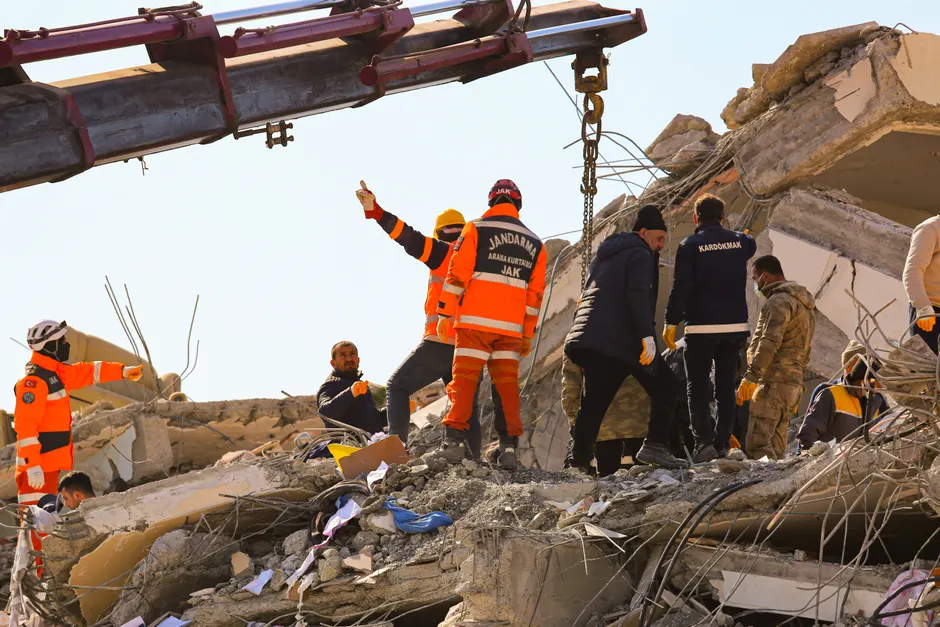
Two powerful earthquakes struck Venezuela on Wednesday, June 24, killing at least 32 people and injuring more than 700. The tremors hit with enough force to send residents of La Guaira — the coastal city that serves as Caracas's maritime gateway — digging through collapsed rubble with their bare hands to reach trapped neighbors.
The scale of the response now unfolding reflects both the urgency of the immediate crisis and the structural fragility of Venezuela's emergency infrastructure after years of economic contraction. International governments and humanitarian organizations mobilized cash, search-and-rescue teams, and logistical support in the hours after the quakes. That speed matters: research on past major earthquakes consistently shows that the overwhelming majority of live rescues occur within the first 24 hours of a collapse event, with survival probability falling sharply thereafter. The same body of evidence indicates that individuals trapped in rubble voids can survive up to a week or more, depending on injury severity, access to air, and ambient temperature — meaning that for some of those still unaccounted for, the window has not yet closed as of this writing.
La Guaira's geography amplifies the hazard. The city sits in a narrow coastal corridor hemmed between the Caribbean and the steep slopes of the Cordillera de la Costa, a configuration that concentrates seismic energy and limits evacuation corridors. The zone carries historical weight: a catastrophic landslide and flooding event in 1999 killed tens of thousands in the same region, leaving a legacy of informal settlement on unstable ground that subsequent governments never fully addressed. Much of the building stock in lower-income neighborhoods predates modern seismic codes or was constructed outside formal permitting processes entirely — factors that typically correlate with higher collapse rates when strong shaking occurs.
Venezuela's capacity to manage a mass-casualty disaster is constrained by well-documented deficits. Chronic underinvestment in civil protection, hospital infrastructure, and heavy rescue equipment has accelerated since the collapse of oil revenues roughly a decade ago. The Maduro government's strained relations with Western donors add a layer of diplomatic complexity to aid delivery; historically, Caracas has been selective about which external assistance it accepts and through which channels. Whether the incoming international response navigates those political frictions smoothly — or whether aid bottlenecks at the border or in customs — will shape outcomes for survivors in the coming days.
The seismic context is worth noting for those tracking regional risk. Venezuela lies along a tectonically active zone defined by the interaction of the Caribbean and South American plates. The country has experienced destructive earthquakes periodically throughout recorded history, but public investment in early-warning systems and building resilience has lagged behind neighboring Colombia and Peru, both of which have made measurable advances in earthquake preparedness over the past two decades.
The immediate priority remains the same as in any mass-casualty collapse event: get specialized rescue teams and medical triage capacity into affected areas before the critical survival window closes. The international mobilization appears to be moving, but speed of deployment — not just the pledge of resources — determines how many people come out of the rubble alive.